Curly hair is not a problem to fix. It is a texture to understand. If you are looking for natural curly hairstyle ideas for men and women that go beyond a pretty photo, this guide is for you. You will find 14 real styles with clear how-to steps, a simple curl-type guide, a wash-day routine that beginners can follow, and answers to the questions curly-haired people ask most online.
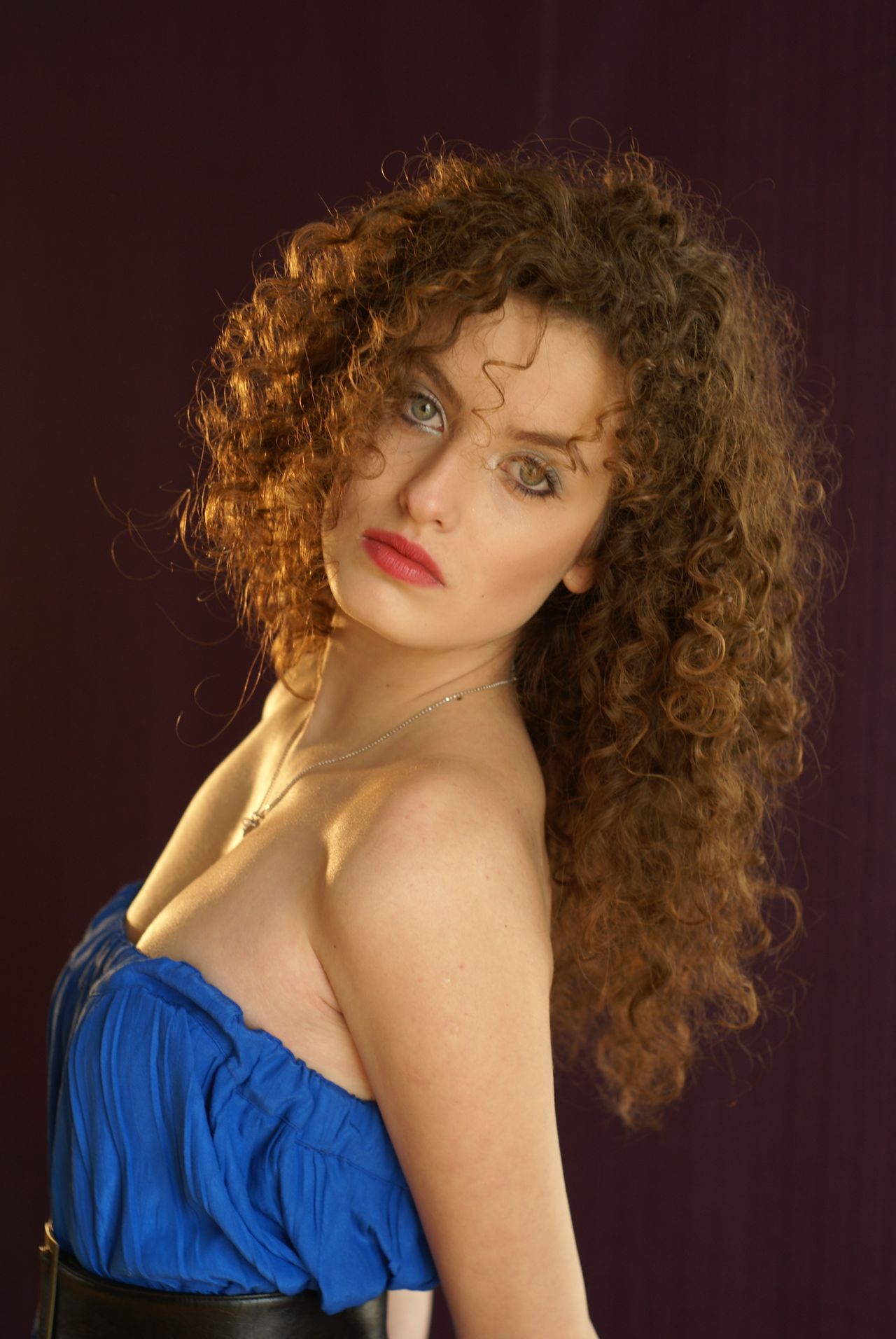
Photo: Roman Biernacki, via Pexels
Table of Contents
- 1. The Wash-and-Go (Women)
- 2. The Curly Bob (Women)
- 3. Long Layered Curls (Women)
- 4. The Pineapple Topknot (Women)
- 5. Curly Bangs (Women)
- 6. Protective Box Braids (Women)
- 7. The Rounded Natural Afro (Women)
- 8. Taper Fade with Curly Top (Men)
- 9. Curly Fringe / Textured Crop (Men)
- 10. Long Curly Hair (Men)
- 11. The Short Curly Afro (Men)
- 12. Diffusing for Volume and Definition (Unisex)
- 13. The Wash-Day Routine (Unisex)
- 14. Nighttime Protection (Unisex)
- Know Your Curl Type
- Wash-Day Routine That Works
- FAQs
- Gallery
Below you will find the styles split into three parts: seven for women, four for men, and three unisex styling and care ideas that everyone with curls should know. Every idea comes with steps you can actually follow at home.
Curly Styles for Women
1. The Wash-and-Go
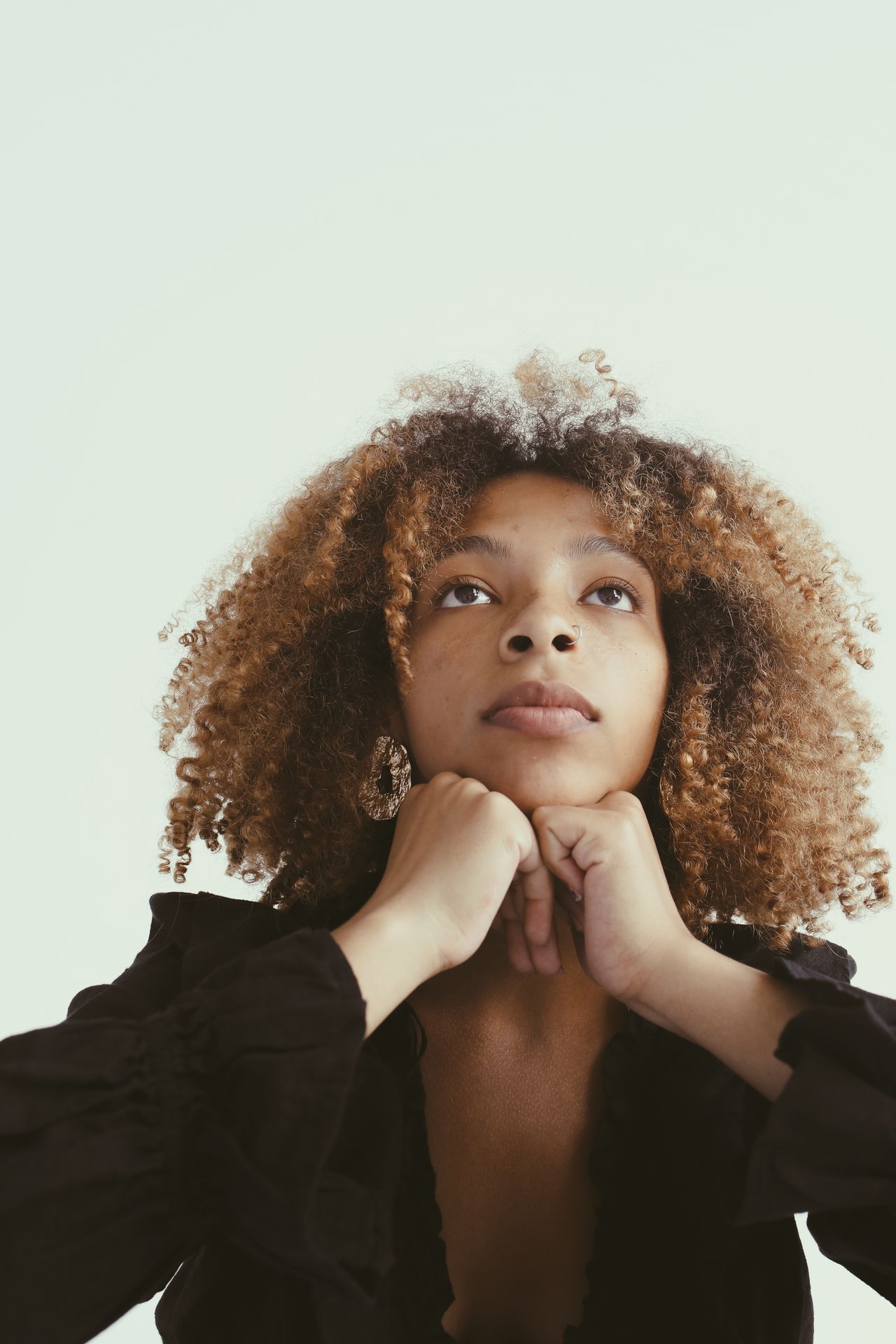
Photo: Polina Tankilevitch, via Pexels
The wash-and-go is the most honest curly style there is. You wash, you add product, and you let your real curl pattern show. It works best on type 3 and type 4 curls, but looser waves can wear a version of it too.
Start on soaking-wet hair. This is the golden rule of curly styling. Apply a leave-in conditioner first, then a curl cream, then a light gel. Work in small sections and smooth each product down the hair with your fingers. This layering is what keeps frizz away.
Scrunch the curls upward toward the scalp to help them form. Then dry with a microfiber towel or an old cotton T-shirt. Never rub with a normal bath towel. That rough rubbing is one of the biggest causes of frizz.
Finish by diffusing on low heat or air-drying. Once the hair is fully dry, scrunch again to break the gel cast. The result is soft, defined curls with real volume. This is the easiest style to pair with polished looks, and defined curls sit beautifully next to old money outfits for an elegant day out.
2. The Curly Bob

Photo: Roman Biernacki, via Pexels
A curly bob ends around the chin or jaw. It is bold, light, and full of bounce. It suits type 2C to 3C curls best, because the short length lets the curls spring up and show their shape.
The secret to a good curly bob is the cut itself. Ask for a dry cut or a curl-by-curl cut. This means the stylist cuts your hair dry, curl by curl, instead of cutting it wet and straight. Wet cutting is guesswork on curls, because the hair shrinks as it dries.
Ask for rounded layers that remove weight from the ends. Heavy ends pull curls down and create a triangle shape. Light ends let the curls lift. Refresh the bob in the morning with a water mist and a pea-sized amount of curl cream.
Style it once and it mostly takes care of itself. Push the front curls back with bobby pins for a change, or wear it with a deep side part for evening. Short curls also dry fast, which makes wash day much shorter.
3. Long Layered Curls

Photo: Oscar Calstrom, via Pexels
Long curly hair looks best with layers. Without layers, long curls hang heavy and the top goes flat while the ends puff out. Layers spread the volume evenly from roots to tips.
Ask your stylist for long layers cut into dry hair. The shortest layer should start around the chin or collarbone. This gives the top section room to curl instead of lying flat against your head.
For styling, divide the hair into four sections and apply product section by section. Long hair drinks up product, so do not be shy with the leave-in. Twist or finger-coil the front pieces around your finger for extra definition near the face.
Long curls need protection at night more than any other length. A loose pineapple or a satin bonnet keeps the length from tangling while you sleep. With a little care, long layered curls are the lowest-effort glamorous style there is.
4. The Pineapple Topknot

Photo: Kampus Production, via Pexels
The pineapple topknot gathers all your curls into a high, loose puff on top of the head. It is both a daytime style and the most famous nighttime trick in the curly world.
To wear it out, flip your head upside down and gather the hair loosely at the very top. Secure it with a satin scrunchie, not a tight elastic. Pull the puff gently outward with your fingers to make it full and round.
Leave a few curls out around the hairline for a soft frame. A little edge control smoothed on the hairline keeps it neat without flattening the texture. This style is wonderfully travel-friendly, and it pairs well with relaxed airport outfit ideas when you are on the move.
At night, the same pineapple protects your curls. Sleeping with the hair piled on top keeps it from being crushed under your head. In the morning, take it down, shake gently, and most of your definition is still there.
5. Curly Bangs

Photo: Meruyert Gonullu, via Pexels
Curly bangs are having a moment, and they deserve it. A curly fringe softens the face and gives even a simple wash-and-go a styled, finished look.
The key rule: bangs must be cut dry and longer than you think. Curls shrink as they dry, sometimes by several inches. A good stylist cuts curly bangs curl by curl, checking the length as they go.
Style the bangs separately from the rest of the hair. Use a tiny amount of curl cream and coil each bang curl around your finger while it is wet. Diffuse the bangs first, holding the dryer below them and lifting upward, so they dry with lift instead of lying flat on the forehead.
On non-wash days, refresh just the bangs. Wet them lightly, add a drop of leave-in, and reshape with your fingers. The rest of the hair can stay untouched. It takes two minutes and makes the whole head look freshly styled.
6. Protective Box Braids
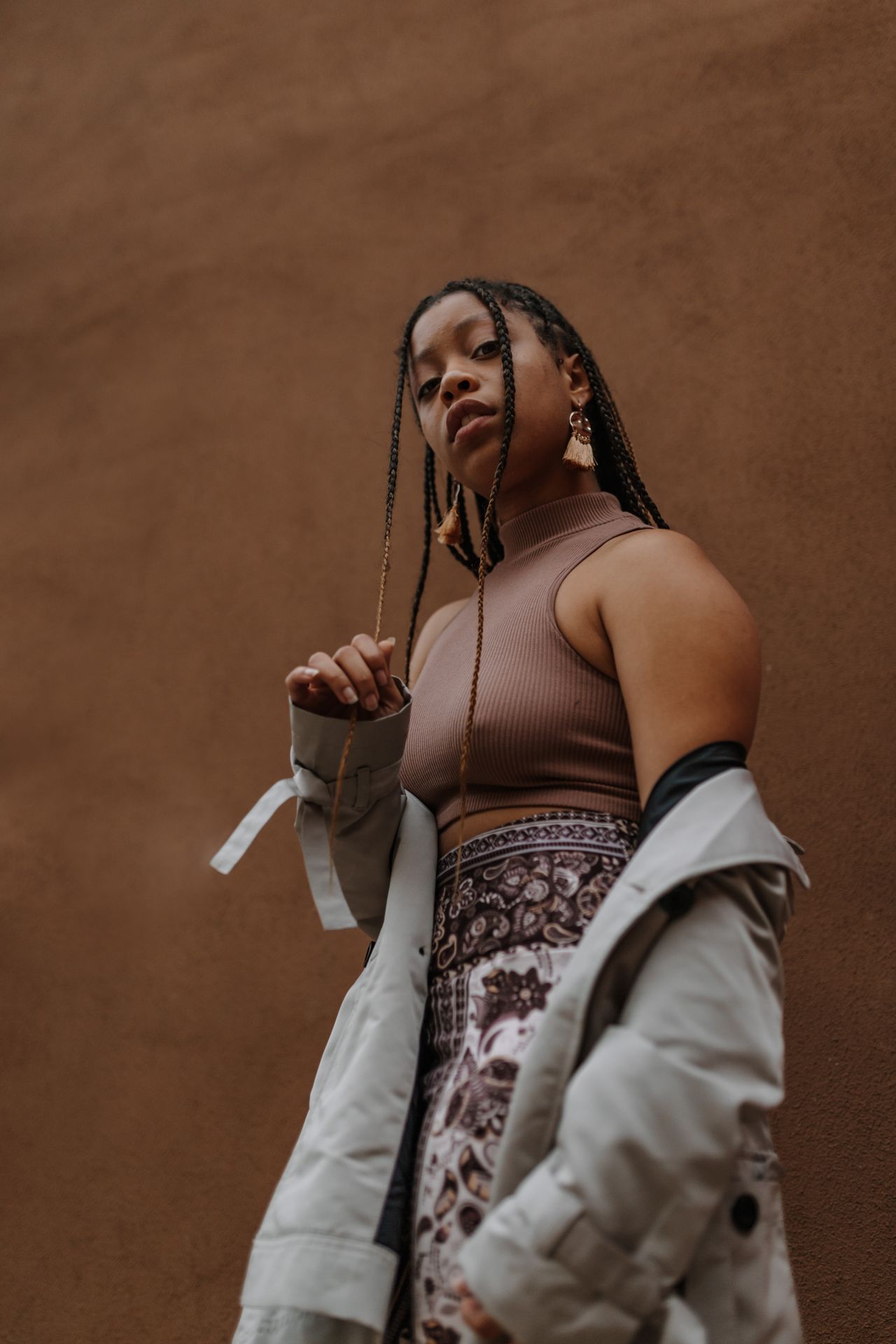
Photo: Ruth Malvoisin, via Pexels
Box braids are a protective style with a long history. The natural hair is braided into sections, which shields the ends from breakage and lets the hair rest and grow. They are a favorite for type 4 hair especially.
Before braiding, the hair must be clean, deep-conditioned, and fully detangled. This is the foundation everything else sits on. Braiding over dry, tangled hair causes damage instead of preventing it.
Keep the braids moisturized while you wear them. A light oil or braid spray on the scalp two or three times a week stops itching and flaking. Wash the scalp gently every one to two weeks with diluted shampoo.
Do not keep braids in longer than six to eight weeks. After takedown, deep-condition again and trim any weak ends before your next style. Worn correctly, braids are one of the best ways to grow long, healthy natural hair.
7. The Rounded Natural Afro

Photo: Fquasie, CC BY-SA 4.0, via Wikimedia Commons
The rounded afro is a statement of pride and a celebration of natural texture. It works beautifully on type 4 hair, where tight coils naturally build that full, round shape.
Shape matters more than length. Visit a barber or stylist who knows how to shape an afro with clippers and shears, rounding the silhouette evenly. An even shape is what makes an afro look intentional instead of overgrown.
Moisture is everything for this style. Use the LOC method: liquid (water or leave-in), then oil, then cream. This layering seals water into the hair shaft. Dry type 4 hair breaks easily, so deep-condition every wash day.
Pick the afro out gently with a wide-tooth comb or an afro pick, starting from the ends. Sleep in a satin bonnet to keep the shape. In the morning, fluff the roots and go. Few styles carry as much confidence as a well-shaped afro.
Curly Styles for Men
8. Taper Fade with Curly Top

Photo: Viviana Ivette BC, via Pexels
The taper fade with a curly top is the most requested curly cut for men, and for good reason. Clean faded sides meet natural texture on top. It looks sharp with almost no daily effort.
When you sit in the barber's chair, be specific. Say how short you want the fade to start, and say exactly how much length to keep on top. Bring a photo. Barbers cut dozens of heads a day, and a picture removes all guesswork.
Styling takes three minutes. On damp hair, work a small amount of curl cream through the top with your fingers. Let it air-dry or diffuse for a few minutes. Do not brush the top dry. Brushing dry curls turns them into frizz.
Get the fade cleaned up every two to three weeks. The top can grow freely between visits. This is the easiest curly cut to maintain, which is why so many men never leave it once they try it.
9. Curly Fringe / Textured Crop

Photo: Jeremy Bishop, CC0, via Wikimedia Commons
The textured crop keeps the curls short all over, with a fringe that falls forward over the forehead. It is a great choice for men with strong curl patterns who want the texture visible without the maintenance of longer hair.
Ask the barber to cut the top with texture, not blunt. Point-cutting or slicing into the ends removes bulk so the curls sit naturally instead of forming a heavy helmet. The fringe should be cut to sit just above or on the eyebrows when dry.
Style it forward. Apply a light matte product to damp hair and push the fringe forward with your fingers. Avoid heavy gels here. They make short curls look wet and crunchy instead of soft and natural.
This cut grows out gracefully. As the top gets longer over a month or two, it turns into a longer curly style on its own. That makes it a smart pick if you are thinking about growing your hair out.
10. Long Curly Hair

Photo: Yusuf Çelik, via Pexels
Long curly hair on men looks powerful when it is healthy. The journey takes patience, but the result is worth it. Shoulder-length curls suit oval, square, and long face shapes especially well.
The awkward phase is real. Between month three and month eight, the hair is too long to look neat and too short to tie back. Survive it with regular shape-up trims that clean the neckline and sides while the top keeps growing. Hats and headwraps help on bad days.
Once it is long enough, a loose man bun becomes your best friend. It keeps the hair out of your face at work or the gym while the length keeps growing. Do not pull it tight. Tight buns cause breakage along the hairline.
Long hair needs more moisture than short hair. Condition every wash, detangle gently with a wide-tooth comb while the conditioner is in, and sleep on a satin pillowcase. Treat the ends well and the length will take care of itself.
11. The Short Curly Afro

Photo: Alvaro A Novo, CC BY-SA 3.0, via Wikimedia Commons
The short curly afro is timeless. It shows off tight curl patterns in their natural glory, with a clean rounded shape that frames the face. It suits men with type 4 hair better than any other cut.
The shape is cut, not grown. A barber experienced with afro texture uses clippers and shears to build the round silhouette. Ask for an even, rounded shape with clean edges at the hairline and temples.
Keep it moisturized. A daily leave-in or a light butter keeps the coils soft and stops the dryness that leads to breakage. Pick it out with an afro pick for volume, but do it gently and never on dry, tangled hair.
Line-ups every one to two weeks keep the edges sharp. Between cuts, a satin durag at night preserves the shape. This is a low-styling, high-impact cut that never goes out of fashion.
Unisex Styling and Care
12. Diffusing for Volume and Definition
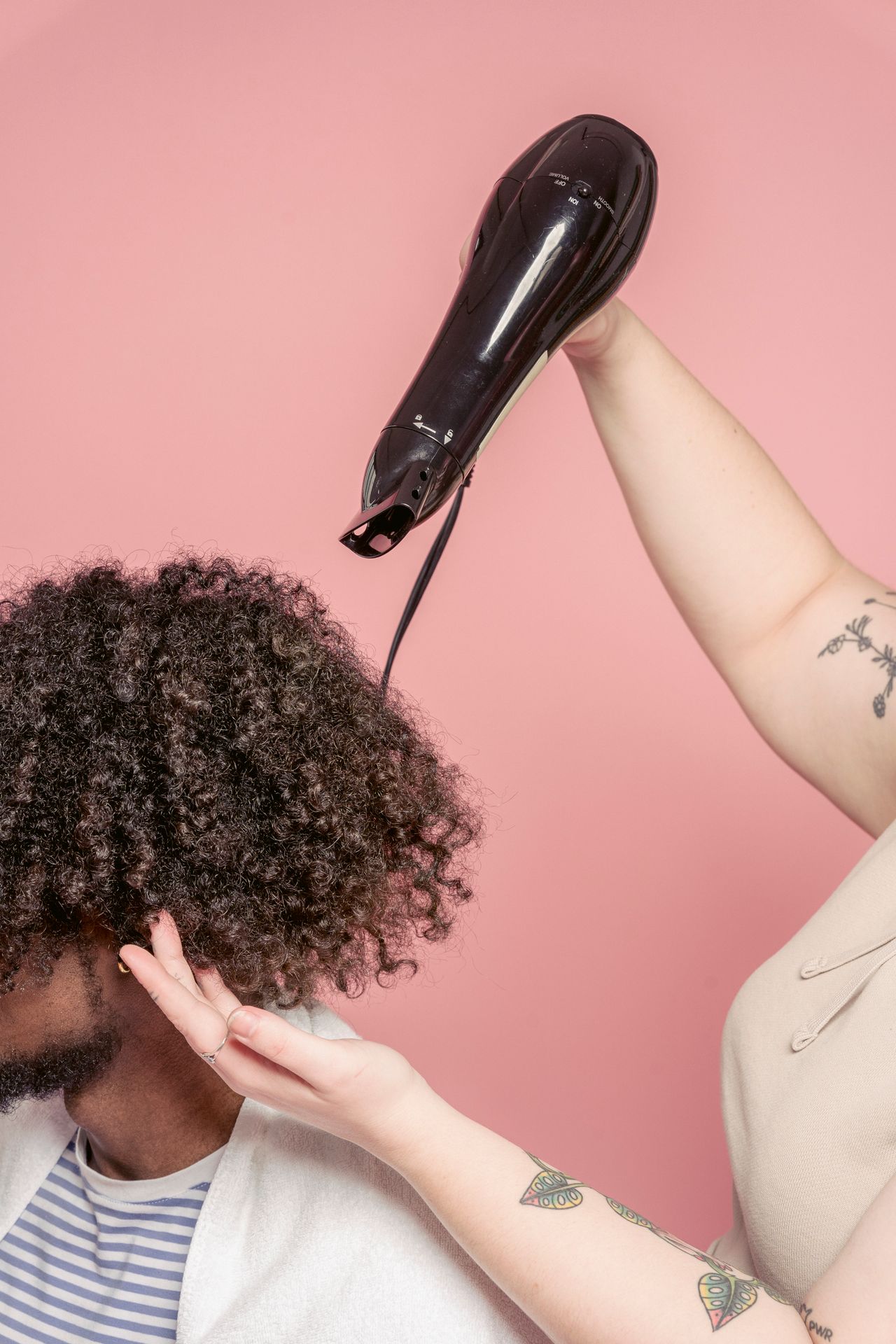
Photo: John Diez, via Pexels
Diffusing is not just drying. It is styling with heat and air. A diffuser attachment spreads the airflow so it does not blow your curl pattern apart, and it builds volume that air-drying alone cannot give.
Flip your head upside down or to the side. Cup sections of hair into the diffuser bowl and hold it at the roots for twenty to thirty seconds per section. Use medium heat and low speed. High speed creates frizz no matter what products you used.
Dry to about eighty percent, then let the rest air-dry. This hybrid method gives you the volume of diffusing with the gentleness of air-drying. Many curl specialists call this the best of both worlds.
Set up your drying station where you get ready each morning. If you style at a makeup vanity, keep the diffuser and a microfiber towel in a drawer there so the whole routine happens in one spot.
13. The Wash-Day Routine
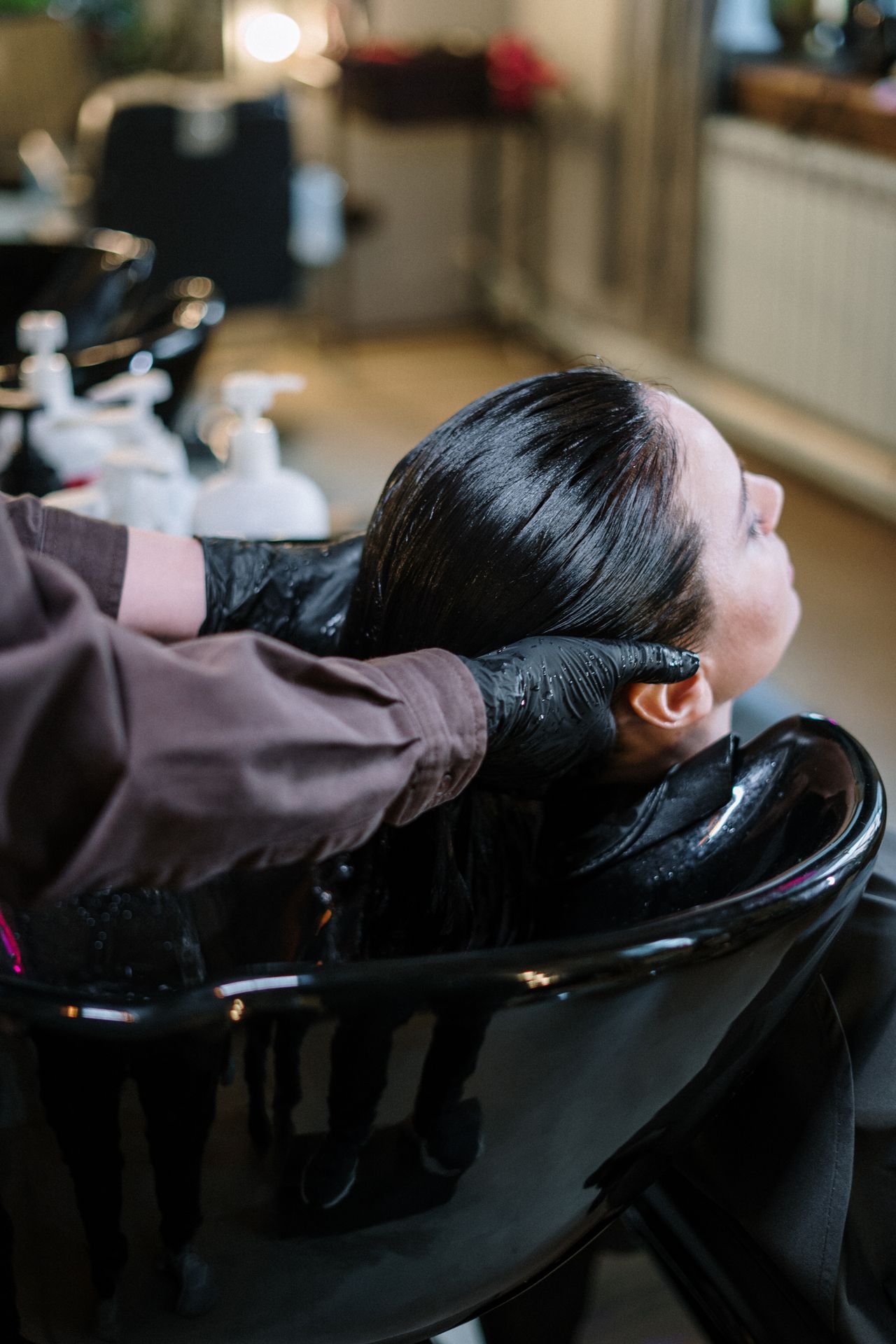
Photo: cottonbro studio, via Pexels
Every great curly style starts on wash day. A good routine is simple: cleanse, condition, detangle, style. Beginners should master these four steps before buying any fancy product.
Shampoo with a sulfate-free cleanser, focusing on the scalp. The lengths do not need scrubbing. The rinse water carries enough cleanser down the hair. Follow with a generous amount of conditioner and detangle with a wide-tooth comb while the conditioner is still in.
Rinse lightly, leaving a little conditioner in the hair. Then apply your stylers to soaking-wet hair: leave-in, then cream, then gel. This order matters. Each layer seals in the one before it.
Wash curly hair one to three times a week, not daily. Over-washing strips the natural oils that curls need. In winter, when indoor heating dries everything out, you may need richer creams. Cold-weather dressing helps too, and our turtleneck outfit ideas pair well with a cozy wash-day-at-home routine.
14. Nighttime Protection: The Pineapple and the Bonnet

Photo: Mikhail Nilov, via Pexels
What you do at night decides how your curls look in the morning. Cotton pillowcases absorb moisture and create friction. Friction means frizz and flattened curls by morning.
The pineapple method works for medium to long curls. Gather the hair loosely at the very top of the head with a satin scrunchie. Short hair that cannot pineapple goes under a satin bonnet instead. Both keep the curls from being crushed while you sleep.
A satin or silk pillowcase is the backup plan. It creates far less friction than cotton. Many people use both: pineapple plus a satin pillowcase for maximum protection.
In the morning, take the hair down and shake gently at the roots. Mist any flat spots with water, smooth a tiny amount of cream over them, and scrunch. This two-minute refresh is the difference between day-one hair and day-three hair.
Know Your Curl Type
Curl types run from 2A to 4C. Type 2 is wavy, type 3 is curly, and type 4 is coily. The letters A, B, and C describe how tight the pattern is within each type. So 2A is a loose wave and 4C is a tight coil.
To find your type, wash your hair and let it air-dry with no products in it. Then compare your natural pattern to a curl chart. Most people have two or even three patterns on one head. That is completely normal. Work with your dominant pattern.
Why does this matter? Because it guides your cuts and products. Fine 2A waves get weighed down by heavy creams and need light mousses. Tight 4C coils need rich butters and the LOC layering method to stay moisturized. Using the wrong products for your type is the cause of most curly hair frustration.
Also learn your porosity. Drop a clean strand of hair in a glass of water. If it floats, you have low porosity and products sit on top. If it sinks fast, you have high porosity and hair absorbs product quickly but loses moisture just as fast. Porosity tells you how much product to use and how often to deep-condition.
Wash-Day Routine That Works
Here is the beginner routine that the curly community swears by. It works for men and women, and for every curl type with small adjustments.
Step one: shampoo the scalp with a sulfate-free shampoo. Massage with your fingertips, not your nails. Rinse well.
Step two: apply conditioner generously from mid-length to ends. Detangle with a wide-tooth comb or your fingers, starting from the ends and working up. Never detangle dry curly hair. That is how breakage happens.
Step three: rinse lightly and apply stylers to soaking-wet hair. Leave-in conditioner first, then curl cream, then gel. Smooth each one down the hair in sections. Scrunch upward to form the curls.
Step four: dry. Plop the hair in a cotton T-shirt or microfiber towel for ten to fifteen minutes to remove extra water, then diffuse or air-dry. Once fully dry, scrunch out the gel cast for soft, touchable curls. That is the whole routine. Simple, repeatable, and it works.
Final Thoughts
These natural curly hairstyle ideas for men and women share one secret: healthy curls style themselves. The cut gives the shape, the products give the definition, and the routine protects it all. Get those three right and almost any style on this list will work for you.
Start with one change, not ten. Learn your curl type this week. Fix your wash day next week. Add nighttime protection the week after. Small steps beat big overhauls every time.
And remember that curls have personality. Some days they cooperate and some days they do not. That is not failure. That is the nature of natural texture, and it is exactly what makes it beautiful.
FAQs
How do I stop frizz on curly hair?
Style on soaking-wet hair, layer leave-in plus cream plus gel, and dry with a microfiber towel or T-shirt instead of a rough bath towel. Sleep on satin to keep frizz away overnight.
How do I find my curl type from 2A to 4C?
Wash your hair, let it air-dry with no products, and compare the natural pattern to a curl chart. Most heads have two or more patterns, so go with the dominant one.
What is a simple wash-day routine for beginners?
Shampoo the scalp with a sulfate-free cleanser, condition and detangle while wet, then apply leave-in, cream, and gel to soaking-wet hair. Diffuse or air-dry, then scrunch out the crunch.
How can men grow out curly hair without the awkward phase?
You cannot skip it, but you can survive it: get shape-up trims for the neckline and sides, wear hats on bad days, and use a loose man bun once the length allows. Be patient with shrinkage.
Should I use a diffuser or air-dry my curls?
Neither wins for everyone. A diffuser gives volume, speed, and definition; air-drying is gentler and keeps the pattern looser. Many people dry to eighty percent with a diffuser and air-dry the rest.
How do I refresh second-day or third-day curls?
Pineapple your hair or wear a satin bonnet at night. In the morning, mist with water, smooth a little cream or gel over flat spots, scrunch, and go.
What does 4B/4C hair need that other types do not?
Maximum moisture through LOC layering (liquid, oil, cream), detangling only on soaking-wet hair, protective styles, and minimal manipulation. Treat it gently and it will thrive.
What haircut should I ask for with curly hair?
Ask for a dry cut or curl-by-curl cut with layers for shape. Men should tell the barber the exact fade and top length and bring a reference photo.
Gallery

Photo: @photosbyphab, CC0, via Wikimedia Commons

Photo: Shixart1985, CC BY 2.0, via Wikimedia Commons
Photo: @photosbyphab, via Pexels
Photo: Monstera Production, via Pexels
Sources
- Curlsmith, "8 Curly Hairstyles for Your Curl Type" — https://curlsmith.com/blogs/style-hub/curly-hairstyles
- Forte Series, "38 Trending Curly Hairstyles for Men" — https://forteseries.com/blogs/hairstyles/curly-hairstyles-for-men
- Southern Living, "18 Easy-To-Do And Flattering Hairstyles For Curly Hair" — https://www.southernliving.com/fashion-beauty/hairstyles/hairstyles-for-curly-hair
- Community questions and routines drawn from r/curlyhair and r/malehairadvice discussions on frizz control, curl typing, wash-day basics, second-day refresh, and growing out curls.

No comments:
Post a Comment