Winter in Australia is not one kind of cold. A July morning in Hobart can sit near 3 degrees, while a winter day in Brisbane may still reach the low 20s, so the best winter wardrobe for pregnancy is built on layers you can add or remove, not on one heavy outfit. The idea is simple: a soft base layer that stretches over your bump, a warm middle layer, and a coat or cardigan that you can leave open. When every layer has stretch and none of them digs in at the waist, you stay warm without feeling squeezed.
Many readers search for this topic as 'maternity outfits winter', and the questions behind that search are almost always the same: what actually fits a growing bump, what keeps you warm without buying a whole new wardrobe, and what shoes are safe when your balance and your feet have both changed. This guide answers those questions in plain language, with ten outfit ideas that work for real life in Australia, from the school run and the office to a dinner out and a weekend walk, plus honest notes on fabrics, fit, footwear and cost.
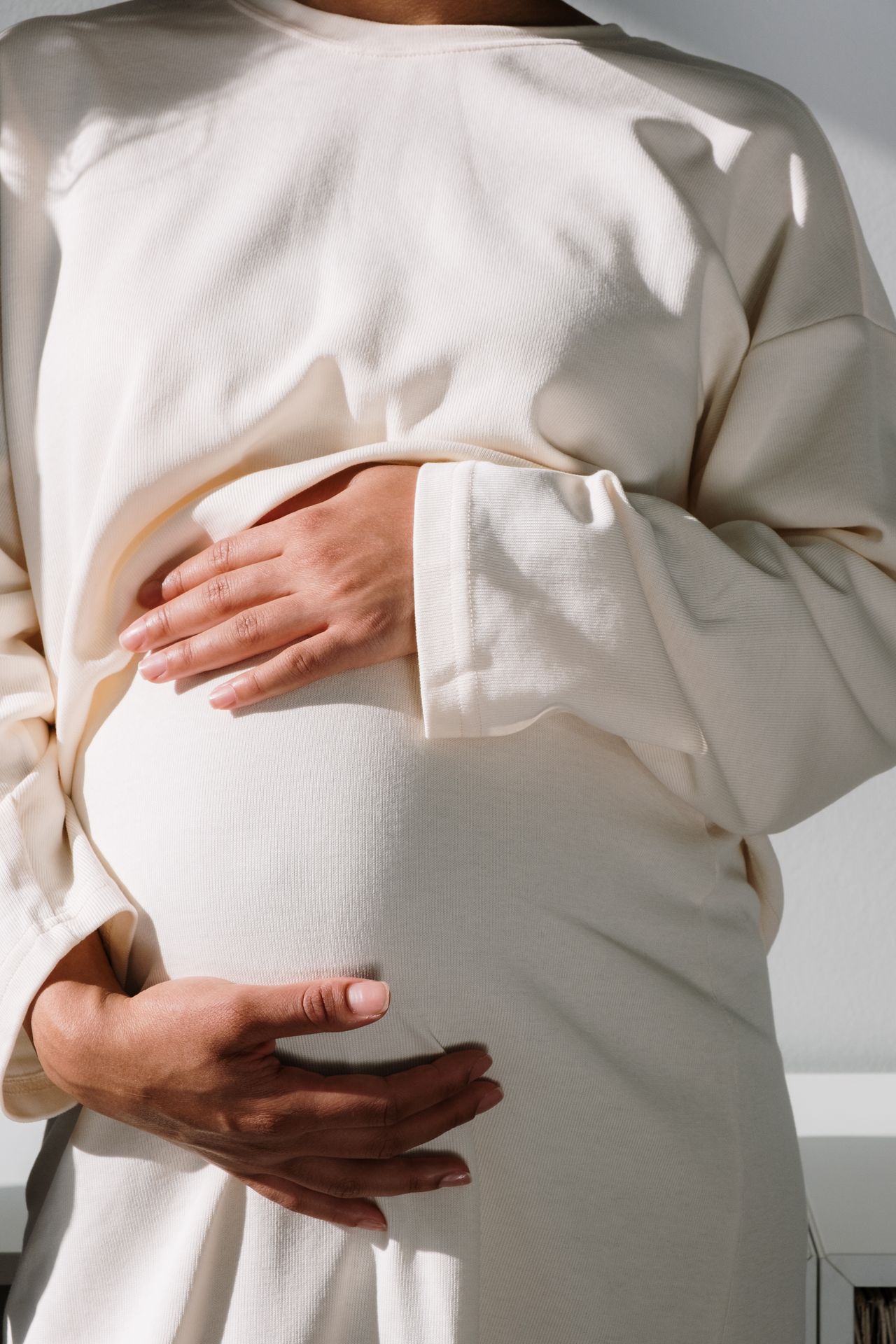
Table of Contents
- 1. The Open Long Coat Over a Hoodie
- 2. The Marled Knit Sweater Dress
- 3. The Cosy Dress-and-Blanket Day at Home
- 4. The Black Long-Sleeve Maxi
- 5. The Fitted Red Dress, Layered for Winter
- 6. The Flowing Burgundy Maxi
- 7. The Long-Sleeve Dress in a Quiet Neutral
- 8. The Royal Blue Lace Dress
- 9. The Sparkling Pink Occasion Dress
- 10. The Red Evening Gown, Worn Indoors
- FAQs
- Final Thoughts
- Sources
- Gallery
1. The Open Long Coat Over a Hoodie

This is the single most useful winter pregnancy outfit, and it does not require a special maternity coat at all. Wear your usual hoodie or a soft long-sleeve top, add stretchy dark trousers or maternity leggings, and finish with a long coat or trench that you simply leave open over your bump. The coat gives you warmth and a finished shape, while the open front means there is nothing pulling across your belly, nothing to do up, and nothing that stops fitting in the third trimester. A tan or camel coat like the one in the photo works with almost everything you already own, and it looks just as good over jeans as it does over a dress.
The practical details matter more than the brand. Choose a coat that is one size up from your pre-pregnancy size, or one with a loose, straight cut, so it hangs cleanly when open rather than flapping around you. Check that the shoulders fit well, because that is the part you cannot adjust, and make sure the sleeves are long enough to cover your wrists when your arms are by your sides. In most Australian cities a water-resistant trench or a mid-weight wool-blend coat is enough for winter, and you can add a thin thermal top underneath on colder days in Canberra, Hobart or the Victorian highlands. Expect to spend around AUD 120–250 for a good non-maternity coat you will keep wearing after the baby arrives, which is far better value than a maternity-only coat you wear for a few months.
2. The Marled Knit Sweater Dress

A knit sweater dress is the closest thing winter pregnancy dressing has to a one-piece solution. The marled grey knit in this photo shows why: the fabric stretches gently over the bump, there is no waistband to dig in, and the long sleeves and knee-covering length keep you warm without extra layers indoors. It is an outfit you can put on in two minutes, which matters on mornings when bending down feels like a project. Pair it with opaque tights and flat ankle boots for errands, or with leggings underneath on a cold day, and you have a complete outfit with almost no decisions left to make.
When you shop for one, look for a knit with real stretch and good recovery, which means it springs back after stretching rather than bagging out at the belly by lunchtime. A cotton-blend or merino-blend knit is usually kinder to sensitive pregnancy skin than pure acrylic, and a slightly looser, straight cut will last longer into the pregnancy than a very fitted one. The same balance of knit and skirt shapes that works in everyday fashion applies here too: our guide to skirt sweater outfit ideas shows how a soft knit pairs with different skirt lengths and boots, and the same proportions work over a bump. Budget around AUD 60–150 for a good maternity or stretch knit dress, and choose a neutral colour such as grey, charcoal or oatmeal so it pairs with every coat and scarf you own.
3. The Cosy Dress-and-Blanket Day at Home
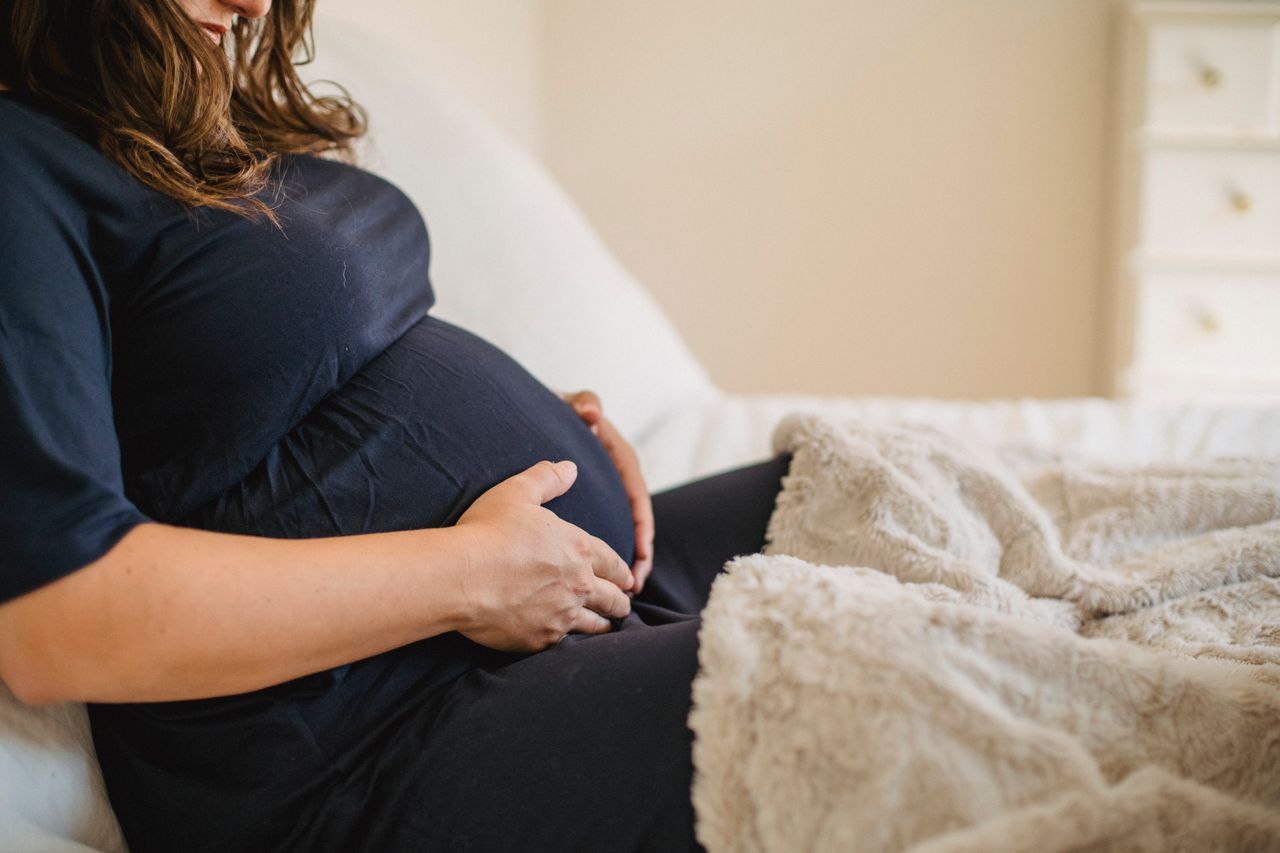
Not every winter outfit is for going out, and the at-home outfit deserves just as much thought, because this is where you will spend most of your time in the later weeks. A soft, loose navy dress like the one in this photo, worn with warm socks and a soft blanket over your legs, is a better home uniform than track pants with a tight waistband. The dress lets air move, it does not press on your belly when you sit, and it still looks tidy if someone drops by. Keep a long, open cardigan by the door of the room you sit in most, so you can add warmth without getting up to change.
The fabric rules for home wear are the same as for going out, only more forgiving. Choose breathable cotton or bamboo blends that do not make you sweat when the heater is on, and avoid anything with a thick elastic waistband that rolls down under your bump. If your feet swell, which is very common in the second half of pregnancy, keep a pair of soft slippers with a low, wide sole by the bed and by the front door, so you are never tempted to walk around in socks on a cold floor. A home outfit that is genuinely comfortable also helps you rest better, and rest is not a luxury in pregnancy: it is part of looking after yourself and the baby.
4. The Black Long-Sleeve Maxi
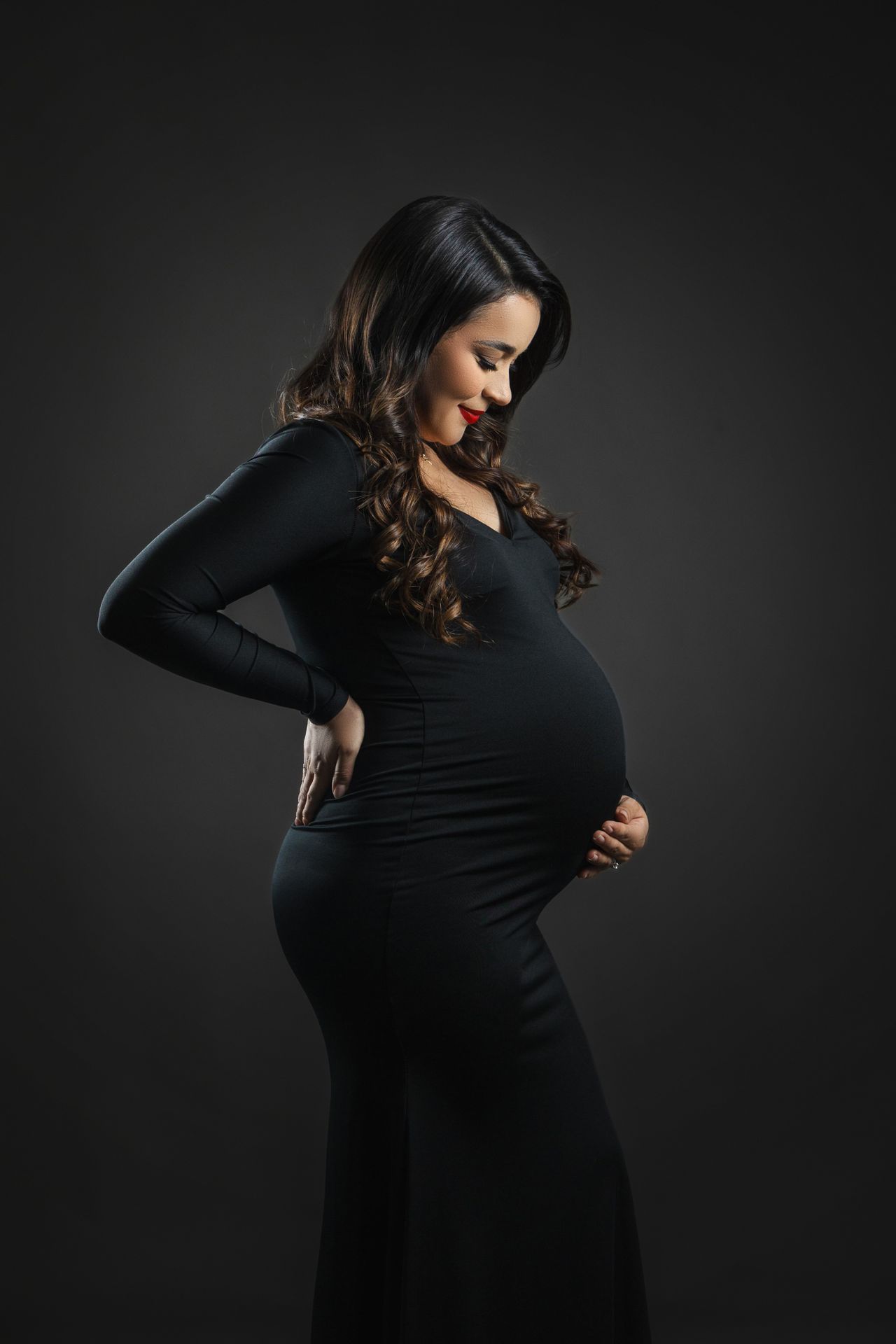
A black long-sleeve maxi dress is the hardest-working dress in a winter pregnancy wardrobe. The fitted stretch fabric in this photo skims the bump instead of hiding it, the long sleeves cover your arms, and the full length keeps your legs warm with tights or leggings underneath. It works for a dinner, a family gathering or a work event, and it needs almost nothing else: simple earrings, flat shoes or low boots, and a coat over the top for the trip there. Black is also forgiving, which is a genuine comfort when your body is changing week by week and you do not want to think about your outfit.
Fit is everything with a dress like this, so try it on sitting down as well as standing, because a dress that feels fine upright can pull across the belly when you sit for a meal. Look for a stretch jersey with at least a little elastane, a neckline you can nurse in later if that matters to you, and a hem that clears the ground in the shoes you will actually wear, not in heels you will not. If the dress is thin, layer a thermal singlet underneath rather than sizing up, because a thermal adds warmth without changing the shape of the dress. A good stretch maxi costs around AUD 70–160, and black means you can wear it again and again with different scarves, coats and jewellery.
5. The Fitted Red Dress, Layered for Winter
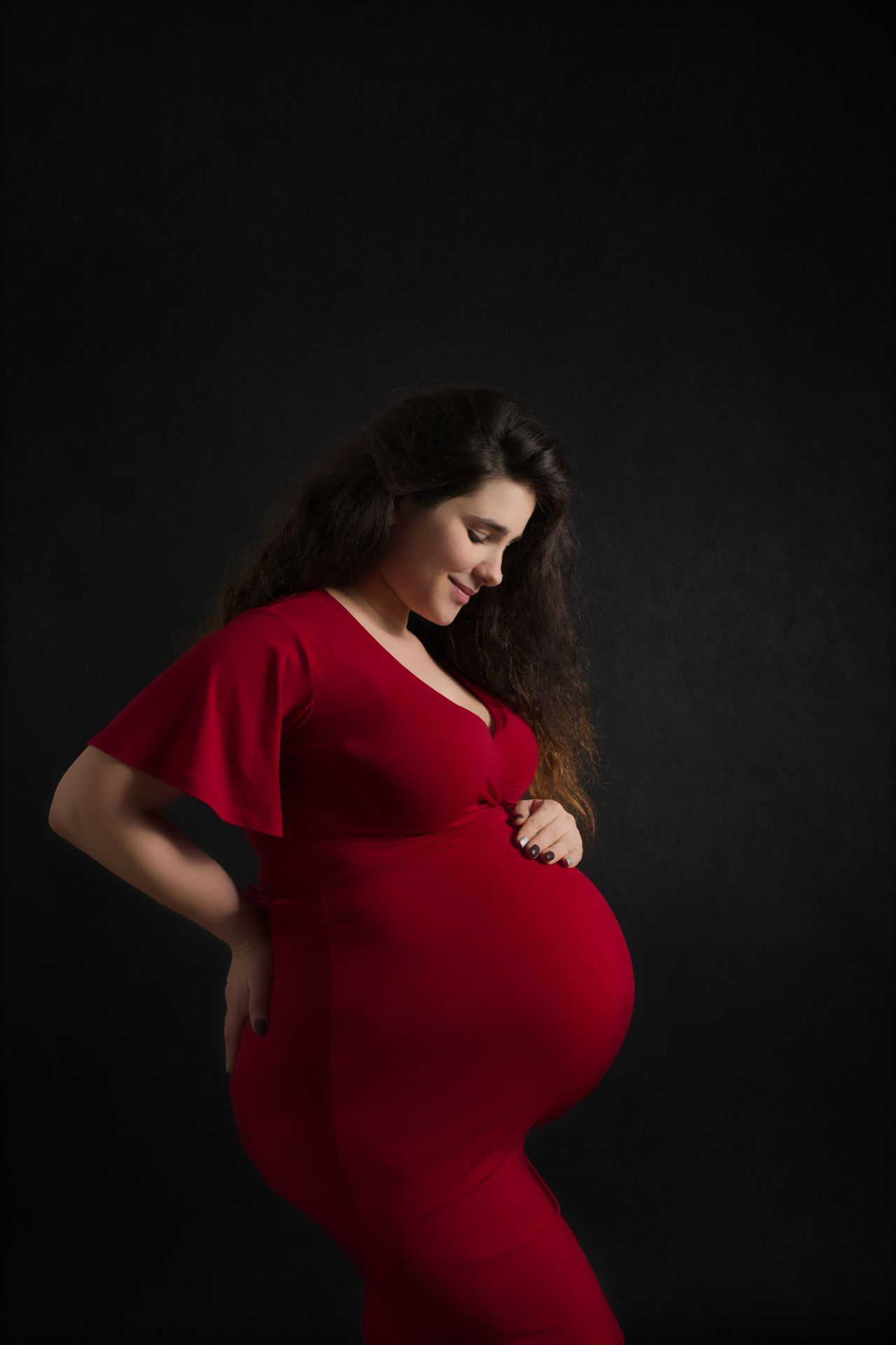
A fitted stretch dress in a strong colour such as red is a wonderful confidence piece in pregnancy, because it celebrates the bump instead of covering it up. The dress in this photo has short sleeves, so for winter it is an indoor dress, or a dress you wear with a long open cardigan or a coat over the top. That is not a flaw: it is how winter dressing works. The dress does the talking, and the layer does the warming. A long black or camel cardigan over a red dress looks polished, keeps your arms warm, and can be taken off indoors when the heating is on.
When you buy a fitted dress for pregnancy, check the fabric content before the colour. A dress with stretch that holds its shape will still look smooth at the end of the day, while a cheap, thin stretch fabric can go baggy at the knees and belly after a few hours. The waist seam, if there is one, should sit above the bump, empire-style, rather than across it, because a seam across the belly will ride up and dig in as you move. Wear it with low block-heel boots or flat boots with grip, since balance changes in pregnancy and a slippery sole is a real risk on wet winter footpaths. If you love colour, this is also the dress to try in burgundy, forest green or navy, all of which pair beautifully with a dark winter coat.
6. The Flowing Burgundy Maxi
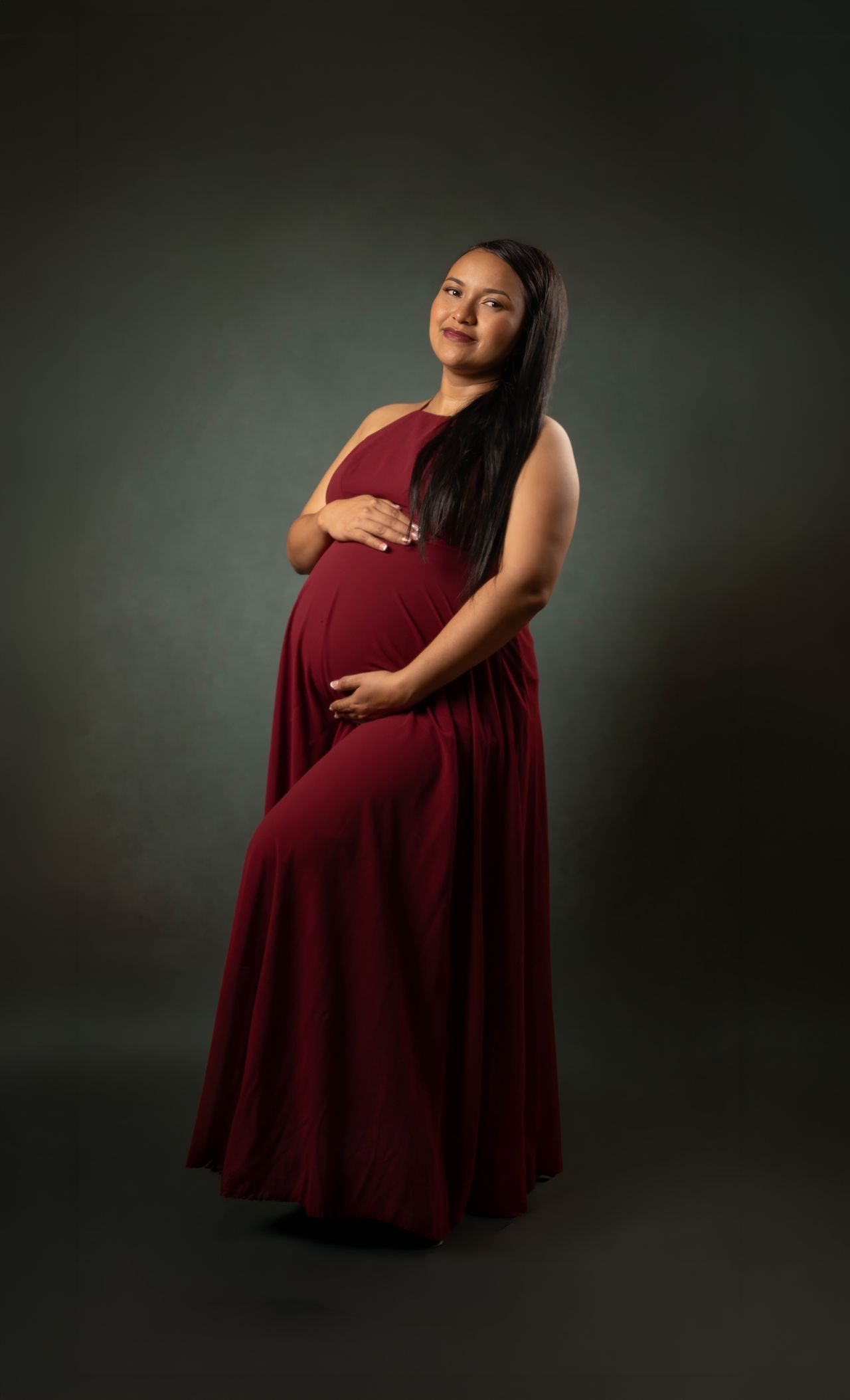
A flowing maxi dress in a deep shade such as burgundy is one of the most comfortable things you can wear while pregnant, because nothing about it is tight. The fabric falls from above the bump and moves when you walk, which feels wonderful when fitted clothes start to irritate you. The dress in this photo is sleeveless, so treat it as a winter base dress: wear a fitted long-sleeve top underneath, or a soft wrap or coat over it, and you get the comfort of a flowing dress with the warmth of a proper winter outfit. Burgundy is also a very flattering winter colour, rich without being loud, and it suits most skin tones.
Length is the detail to get right with a maxi. The hem should just clear the ground in your usual flat boots, because a hem that drags will get wet and dirty on winter footpaths, and a hem that is too short can ride up over the bump as the pregnancy grows. If you are between sizes, size up: a flowing dress looks better slightly loose than slightly tight, and you can always add a thin belt above the bump if you want more shape. For very cold days, add fleece-lined tights underneath, which are invisible under a maxi but add a surprising amount of warmth. A flowing maternity maxi usually costs around AUD 80–180, and it is one of the few pregnancy pieces that also works well in the months after birth if the top allows easy nursing access.
7. The Long-Sleeve Dress in a Quiet Neutral
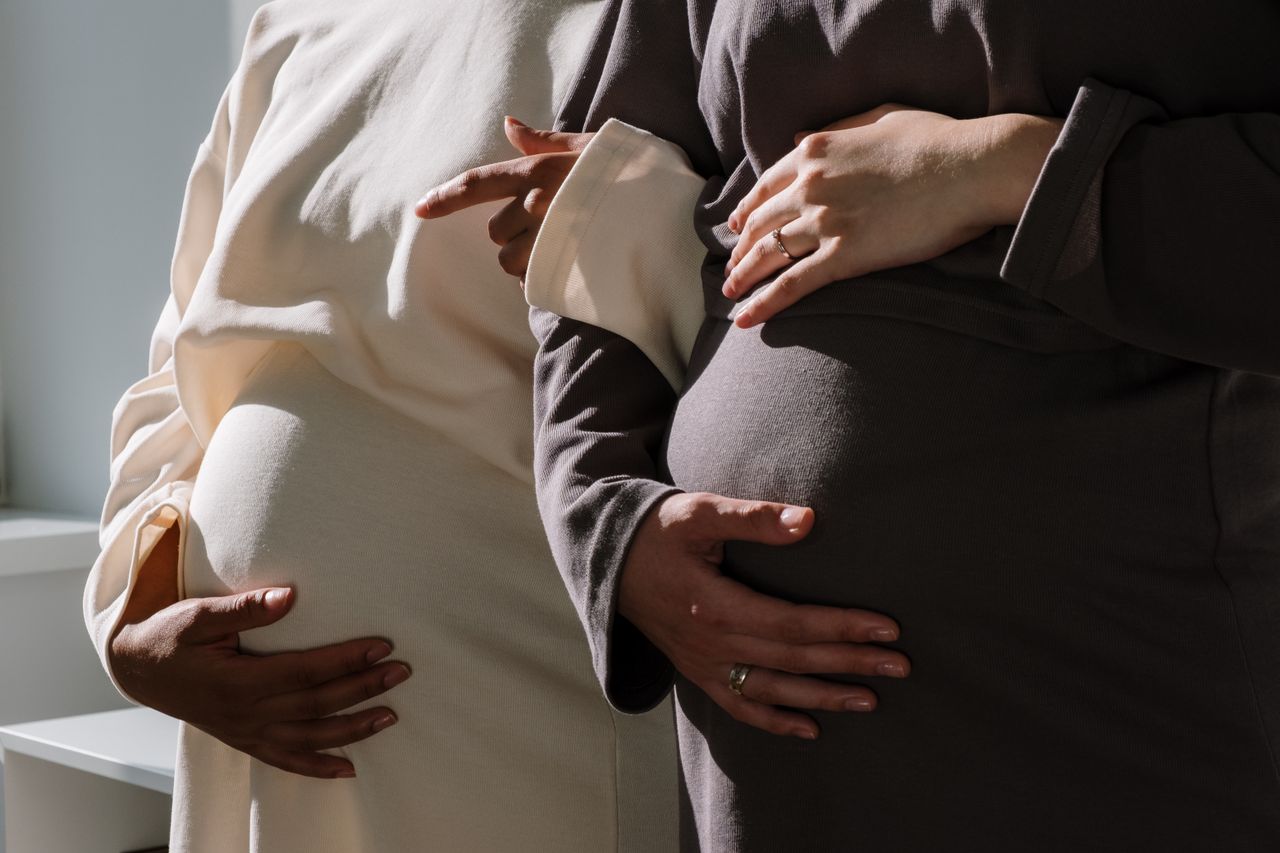
There is a reason so many winter maternity wardrobes are built on cream, grey, charcoal and navy: when every piece is a quiet neutral, everything matches, and getting dressed stops being a puzzle. The two long-sleeve dresses in this photo show the idea perfectly. One cream, one dark grey, both simple, both with long sleeves, both cut to let the bump lead the shape. A dress like this is a blank canvas: add a coloured scarf one day, a long coat the next, boots or sneakers depending on where you are going, and the outfit looks different each time without any extra spending.
Neutrals also solve the colour question that many pregnant women ask, which is whether to wear bright colours or dark ones. The honest answer is that muted, slightly greyed colours are usually the most flattering in winter light, and they hide the small marks and spills of everyday life better than bright white or pale pastels. If you want help choosing your own best muted shades, our guide to soft summer celebrity looks explains how dusty blues, mauves and soft greys flatter without shouting, and the same idea works beautifully for maternity dressing. Buy your neutral dresses in a fabric you can wash at home, because in pregnancy you will wash them often, and a dress that needs dry-cleaning will spend more time in the laundry bag than on you.
8. The Royal Blue Lace Dress
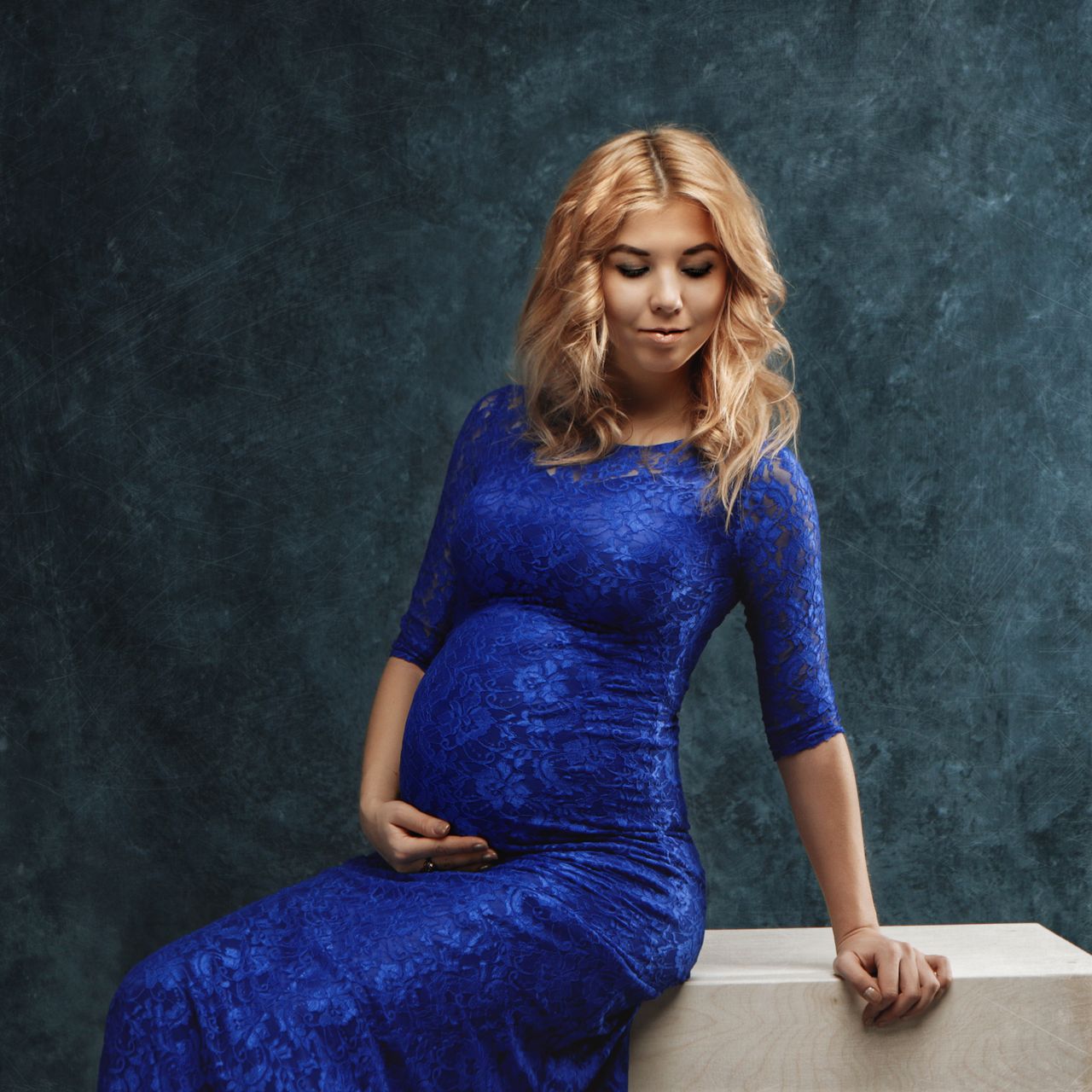
Lace is not an obvious winter fabric, but a lace dress with sleeves and a long length, like the royal blue one in this photo, is a lovely choice for a winter lunch, a baby shower or a family celebration. The lace gives the outfit texture and interest, so you do not need much jewellery, and the three-quarter sleeves and full skirt give you far more coverage than a sleeveless party dress. Because lace can be slightly scratchy, check that the dress is lined through the body, and wear a soft camisole underneath if the lining is thin, which also adds a little warmth.
Colour is the other reason this dress works. Royal blue is a strong, clear colour that photographs beautifully and lifts winter skin that can look pale in the colder months, but it is still dark enough to pair with a black coat and black boots for the journey. If you are buying a lace dress for pregnancy, make sure the lace itself has stretch, or that the dress has a stretch lining, because non-stretch lace will not grow with you and will feel tight across the bump by the third trimester. Keep the shoes low and the bag small, and let the dress be the star. A lined stretch lace dress usually costs around AUD 90–200, and it is worth trying on with the coat you plan to wear over it, so you know the two work together.
9. The Sparkling Pink Occasion Dress
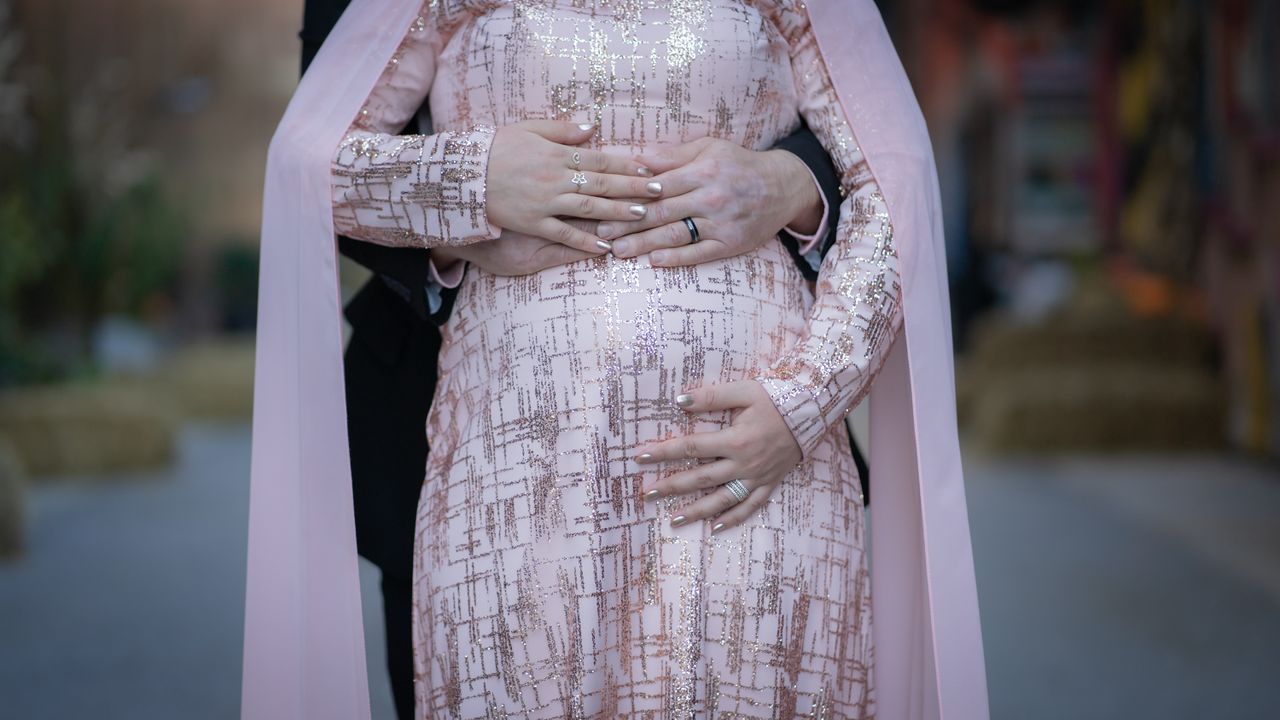
Some winter events call for something special, and pregnancy is no reason to sit them out in a shapeless outfit. The sparkling pink long-sleeve dress in this photo, worn with a soft veil, shows how an occasion dress can still be comfortable: long sleeves for warmth, stretch fabric over the bump, and a fitted shape that celebrates rather than hides the pregnancy. For a wedding, an engagement party or a special dinner, a dress like this lets you feel dressed up without feeling restricted, and the sparkle means you need almost no other decoration.
The winter trick with an occasion dress is planning the journey, not just the event. Wear a long, warm coat over it to and from the venue, and take the coat off only once you are inside, so you arrive warm and comfortable rather than chilled. Choose shoes you can stand in for hours: low block heels or dressy flats with a cushioned sole, and pack a pair of soft flats in your bag for the end of the night. If the dress has a train or a veil, practise walking and sitting in it at home first, because a long hem and a growing bump together can trip you up on stairs. Hire is also worth considering for occasion dresses, since Australian maternity hire services often charge around AUD 80–150 for a designer dress, which is far less than buying a dress you may wear once.
10. The Red Evening Gown, Worn Indoors
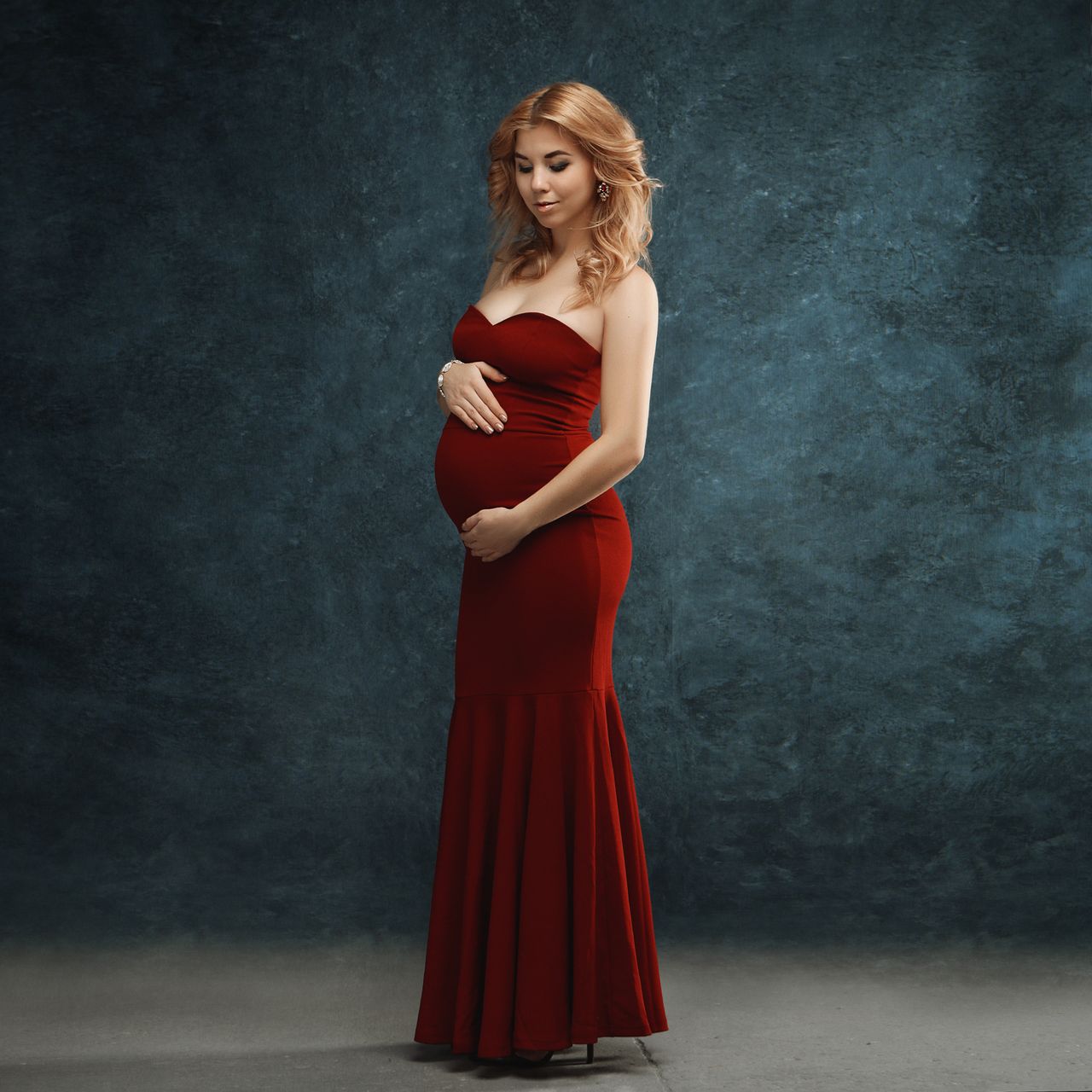
A full-length evening gown in a rich red is the boldest look in this guide, and it belongs indoors: at a dinner, a celebration or a photoshoot, where the heating is on and the dress can be enjoyed properly. The strapless neckline and fitted bodice in this photo show off the bump beautifully, and the long skirt gives the whole outfit a sense of occasion that a shorter dress cannot match. If you are planning maternity photos in winter, a gown like this is a popular choice precisely because it looks timeless in photographs, long after the trends of the year have faded.
Because the gown is strapless, winter planning matters even more. Bring a wide wrap or pashmina for the car, the walk from the car park, and any cold room at the venue, and choose a wrap in a colour that works with the dress, such as black, charcoal or cream, rather than a second bright colour that fights with the red. Support matters too: a well-fitted strapless gown should stay up on its own, but a good maternity bra underneath, fitted properly, will make a long evening far more comfortable. Keep the evening short if you are in the third trimester, sit down often, and remember that the best maternity outfit is always the one you can still enjoy at the end of the night, not just at the start.
FAQs
Do I need to buy special maternity clothes for winter?
Not as many as you might think. Most women do best with a small number of true maternity pieces, such as stretch trousers or leggings and one or two dresses, plus their usual coats, cardigans and scarves worn open or in a larger size. Spend your money on pieces with stretch and soft fabric, and save the rest for good footwear and warm layers you will keep wearing later.
How do I stay warm without overheating?
Layer in threes: a thin thermal or singlet, a soft knit or dress, and a coat or cardigan you can remove. Pregnancy raises your body temperature, so you will often feel warm indoors even when it is cold outside. Layers let you adjust in seconds, which is far more comfortable than one very thick jumper you cannot take off.
What shoes are safest in winter while pregnant?
Flat or low-heeled boots with a good grip, a wide fit and a sole that is easy to slip on are the safest choice. Feet often swell and balance changes, so avoid high heels, smooth soles and shoes you have to bend down to lace. If your usual boots feel tight, go up half a size rather than squeezing in.
Can I wear my normal coat through the whole pregnancy?
Yes, in most cases, if you wear it open over your bump. A coat that fitted before pregnancy will usually still fit at the shoulders and arms, which are the parts that matter, even when it no longer does up at the front. Only buy a new coat if your old one pulls at the shoulders or the sleeves have become too short.
What should I wear to a winter baby shower or wedding while pregnant?
Choose a dress with stretch, sleeves or a wrap for warmth, and a length you can walk in safely. A long-sleeve or three-quarter-sleeve dress in a rich colour, with low boots and a coat for travel, is comfortable and looks polished. Avoid very tight fabrics, very long hems and high heels, and bring a wrap for cold rooms.
Final Thoughts
Winter dressing while pregnant is not about buying a new wardrobe. It is about choosing soft, stretchy layers, a coat you can wear open, shoes that keep you steady, and one or two dresses that make you feel like yourself. Start with what you already own, add a good knit dress and a pair of warm, well-fitting boots, and build from there. The best outfit is the one that keeps you warm, lets you move freely, and still feels like you, because comfort and confidence are not opposites in pregnancy: they are the same thing. Take your time, try things on sitting down as well as standing, and trust how a piece feels on your body more than how it looks on the hanger.
Sources
- Mama Rentals: What to Wear This Winter — Maternity Dresses for Baby Showers, Weddings and Photoshoots
- Huggies: Maternity Clothes Essentials for Every Season
- The Bump: 15 Fall and Winter Maternity Dresses to Buy
- Silver Bridge Co: What to Wear for a Winter Maternity Session
Gallery

No comments:
Post a Comment