Blue is one of the safest and prettiest colours for a maid of honour, because it photographs well, suits almost every skin tone, and never competes with the bride in white. Whether the wedding is a garden ceremony in Brisbane, a beach wedding in Byron Bay, or a formal evening reception in Melbourne, there is a shade of blue that fits the setting. This guide covers the most useful shades, fabrics, lengths and styling choices, so the maid of honour can look special, feel comfortable, and still look like part of the bridal party. It is often searched as 'maid of honor dresses blue', and the ideas below answer the questions Australian brides and maids of honour ask most: which shade, which fabric, what to spend, and how to make one dress stand out from the rest of the party.
In Australia, the practical details matter as much as the colour. Summer weddings can reach 35 degrees, garden venues mean grass and uneven ground, and a long day usually runs from a midday ceremony to a late-night dance floor. That is why this guide talks about breathable fabrics, hems that clear the ground, shoes that work on lawn, and prices in Australian dollars, including what to allow for alterations. Off-the-rack bridesmaid dresses from Australian retailers commonly start at about AUD 149, while made-to-order or boutique gowns often run from AUD 300 to AUD 800 or more, before shoes and alterations. Order early, ask for a fabric swatch, and try the dress on with the shoes you will actually wear, because blue looks different in shop lighting, daylight, and evening light.

Table of Contents
- 1. Start With Dusty Blue, the Softest Shade
- 2. Navy Satin for a Formal Evening
- 3. Royal Blue for a Bold, Joyful Look
- 4. Dusty Blue Lace for a Romantic Ceremony
- 5. A Deep Petrol Blue Gown for Black-Tie Style
- 6. An Electric Blue Maxi for a Long, Easy Day
- 7. A Navy Floral Maxi for Garden Weddings
- 8. A Navy Tiered Midi for Daytime Weddings
- 9. Navy Sequin for an Evening Reception
- 10. Pale Blue Linen for a Relaxed Outdoor Wedding
- FAQs
- Final Thoughts
1. Start With Dusty Blue, the Softest Shade
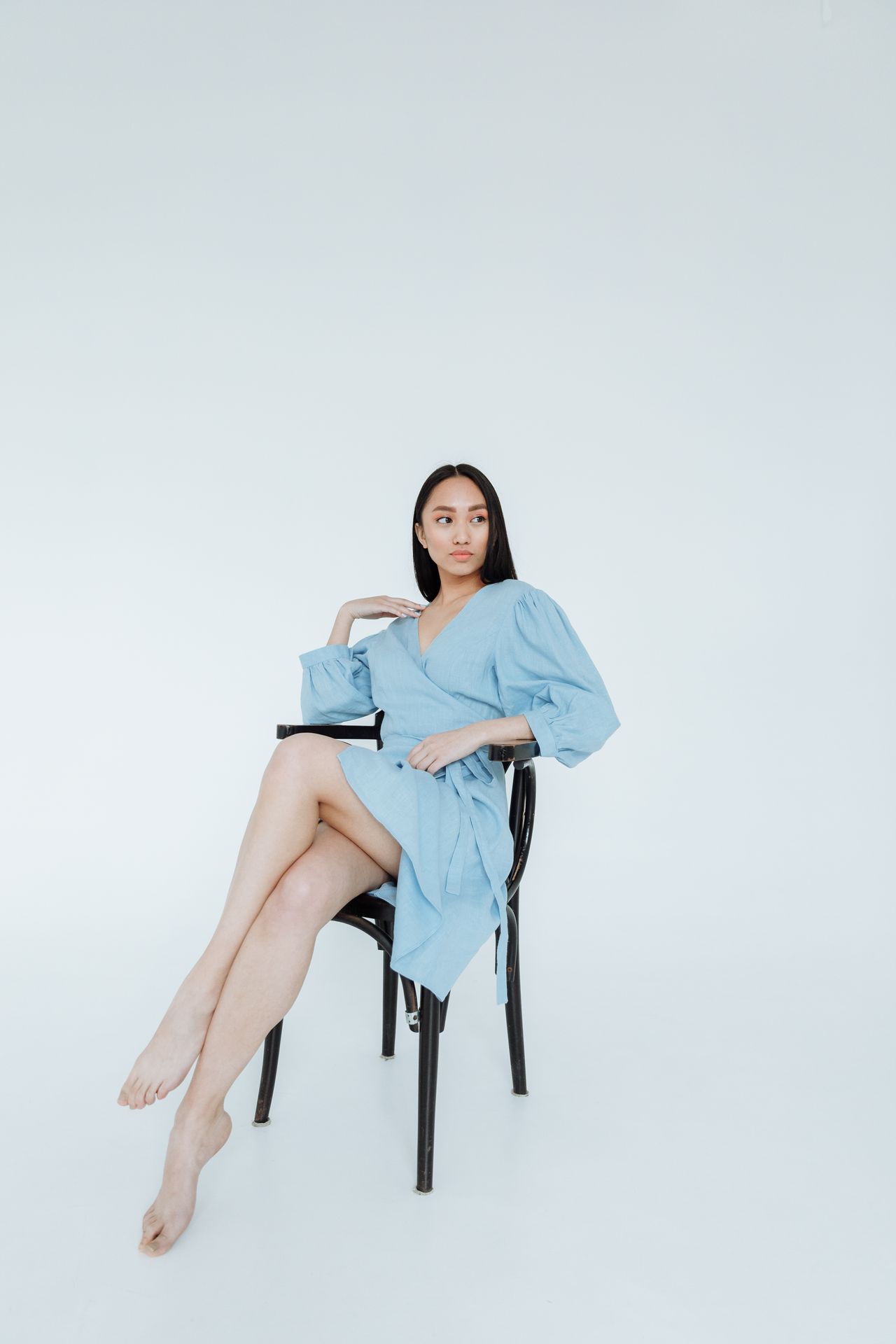
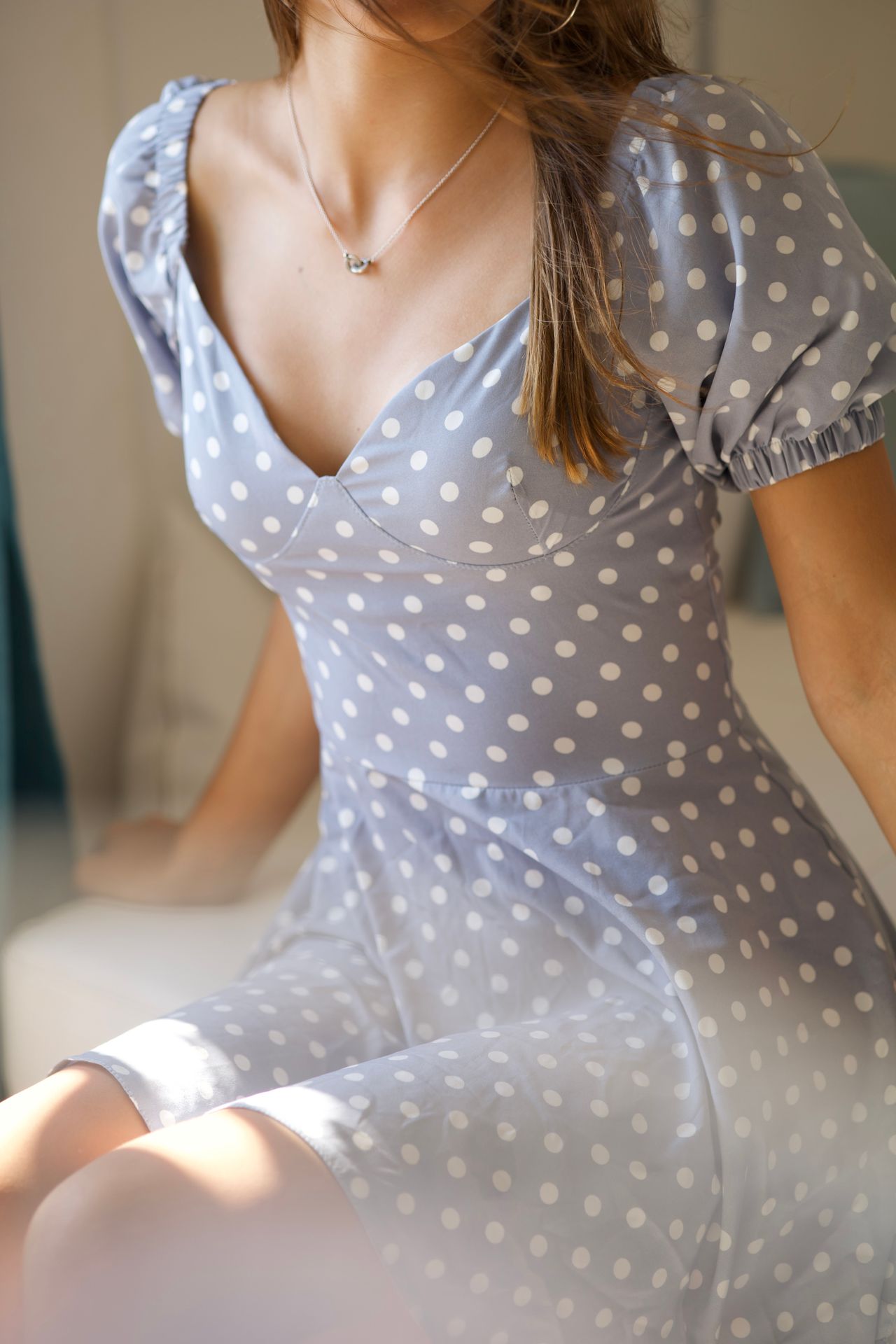
Dusty blue, a soft blue-grey, is the shade most brides choose first, and for good reason. It looks gentle in photographs, it sits beautifully beside white and cream flowers, and it suits warm, cool and neutral skin tones without washing anyone out. A wrap dress in this shade, like the light blue style pictured, is a kind and practical choice for a maid of honour, because the tie waist can be adjusted on the day and the V-neckline suits most bust sizes. For a garden or beach wedding, choose dusty blue in chiffon or a light crepe, and keep the jewellery simple: silver or pearl earrings, a fine bracelet, and nude or silver shoes.
When you order dusty blue, ask for a fabric swatch before you commit, because this shade varies more than navy between brands. One label's dusty blue can look grey in daylight, while another's can look almost sky blue. Hold the swatch next to the bride's dress and the bridesmaids' bouquets in daylight, not just under shop lights, and check it in a photograph too, because cameras can cool this shade further. If the rest of the party is in the same dusty blue, the maid of honour can stand out with a slightly different neckline, a small hairpiece, or a bouquet with one extra flower, rather than a whole different colour.
2. Navy Satin for a Formal Evening
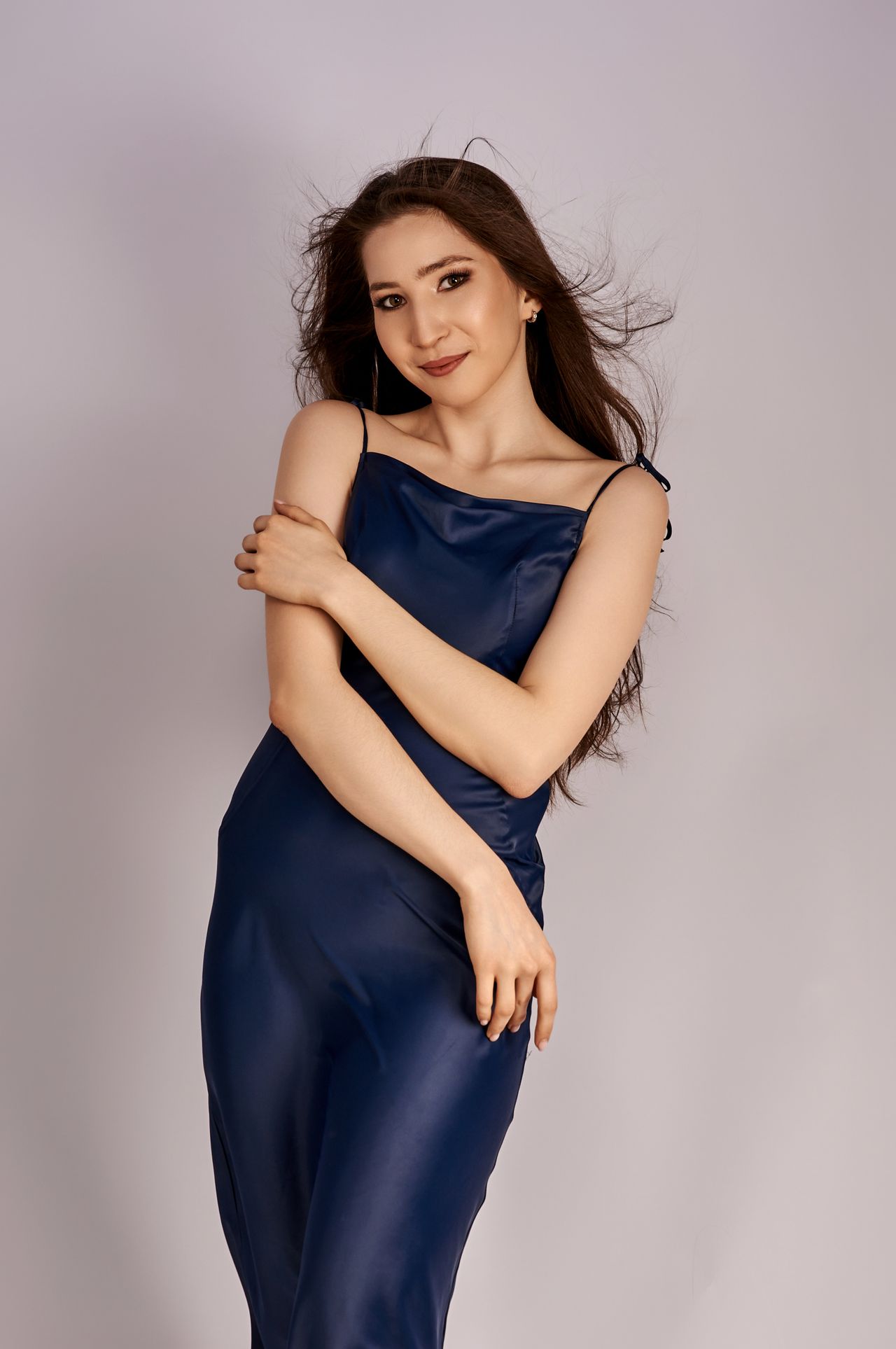
Navy satin is the most reliable choice for a formal evening wedding. Satin has a soft shine that looks expensive under warm reception lighting, and navy is dark enough to feel formal without the heaviness of black. A simple slip dress in navy satin, like the one pictured, is also one of the easiest styles to wear again after the wedding, to a dinner or a formal party, which helps justify the price. For the ceremony, pair it with a light wrap or a fitted jacket if the venue is air-conditioned or the evening turns cool, and choose silver or crystal earrings, because silver sits more cleanly against navy than gold for most people.
Satin does need a little extra care. It shows creases, water marks and every line underneath, so wear smooth, seamless underwear, steam the dress on the morning of the wedding, and carry a small handkerchief rather than tissues, which can leave lint. When you sit, smooth the skirt under you rather than bunching it, and avoid sitting on rough stone or wet grass in a long satin dress. If the maid of honour prefers more support than thin straps give, look for the same navy satin with wider straps, a cowl neckline, or a matching bolero, so the colour and fabric stay the same while the fit feels secure all day.
3. Royal Blue for a Bold, Joyful Look
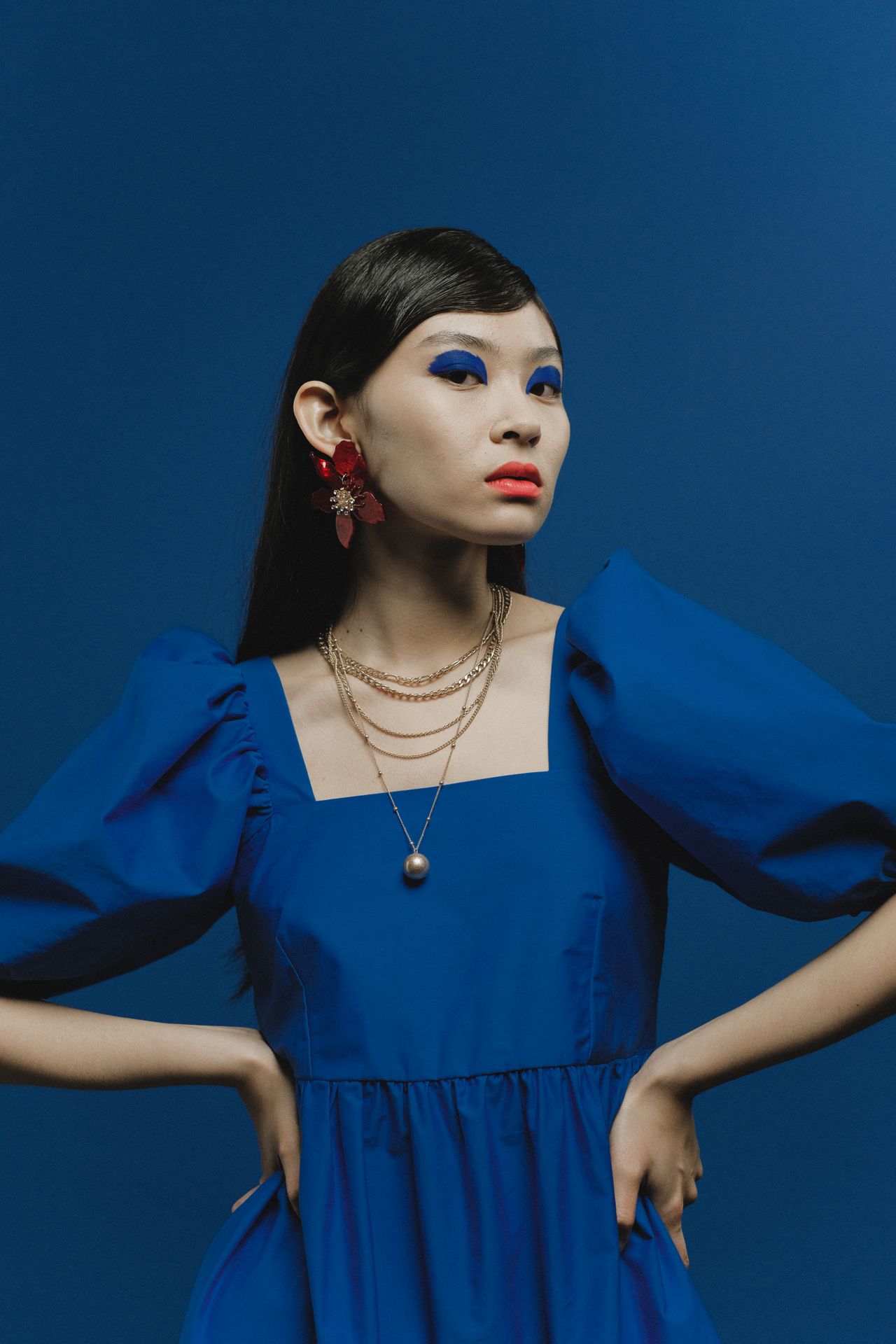
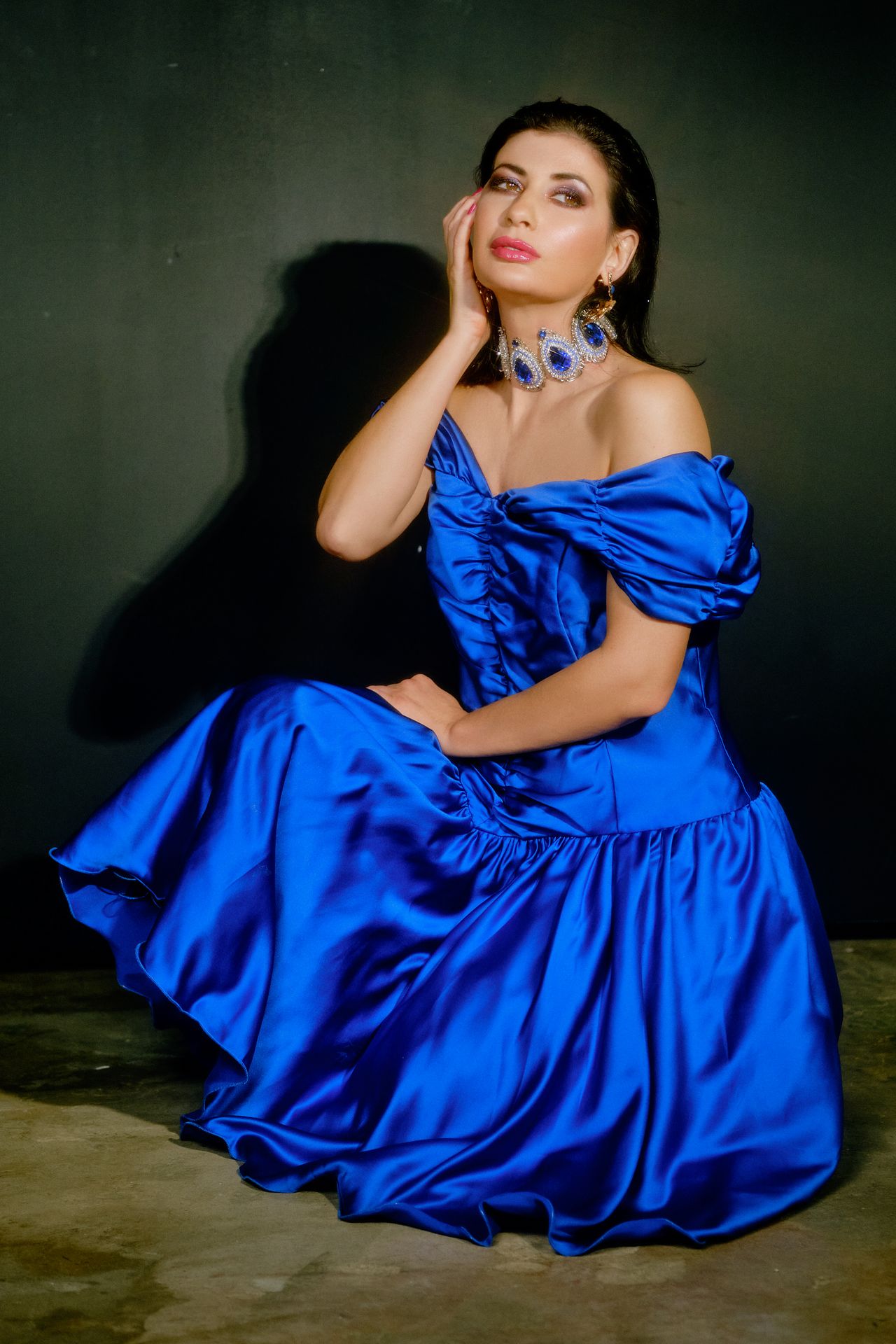
Royal blue, sometimes called cobalt blue, is for a maid of honour who wants to be noticed. It is bright, joyful and confident, and it photographs with real energy, especially outdoors against green gardens or pale stone. A dress with a strong shape, such as the puff sleeves and square neckline pictured, suits this colour well, because the shade is already bold and does not need extra sparkle to make an impact. Keep the rest of the outfit calm: one necklace or one pair of statement earrings, not both, plain shoes, and a small clutch, so the dress stays the focus.
Royal blue works best when the wedding palette can carry it. It pairs beautifully with white, silver, gold and soft pink flowers, and it looks wonderful beside groomsmen in navy suits. It is less suited to a very soft, muted wedding, where it can overpower blush and sage details, so check it against the flowers and table styling before you commit. For skin tones, royal blue is kind to deeper skin and to fair skin with cool undertones, while very warm skin can look even warmer beside it, which some women love and others prefer to soften with gold jewellery. As with every strong colour, try it in daylight first.
4. Dusty Blue Lace for a Romantic Ceremony
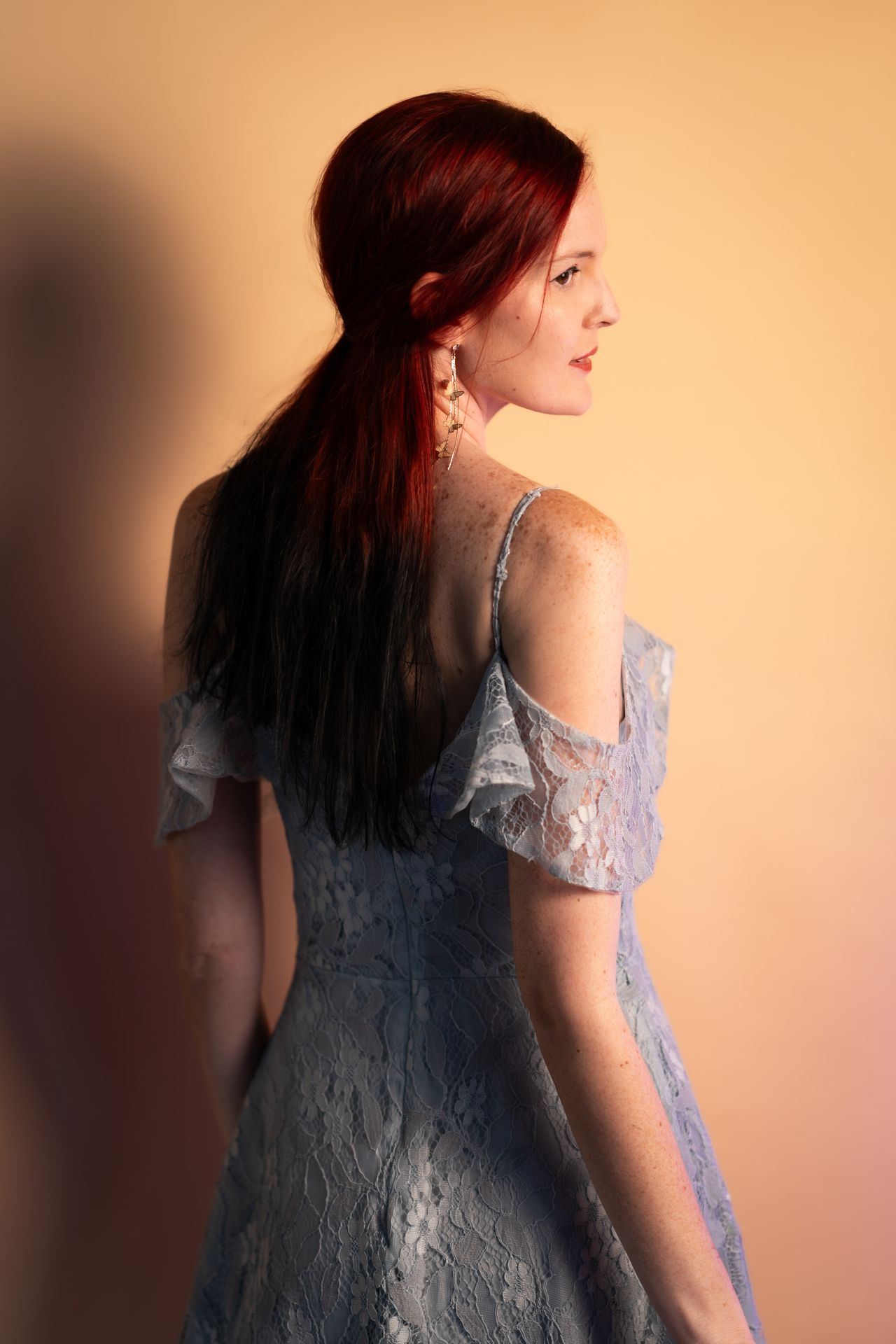
Lace turns a simple blue dress into something romantic without adding weight or shine. A dusty blue lace dress, like the cold-shoulder style pictured from behind, suits a church, chapel or garden ceremony, and it photographs with lovely texture, especially in soft morning or late-afternoon light. Lace is also forgiving to wear: it stretches a little, it does not crease as obviously as satin, and a lined lace dress feels secure through a long ceremony and a longer reception. For this look, keep hair soft and jewellery minimal, because the lace is already the decoration.
Before you buy lace, check the lining carefully. A good lace dress is fully lined through the bodice and at least to the knee in the skirt, so it is not see-through in bright sunlight or under camera flash. Run your hand over the inside seams to check for scratching, and sit down in the dress in the shop, because a lining that rides up when you sit will annoy you all day. Lace in dusty blue also pairs well with a small posy of white roses or ranunculus, and with nude block heels for a garden venue, where thin stilettos can sink into lawn. If the wedding is in summer, choose a lace with an open pattern rather than a heavy, dense lace, so air can move through it.
5. A Deep Petrol Blue Gown for Black-Tie Style

Petrol blue, a deep blue with a hint of green, is a wonderful choice when the wedding is black-tie or an evening event in a grand venue. It reads as richer and more unusual than plain navy, but it is still dark enough to feel formal, and it suits silver, pearl and diamond-style jewellery beautifully. A long gown with clean lines and three-quarter sleeves, like the satin gown pictured on a mannequin, is flattering for a maid of honour who prefers more coverage, and it looks calm and elegant beside a bride in a full white gown. For a black-tie wedding, this is the shade to choose when you want to look dressed up without wearing sequins.
Long gowns need a hem check with the exact shoes you will wear, because even a 2-centimetre heel change alters where the fabric falls. Walk up and down stairs in the dress, sit down, and practise getting in and out of a car, because a floor-length hem can catch on car doors and venue steps. If the reception involves a lot of dancing, ask your dressmaker about a bustle, a small loop or button that lifts the train or back of the skirt off the floor after the formal photos. A petrol blue gown also photographs best against a simple background, so for group photos, stand where the background is plain rather than busy, and let the colour do the work.
6. An Electric Blue Maxi for a Long, Easy Day

A maxi dress, which falls to the ankle or floor, is the easiest blue dress to wear for a whole wedding day. It covers the legs, it hides thermal leggings or comfortable shoes in cooler weather, and the unbroken line of colour from shoulder to hem makes the wearer look taller. The electric blue maxi pictured, worn outdoors with a tan jacket and belt, shows how a bright blue can still look relaxed rather than formal, especially with flat or block-heel sandals. For a full guide to lengths and shapes, see our explanation of what a maxi dress is, which covers hems, fabrics and shoes in plain terms.
For a maid of honour, the maxi's main job is comfort over eight or more hours. Choose a fabric with some stretch or a flowing drape, such as jersey, soft chiffon or rayon, rather than a stiff fabric that fights you when you sit and dance. Check the hem with your wedding shoes, and if the dress is floor-length, make sure you can walk up steps without stepping on it. A defined waist, a belt, or a wrap tie stops a long dress from looking shapeless in photographs, and a small slit at the side makes walking and dancing much easier. Electric blue suits outdoor and daytime weddings best, while navy or petrol blue suits the same maxi shape for an evening event.
7. A Navy Floral Maxi for Garden Weddings
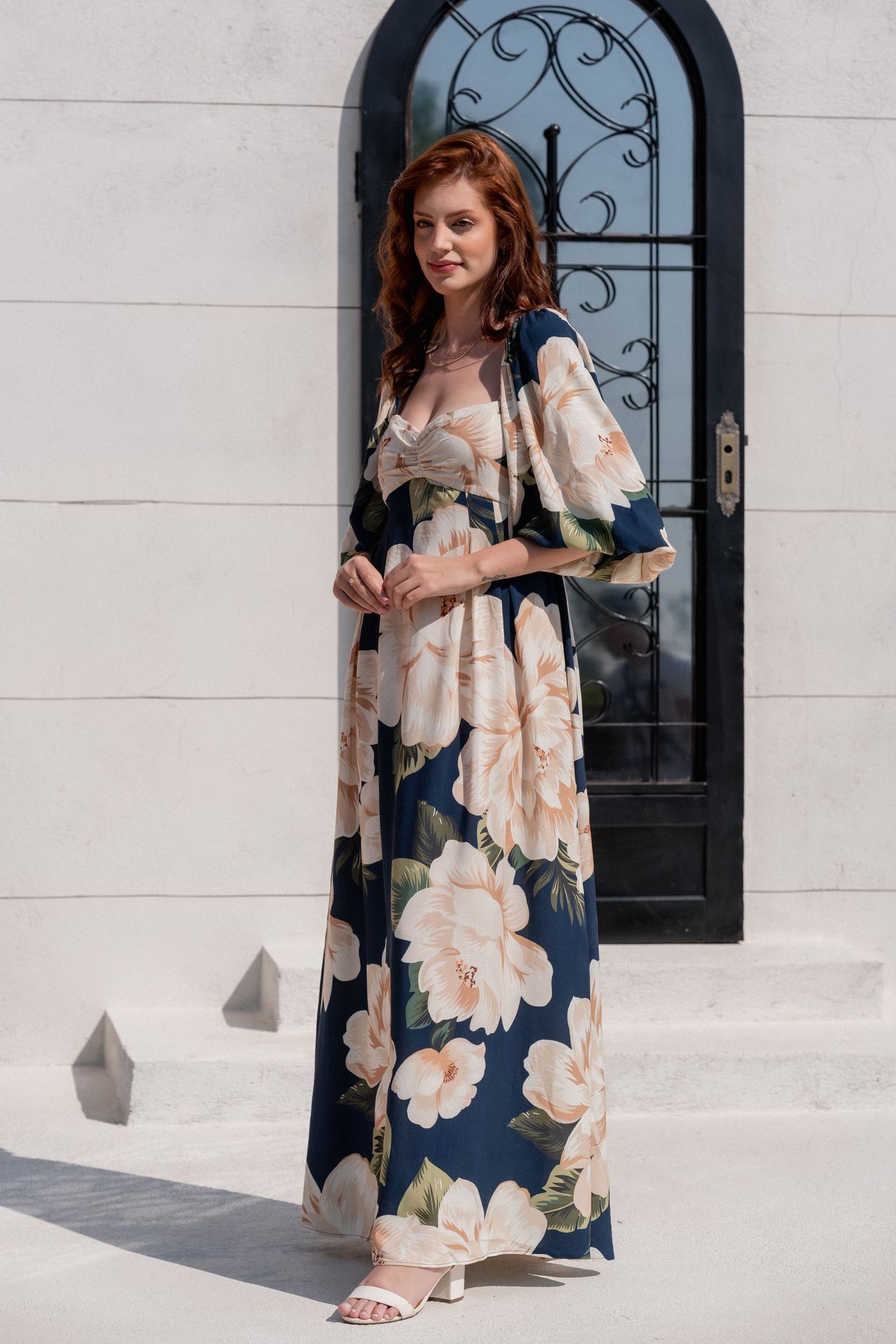
A floral dress on a navy ground is a clever way to wear blue without looking plain. The dark background keeps the dress formal enough for a wedding, while large cream flowers, like those pictured, link the outfit to the garden, the bouquets and the table flowers. This is a good choice for a spring or summer garden wedding in Australia, where a solid navy dress can feel a little heavy in bright sun, but a print feels fresh. Puff sleeves add a soft, romantic shape, and white block-heel sandals, as pictured, are a practical garden choice, because the wider heel does not sink into lawn the way a stiletto does.
With a large print, keep everything else simple. A small cream or nude clutch, plain earrings, and a bouquet in white or cream will look calm beside the pattern, while a busy necklace or a patterned bag will fight it. Check the scale of the print against your height too: very large flowers can overwhelm a petite frame, while a small, ditsy print can disappear in group photographs. If the whole bridal party is in solid blue, one floral dress for the maid of honour can be a lovely way to mark her role, as long as the print contains the same navy as the other dresses, so the group still looks coordinated rather than mismatched.
8. A Navy Tiered Midi for Daytime Weddings
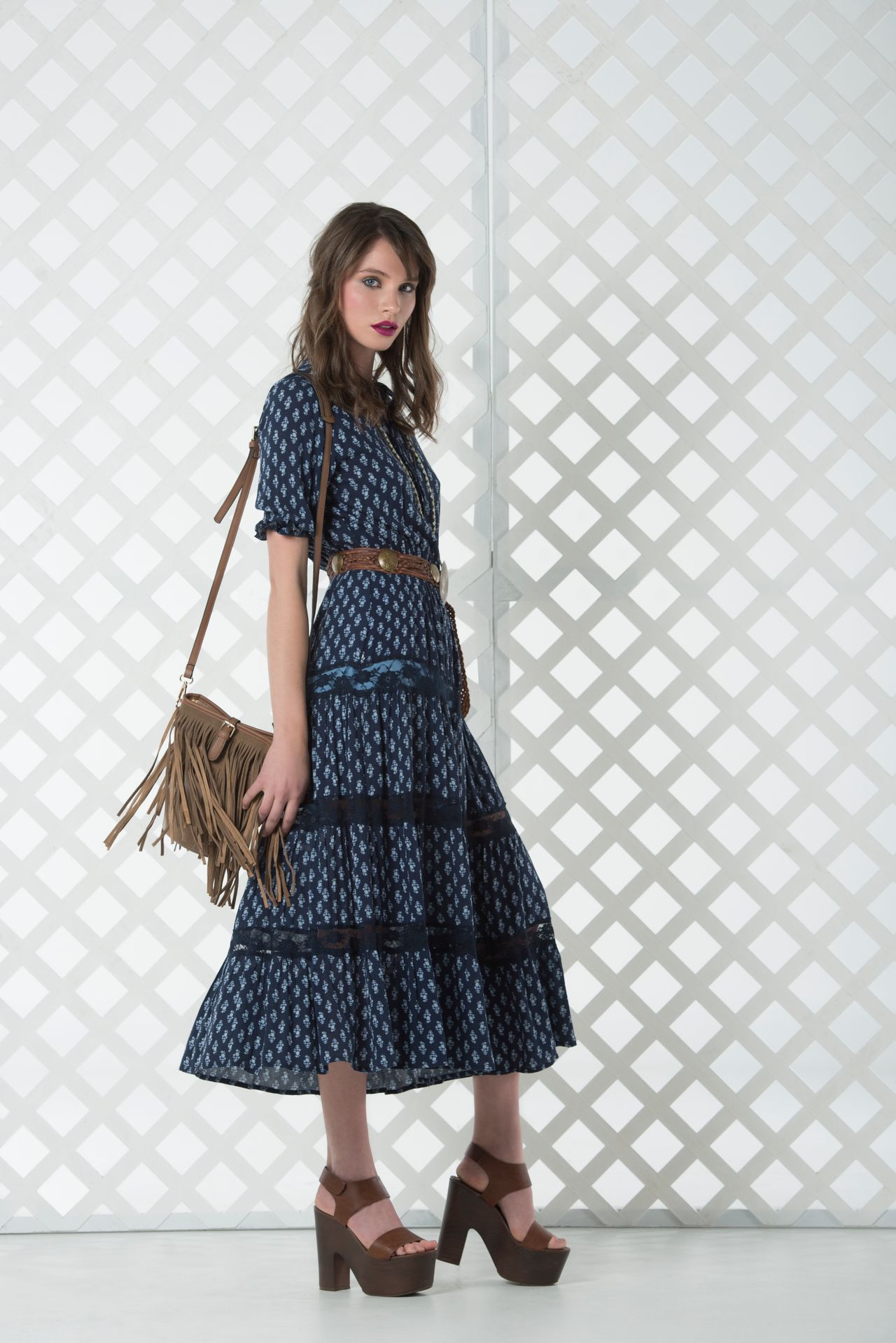
A midi dress, which finishes below the knee and above the ankle, is the most practical length for a daytime wedding. It is easy to walk in, it does not drag on grass or dance floors, and it shows off shoes, which is useful when the maid of honour has chosen comfortable block heels for a garden or winery venue. A tiered midi in navy, like the small-print style pictured with lace bands and a woven belt, has movement and texture without the formality of a floor-length gown, and it suits a lunch reception, a winery wedding, or a relaxed church wedding followed by a garden party.
The midi length does need care with proportions. A hem that finishes at the widest part of the calf can shorten the leg in photographs, so try the dress with your wedding shoes and check the mirror from the side, not just from the front. A defined waist, whether from a belt, a tie, or the cut of the dress, helps a tiered skirt look intentional rather than shapeless. The very high platform sandals pictured are a styling choice for a photo shoot, not a wedding-day recommendation: for a real wedding, choose block heels, wedges or elegant flats, and break them in for at least a week before the day, so sore feet do not cut the dancing short.
9. Navy Sequin for an Evening Reception
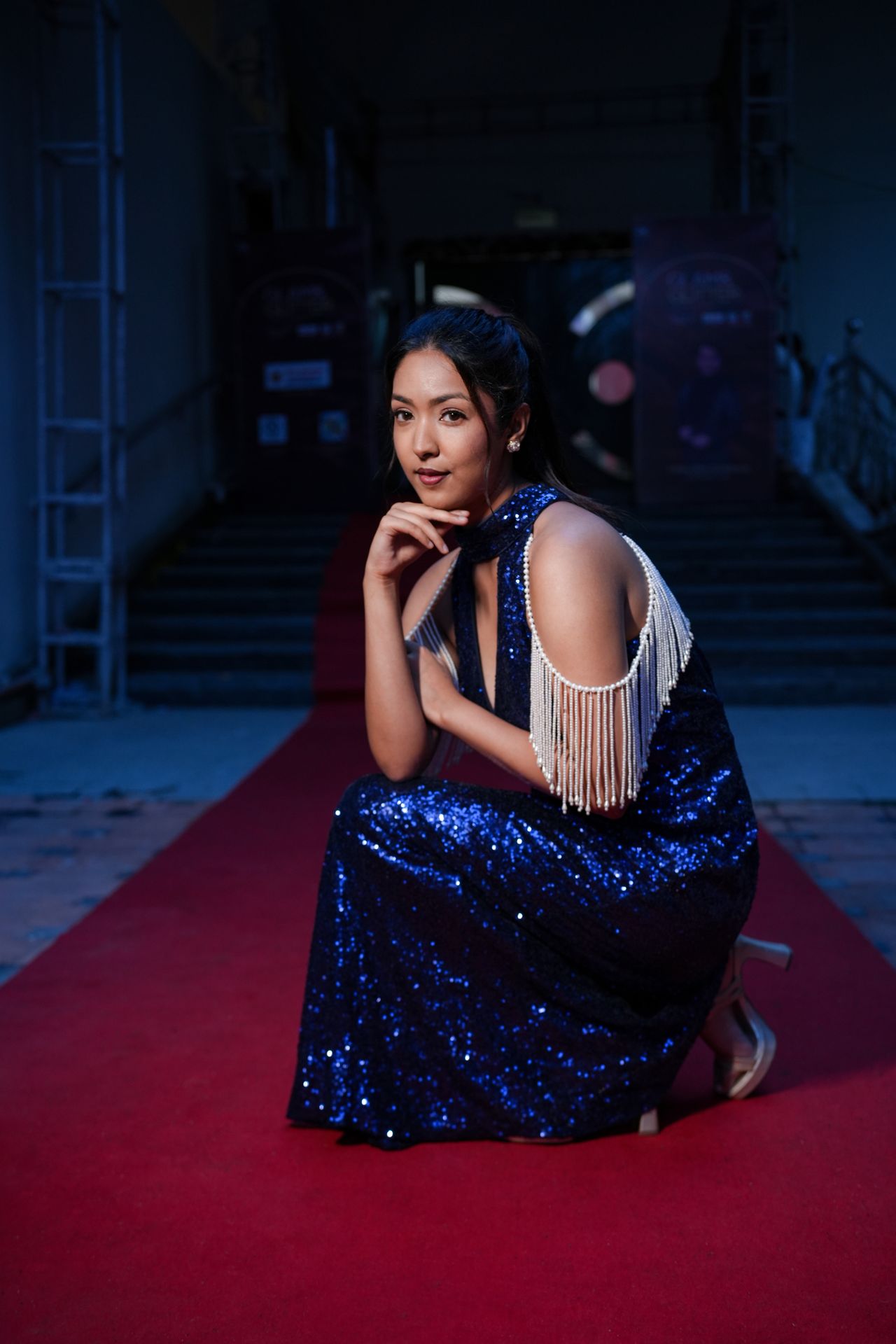
Sequin is the right choice when the wedding turns into a party after dark. A navy sequin gown, like the pearl-fringed style pictured, catches candlelight and dance-floor light in a way that plain fabric cannot, and navy keeps the sparkle feeling elegant rather than flashy. This is a good option for a maid of honour at a city hotel, ballroom or evening winery reception, especially in winter, when the darker setting suits shine. Because the dress is already the statement, keep jewellery to one pair of earrings and a plain clutch, and let the sequins do the rest.
Sequin dresses need a few practical checks. They can itch, so wear a smooth base layer if the lining is thin, and check that sequins do not catch on the bride's dress or on your own jewellery when you hug. They are also heavier than chiffon, so a well-fitted bodice matters, and a dress that is too tight will feel restrictive after a few hours of dancing. For cold evenings, a structured coat or a faux-fur wrap over the shoulders for arrivals will keep you warm without hiding the dress indoors. For more cold-weather wedding styling, see our winter wedding guest outfit ideas, which cover layers, coats and shoes for evening celebrations.
10. Pale Blue Linen for a Relaxed Outdoor Wedding
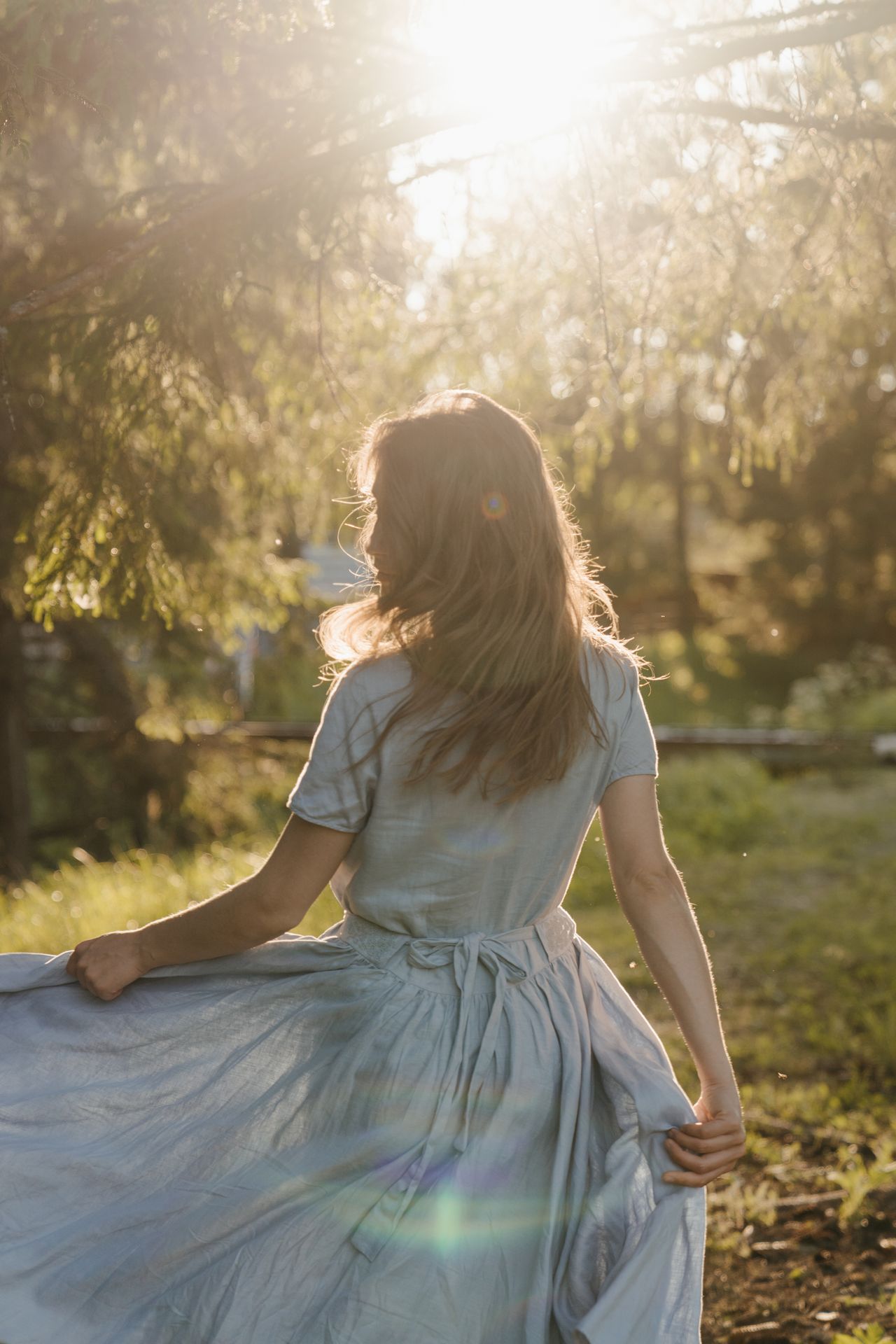
Pale blue linen is the answer for a hot, relaxed outdoor wedding, such as a farm, beach or backyard celebration. Linen breathes in heat, it moves softly in a breeze, and a long, flowing shape with a tie waist, like the dress pictured from behind, looks effortless in photographs. This is not a fabric for a formal ballroom, but for a daytime wedding where comfort matters more than shine, it is hard to beat. Pair it with flat sandals or wedges, a straw or fabric clutch, and simple gold or silver jewellery, and the whole outfit will feel as easy as the day itself.
Linen does wrinkle, so accept that before you buy, or choose a linen blend with a little rayon or cotton, which holds its shape better through a long day. Steam the dress in the morning, and avoid sitting on rough surfaces for long stretches, which can crease the skirt badly. A pale blue dress also shows marks more easily than navy, so carry a small stain-removal wipe in your clutch and be careful with red wine and grass stains at the reception. For shapes and lengths beyond this relaxed style, our guide to different types of dresses explains A-line, wrap, sheath and fit-and-flare cuts in plain language, which helps when the whole party is choosing different styles in one colour.
FAQs
Does the maid of honour have to wear the same colour as the bridesmaids?
No. She can wear the same colour in a different style, a different shade of the same colour, or a completely different colour if the bride prefers. A different shade of blue, such as navy while the bridesmaids wear dusty blue, is a popular middle ground, because the group still looks coordinated while the maid of honour stands out. A different bouquet, a hairpiece, or slightly dressier jewellery can also mark her role without changing the dress colour at all.
Which shade of blue suits most skin tones?
Dusty blue and navy are the most forgiving shades across skin tones. Dusty blue is soft and suits warm, cool and neutral undertones, while navy is deep enough to flatter almost everyone and looks formal in photographs. Royal blue is bolder and suits deeper skin and cool fair skin best, while very pale blue can wash out very fair skin in bright sunlight, so always check the shade in daylight and in a photograph before ordering.
Can the maid of honour wear a different style from the bridesmaids?
Yes, and it is now very common. Many brides choose one colour and one fabric, then let each woman choose her own neckline, sleeve length and hem, so every dress fits well. The key is to keep one thing consistent, such as the exact colour, the fabric, or the length, so the group looks deliberate rather than accidental. If the maid of honour wears a different style, keep her colour the same or one shade darker for the clearest group photographs.
What should a maid of honour wear to a summer wedding in Australia?
Choose a breathable fabric such as chiffon, light crepe or linen, a hem that clears the ground, and shoes that suit the venue, such as block heels or wedges for grass. Avoid heavy satin or velvet in summer heat, and avoid stilettos on lawn. Carry a small wrap for air-conditioned venues and cooler evenings, drink water through the day, and choose a dress you can sit, walk and dance in for eight hours without adjusting.
How much should a blue maid of honour dress cost in Australia?
Off-the-rack bridesmaid dresses from Australian retailers commonly start at about AUD 149, while boutique or made-to-order gowns often run from AUD 300 to AUD 800 or more. Add alterations, which commonly cost AUD 50 to AUD 200 for a hem and simple fitting, plus shoes and jewellery. Order at least three months before the wedding where possible, so there is time for delivery, fittings, and a final check with the shoes you will wear on the day.
Final Thoughts
The best blue dress for a maid of honour is the one that suits the wedding, the season, and the woman wearing it. Dusty blue is soft and romantic, navy is formal and forgiving, royal blue is joyful and bold, and pale blue is relaxed and fresh. Choose the shade first, then the fabric for the weather, then the length for the venue, and finally the details, such as lace, sequin or a print, that make the dress feel personal. A fabric swatch, a daylight check, and a fitting in the real shoes will prevent most disappointments.
Remember the maid of honour's real job on the day: to support the bride, hold the bouquet, fix a hem, calm nerves, and dance at the end of the night. A dress that fits well, breathes in the heat, and lets her move freely will help her do all of that with confidence. Pick a blue she loves, keep the styling simple, and she will look wonderful in every photograph, from the first ceremony shot to the last dance.
Sources
- Azazie Australia: Dusty Blue Satin Bridesmaid Dresses
- Azazie Australia: Dusty Blue Chiffon Bridesmaid Dresses
- Adrianna Papell: Blue Bridesmaid Dress Ideas in Every Shade
- InWeddingDress: Blue Bridesmaid Dress Colour Guide
- AW Bridal Australia: Dusty Blue Bridesmaid Dresses
Gallery

No comments:
Post a Comment