Packing your dresses away in October feels like a waste. The good news is that you do not have to. Learning how to layer dresses for winter is really learning five or six small tricks — a thin top under the dress, a knit over it, the right tights, the right boots, and a coat that covers the hem. Once those pieces are in place, almost any dress in your closet becomes a winter outfit. If you are still choosing dresses, our winter dress outfit ideas guide is a good place to start. Below are 12 complete formulas, each with a real photo, so you can copy them exactly.
Table of Contents
- 1. A Fitted Turtleneck Under a Sleeveless Dress
- 2. A Thin Long-Sleeve Top Under a Summer Dress
- 3. A Cropped Cardigan Over the Dress
- 4. A Chunky Cardigan, Belted at the Waist
- 5. A Long Duster Cardigan Over a Dress
- 6. A Denim Jacket Over a Dress
- 7. A Leather Jacket Over a Floral Dress
- 8. A Tailored Blazer Over a Dress
- 9. A Long Wool Coat, Belted Over Everything
- 10. A Parka Jacket for Street Style
- 11. Knee-High Boots and Tights: The Leg Formula
- 12. Scarves, Hats and Gloves: The Finishing Warmth
- The No-Bulk Rule
- The Temperature Ladder
- Fabric Pairing: What Goes With What
- What to Avoid
- FAQs
- Gallery

Photo: Tobias ToMar Maier, CC BY-SA 4.0, via Wikimedia Commons
1. A Fitted Turtleneck Under a Sleeveless Dress

Photo: Jamie, CC BY-SA 2.0, via Wikimedia Commons
This is the single most useful layering trick in winter fashion. A fitted turtleneck turns every sleeveless dress you own — shift dresses, pinafores, slip dresses — into a cold-weather outfit. The photo above shows the classic version: a black mock-neck sweater under a sleeveless dress, and it looks intentional, never like an afterthought.
The fit of the turtleneck matters more than its colour. It must be thin and close to the body, with no bunching at the waist. A ribbed or fine-knit turtleneck in black, white, navy or camel works under almost everything. Avoid loose or chunky turtlenecks here — they add bulk where the dress sits and make the whole outfit look lumpy.
Colour strategy is simple: match the turtleneck to the dress for a seamless column effect, or contrast it on purpose. A black turtleneck under a floral dress makes the print look sharper; a cream turtleneck under a dark dress brightens your face. Finish with tights and ankle boots, and you have a formula that works from the office to dinner.
2. A Thin Long-Sleeve Top Under a Summer Dress

Photo: Jamie, CC BY-SA 2.0, via Wikimedia Commons
That striped summer dress you wore in June does not need to retire. A thin long-sleeve top underneath — a fitted tee, a thermal top, or even a bodysuit — adds a full layer of warmth without changing how the dress looks. This is the same principle behind many hijab outfit ideas: coverage and warmth can be stylish when the layers are slim.
Choose a top with a neckline lower than the dress neckline so nothing peeks out except at the arms. Neutral colours — black, white, beige, navy — disappear under prints. On very cold days, swap the tee for a thin merino or thermal long-sleeve; it is barely thicker but much warmer.
One warning: this only works with tops that are truly fitted. A regular long-sleeve tee bunches at the waist and sleeves under a dress. Look for tops marketed as base layers, bodysuits, or "second skin" fits. They cost the same and behave completely differently under clothing.
3. A Cropped Cardigan Over the Dress

Photo: Jamie, CC BY-SA 2.0, via Wikimedia Commons
Wear a cropped cardigan over your dress and let the skirt show below it. Suddenly the dress reads as a skirt-and-top outfit, and you gain a warm layer exactly where you need it — over your core. The photo above shows how clean this looks when the cardigan ends right at the waist.
Proportion is the whole game here. The cardigan should be cropped or hit exactly at your natural waist. A long, boxy cardigan over a dress erases your shape and reads as shapeless. If your only cardigans are long, add a belt over the cardigan at the waist.
This formula loves contrast: the teal cropped cardigan over the polka-dot dress in the photo, or a black cropped knit over a light midi. Add tights and knee-high boots below, and the outfit is complete. For more knit inspiration, our sweater dress outfit ideas cover the same cosy territory.
4. A Chunky Cardigan, Belted at the Waist

Photo: Jamie, CC BY-SA 2.0, via Wikimedia Commons
A chunky cardigan over a dress is warm and easy — but without a belt it can look like a blanket with sleeves. The fix takes ten seconds: belt the cardigan at your natural waist. The belt creates shape, shows the dress underneath, and stops the knit from swallowing your figure.
Wear the cardigan open or buttoned — both work — and let the belt sit on top. A wide leather belt gives structure; a thin belt looks more delicate. Match the belt to your boots or bag for a pulled-together feel. The cardigan should fall somewhere between the hip and mid-thigh; longer than that, and it starts competing with the dress hem.
This is the cosiest formula on the list and the best one for working from home or long travel days. Underneath, any dress works — slip dresses, shirt dresses, knits. The cardigan does the warming; the belt does the styling.
5. A Long Duster Cardigan Over a Dress

Photo: Jamie, CC BY-SA 2.0, via Wikimedia Commons
A duster cardigan — the long, open, coat-like knit that falls to mid-calf or the ankle — is the elegant answer to winter layering. It adds serious warmth, moves beautifully when you walk, and layers over maxi and midi dresses without hiding them. If you like longer, graceful silhouettes, this pairs naturally with modest winter dress ideas too.
The rule with dusters: keep everything underneath slim. A fitted dress, leggings or slim tights, and a thin top under the dress. If the under-layers are bulky, the whole outfit turns into a shapeless column. One long layer over slim layers — that is the balance.
Dusters look best in solid, rich colours — camel, charcoal, burgundy, forest green — because the large knit surface shows colour beautifully. Add ankle or knee-high boots and a long scarf, and you have an outfit that works for the office, events, and cold evenings out.
6. A Denim Jacket Over a Dress

Photo: Jamie, CC BY-SA 2.0, via Wikimedia Commons
The denim jacket is the transitional-weather hero: perfect for autumn days and mild winter afternoons when a wool coat is too much. Over a floral midi or a knit dress, a denim jacket adds casual structure and a little wind protection without any bulk.
Fit matters here. An oversized denim jacket over a flowy dress can look charmingly relaxed; a fitted trucker jacket over a slip dress looks sharper. Either way, the jacket should end at or above the hip so the dress silhouette stays visible. Roll or push the sleeves to show a bracelet or watch.
For real cold, a denim jacket alone is not enough — treat it as a mid-layer. Wear a thin thermal under the dress, add the denim jacket, then top with a scarf and, if needed, a heavier coat you can remove indoors. The denim layer still shows at the collar and sleeves, keeping the outfit interesting.
7. A Leather Jacket Over a Floral Dress

Photo: Jamie, CC BY-SA 2.0, via Wikimedia Commons
A leather (or good faux leather) jacket over a soft knit or floral dress is one of winter's best contrasts: tough on top, soft below. The burgundy faux-leather moto jacket over the black floral dress in the photo shows it perfectly — it adds wind protection, edge, and instant polish, and the outfit looks styled even when you threw it on in two minutes.
The classic version is a cropped moto jacket ending at the waist, worn over a midi dress with tights and ankle boots. The cropped length is important: it defines your waist and lets the dress do the talking below. Longer leather blazers work too, especially over slip dresses for evening.
Black leather goes with everything, but brown or tan leather softens the look and pairs beautifully with cream, rust and olive dresses. Add a scarf in a contrasting texture — wool against leather — and the outfit gains a layer of visual richness that photographs very well.
8. A Tailored Blazer Over a Dress

Photo: Jamie, CC BY-SA 2.0, via Wikimedia Commons
For the office, nothing beats a tailored blazer over a dress. It adds polish, a little warmth, and structure — the outfit reads as professional even if the dress underneath is simple. This is the workhorse formula behind many old money outfits: clean lines, quality fabric, nothing loud.
Choose a blazer with a little room in the shoulders so it sits comfortably over the dress. Slightly oversized blazers look modern; nipped-waist blazers look classic. Push the sleeves to the forearm to show a bracelet and keep the look from feeling stiff.
Under the blazer, a thin thermal or turtleneck under the dress handles the warmth quietly. On the commute, add a long wool coat over everything — the blazer is the mid-layer that shows when you arrive. Finish with closed-toe heels, loafers or sleek ankle boots.
9. A Long Wool Coat, Belted Over Everything

Photo: Tobias ToMar Maier, CC BY-SA 4.0, via Wikimedia Commons
A long wool coat that covers the dress hem is the single most flattering winter outer layer. The trick, borrowed from the best street-style looks, is belting it: a belt over the coat defines your waist and stops the long coat from reading as a shapeless tube. This is also a traveller's favourite — see our airport outfit ideas for more comfort-first formulas.
Choose a coat that falls at least to the knee, ideally to mid-calf, so the dress hem does not peek out awkwardly below it. Camel, black, charcoal and navy are the versatile choices; a belt in a contrasting shade turns the coat into the outfit's focal point.
Under the coat, your other layers do the real warming: thermal top under the dress, fleece-lined tights, knee-high boots. The coat is the visible layer and the wind barrier. When you walk into a heated room, the coat comes off and the outfit underneath still looks complete — that is the test of a good layered outfit.
10. A Parka Jacket for Street Style

Photo: Tobias ToMar Maier, CC BY-SA 4.0, via Wikimedia Commons
Winter parkas used to be purely practical. Now a sporty parka over a dress is a legitimate street-style look — warm, modern, and a little playful. The burgundy parka with a faux-fur hood in the photo above, worn over a blue turtleneck sweater dress, shows the formula at its best: the contrast between the rugged jacket and the soft knit is exactly what makes it work.
Keep the parka on the shorter side. A parka ending at the waist or hip preserves your proportions; a very long parka over a dress hides the dress entirely, and you might as well be wearing trousers. Underneath, go slim: fitted dress, thermal tights, chunky boots or sneakers.
Colour is where parkas shine. A dark dress with a burgundy, olive or cream parka looks intentional and fresh. Add a beanie and a chunky scarf, and you have the warmest casual formula on this list — perfect for markets, walks, and weekends when the temperature drops hard.
11. Knee-High Boots and Tights: The Leg Formula
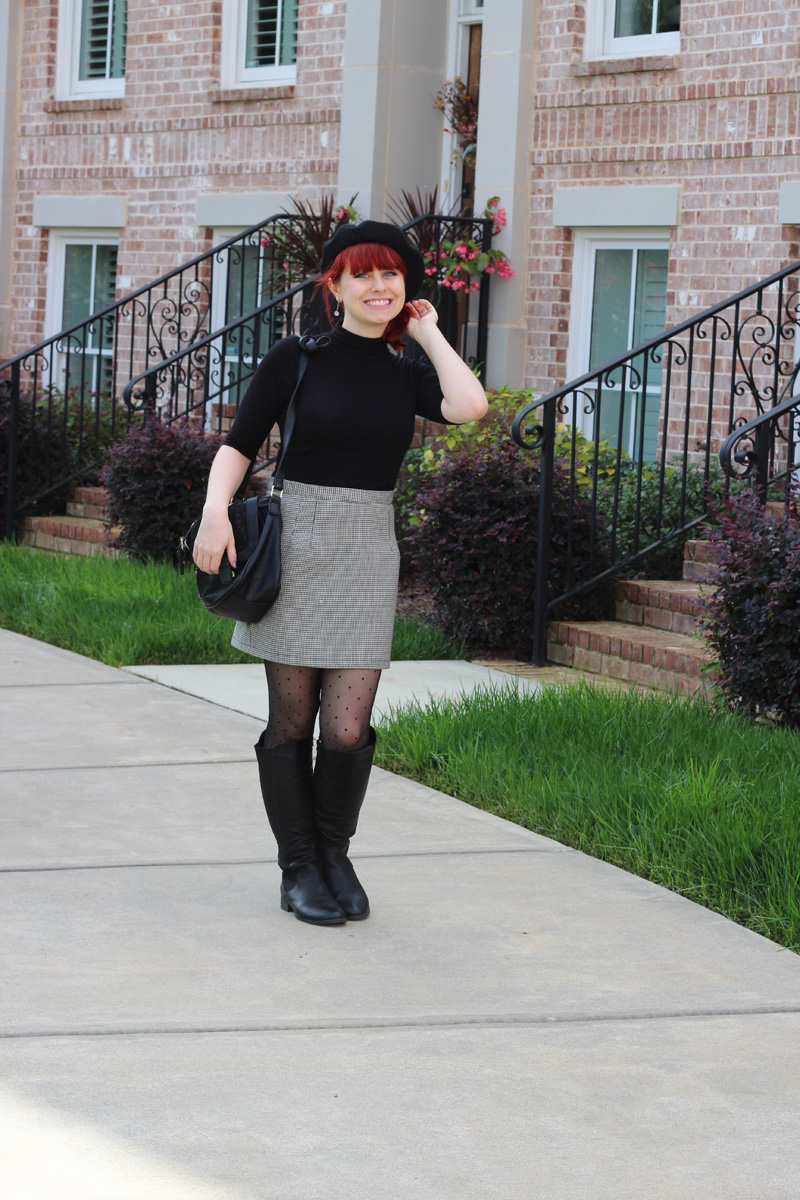
Photo: Jamie, CC BY-SA 2.0, via Wikimedia Commons
Legs are where most people feel the cold in a dress, so this formula solves the biggest problem directly. Knee-high boots plus thick tights cover almost your entire leg — only a few inches of thigh stay exposed, and on freezing days you can close even that gap with thermal shorts or fleece-lined leggings under the tights.
Tights weight matters more than people think. Sheer 20-denier tights are decoration; 40-denier is everyday winter; 60-100 denier or fleece-lined tights are real warmth. Fleece-lined tights look like normal black tights but feel like leggings — they are the single best-value winter purchase a dress-wearer can make.
Match the boot to the dress length: knee-high boots with midi dresses, over-the-knee boots with minis, ankle boots with maxis (where the tights barely show). Black boots go with everything; brown or tan boots warm up the outfit visually. This leg formula sits under almost every other idea on this list.
12. Scarves, Hats and Gloves: The Finishing Warmth

Photo: Jamie, CC BY-SA 2.0, via Wikimedia Commons
Accessories are not decoration in winter — they are insulation. A chunky scarf, a warm hat and gloves add the equivalent of a whole extra layer, exactly where your body loses heat fastest: the neck, the head, the hands. The photo above shows how a great scarf can become the outfit's centrepiece.
Scarf rules are simple. If the dress is printed, choose a solid scarf; if the dress is plain, choose a patterned or textured one. A big blanket scarf doubles as a shawl indoors. Wrap it twice for a chunky collar effect that fills the neckline gap most dresses leave open.
Hats depend on your hair and your plans: beanies are warmest, berets are chicest, wide-brim wool hats are most dramatic. Leather gloves look polished; knit mittens are warmer. And one practical tip: lay out your full outfit — accessories included — the night before, somewhere you can see it, like near your makeup vanity. Cold mornings are not the time to hunt for matching gloves.
The No-Bulk Rule
The number one fear about winter layering is looking bulky. The fix is a system, not luck: layer thin-to-thick, and contrast the fits. Your base layer (thermal, bodysuit) should be skin-tight. Your middle layer (turtleneck, sweater, cardigan) should be fitted or only slightly relaxed. Only your outer layer (coat, duster, puffer) gets to be oversized.
The second part of the system: define the waist somewhere. A belt over a cardigan, a cropped sweater ending at the waist, a belted coat, a tucked-in top — pick one per outfit. One waist definition is enough; two starts looking fussy. Follow these two rules and you can wear four layers without looking heavy.
The Temperature Ladder
Take one dress — say, a floral midi — and climb the ladder. At 10°C: the dress, a thin long-sleeve top underneath, ankle boots, and a denim jacket or light cardigan. At 0°C: swap the top for a thermal, add a fitted turtleneck under the dress, fleece-lined tights, knee-high boots, a chunky belted cardigan, and a wool coat. Below freezing: everything above, plus a thermal vest between the layers, a puffer or heavy wool coat, a blanket scarf, hat and gloves.
The ladder shows why layering beats one heavy coat: you add or remove one piece as the day changes. Offices, cars and shops are heated — a good layered outfit looks complete with the coat off, because every layer underneath was chosen as part of the outfit, not hidden as an afterthought.
Fabric Pairing: What Goes With What
Some fabrics layer together beautifully and some fight. Wool over cotton or linen is the classic winter pairing — the textures contrast and the wool sits warmly over your shoulders. Knit dresses pair well with structured blazers, because the blazer gives shape to the soft knit. Silk or satin dresses want smooth layers: a fine turtleneck, a long smooth cardigan, a tailored coat — anything nubby or rough will catch and bunch.
As a rule, pair a heavy dress with lighter layers and a light dress with heavier layers. A thick sweater dress needs only a coat and boots. A thin summer dress needs the full system: thermal under, knit over, tights, boots, coat. Match the total weight to the weather, not to the dress.
What to Avoid
Avoid loose-on-loose: a baggy sweater over a flowy dress with no waist definition reads as shapeless every time. Avoid visible bunching — if a layer wrinkles or rides up under the dress, it is the wrong fit; swap it for a true base layer. Avoid sheer tights on cold days; they are not a layer, they are an illusion of one.
Avoid coats shorter than your dress hem by a wide margin — a cropped jacket over a maxi can work, but a hip-length coat over a midi that sticks out six inches below looks accidental. And avoid saving your warmest pieces for "special" days; the thermal top and fleece tights earn their place on ordinary Tuesdays too.
FAQs
Can I wear a summer dress in winter?
Yes. Add a thin thermal or long-sleeve top under it, fleece-lined tights, boots, and a coat. The dress just becomes the visible middle layer.
How do I layer a dress without looking bulky?
Go thin-to-thick: skin-tight base, fitted middle, relaxed outer. Define your waist once with a belt or a cropped layer.
What tights are warm enough for winter dresses?
60-100 denier or fleece-lined tights. They look like normal black tights but insulate like leggings.
Can I wear a sleeveless dress in winter?
Yes — a fitted turtleneck underneath is the classic fix. It looks intentional and adds real warmth.
What boots go best with winter dresses?
Knee-high boots with midi dresses, over-the-knee with minis, ankle boots with maxis. Match boot colour to your coat or belt.
Do I need a long coat for dresses in winter?
It helps a lot. A coat that covers the hem keeps the silhouette clean and blocks wind along the whole body.
How many layers is too many?
Four thin, well-fitted layers beat two bulky ones. If you cannot move your arms freely, remove or swap one layer.
Gallery

Photo: Jamie, CC BY-SA 2.0, via Wikimedia Commons

Photo: Jamie, CC BY-SA 2.0, via Wikimedia Commons

Photo: Jamie, CC BY-SA 2.0, via Wikimedia Commons

Photo: Jamie, CC BY-SA 2.0, via Wikimedia Commons

Photo: Jamie, CC BY-SA 2.0, via Wikimedia Commons
Sources: layering techniques cross-checked against current winter styling guides from India TV News, Times Now News, LeMuse and Uoozee (October 2026).
Final Thoughts
Winter does not end dress season — it just changes the formula. A thin layer under the dress, a knit over it, warm tights, real boots and a coat that covers the hem: those five pieces turn nearly every dress you own into cold-weather outfits. Start with the turtleneck trick, add the belted cardigan, and build from there. Once you know how to layer dresses for winter, January feels less like a fashion problem and more like a chance to wear everything twice.

No comments:
Post a Comment