Working from the same tired corner every day can drain your energy before you even open your laptop. The good news is that you do not need a big budget or a spare room to fix it. A few smart changes — a fresh colour on the wall, a better chair, tidier shelves — can make a small workspace feel brand new.
In this guide you will find ten home office makeover ideas that work in real British homes, from a tiny box room to a corner of the lounge. Each one comes with simple steps, honest prices in pounds, and sizes in centimetres, so you can plan your weekend project with no guesswork. Pick one idea to start, or mix a few for a full new look.
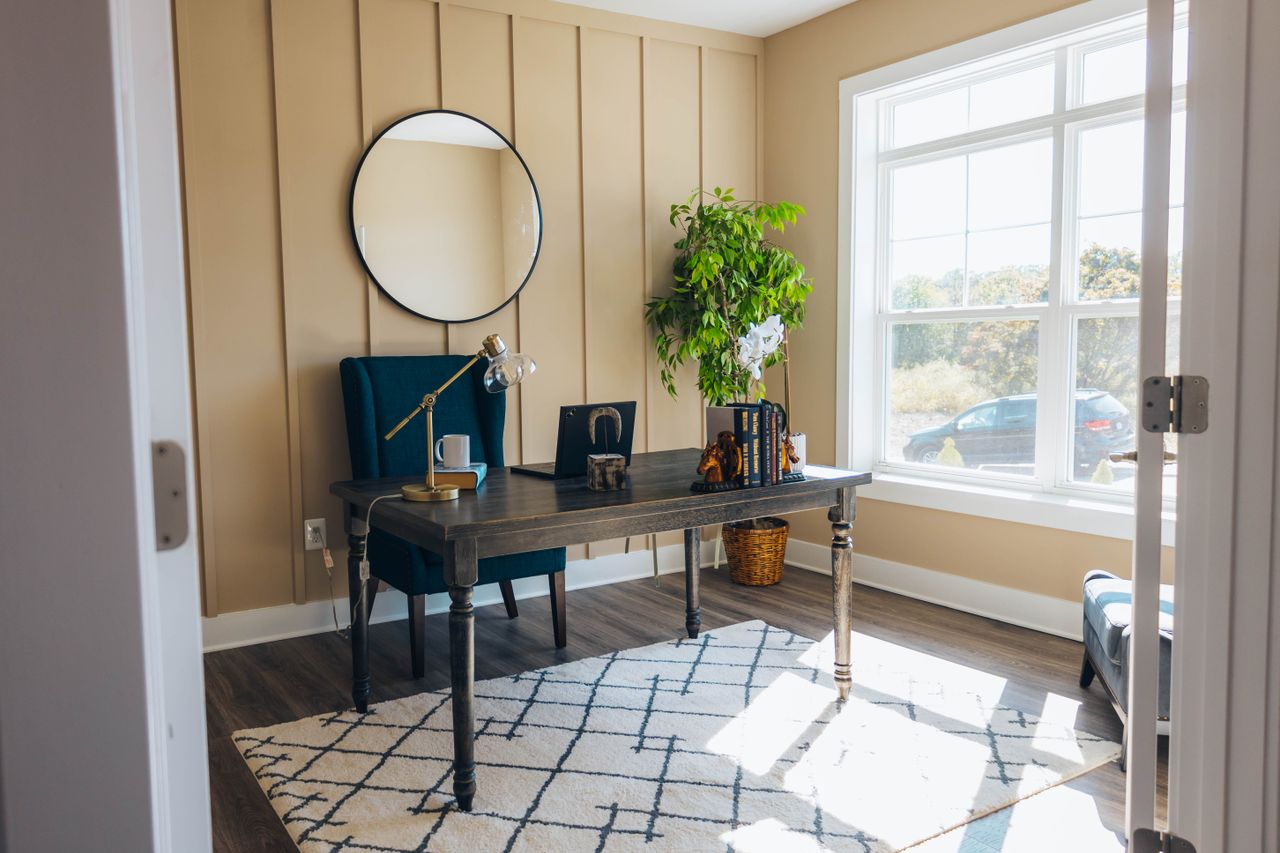
Photo via Pexels
Table of Contents
- 1. Paint One Wall a Calm, Confident Colour
- 2. Upgrade to a Desk That Truly Fits
- 3. Swap the Chair and Save Your Back
- 4. Add Shelves and Use the Wall Space
- 5. Layer Your Lighting Like a Pro
- 6. Tidy the Cables Once and For All
- 7. Hang Art That Makes You Smile
- 8. Bring in Plants for a Fresher Feel
- 9. Roll Out a Rug to Anchor the Zone
- 10. Style a Backdrop Wall for Video Calls
- Frequently Asked Questions
1. Paint One Wall a Calm, Confident Colour
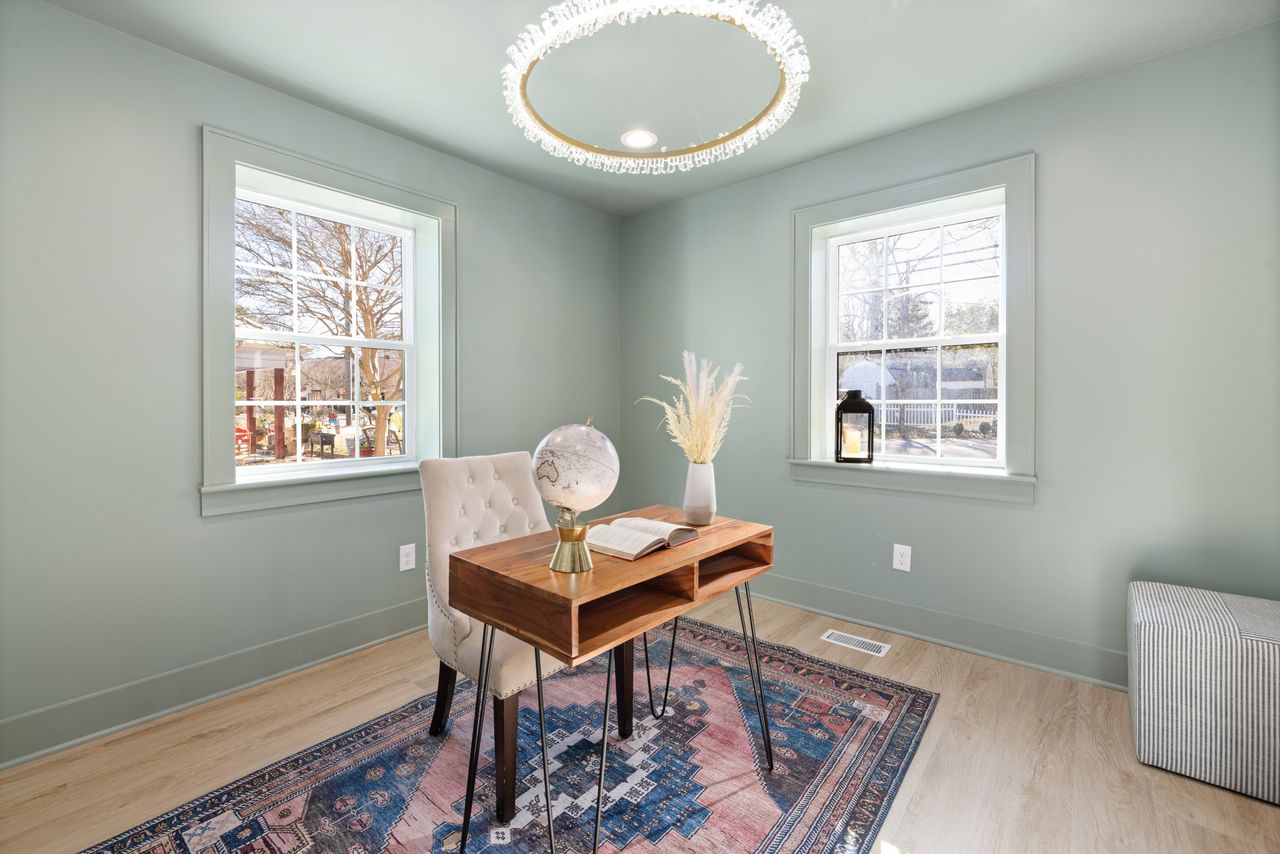
Photo via Pexels
Paint is the cheapest way to change the whole mood of a room. One wall in a deep, calm colour — sage green, dusty blue or warm clay — gives your eyes a restful place to land and makes video calls look smart too. A 2.5 litre tin of good emulsion costs around £25 to £40 and covers roughly 30 square metres with two coats, so one wall in a box room is an easy one-tin job.
Choose the wall behind your desk, or the wall you face, and keep the other walls light so a small room still feels open. Test the colour first with a sample pot (about £3 to £5) and look at it morning and evening, because north-facing rooms make colours look cooler and greyer. Use a low-sheen finish such as matt or eggshell, which hides bumps in older plaster and does not reflect your screen.
2. Upgrade to a Desk That Truly Fits
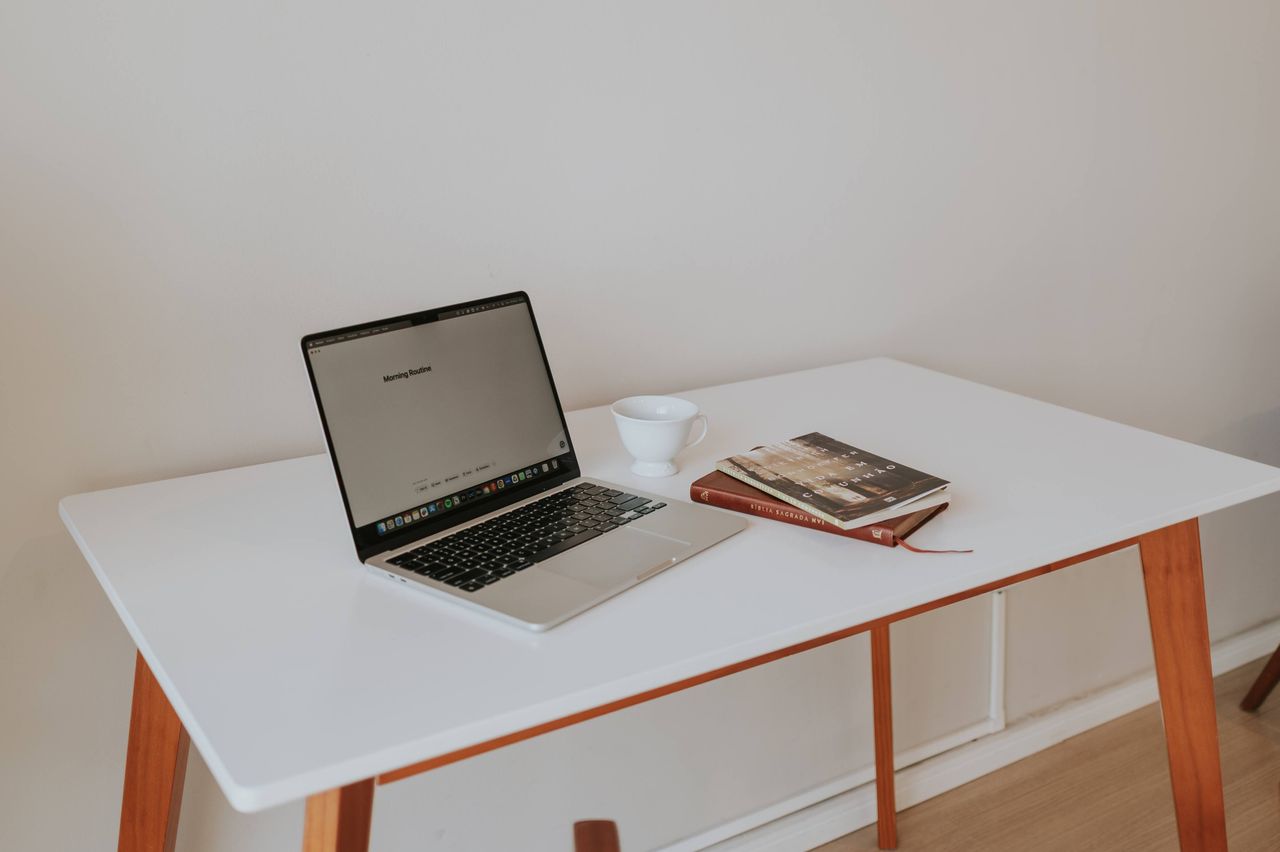
Photo via Pexels
A desk that is too big eats the room, and one that is too small makes work feel cramped. For most people, a top that is 120 cm wide and 60 cm deep is the sweet spot: wide enough for a laptop, a notebook and a mug, yet slim enough for a box room. If you use a separate monitor, 140 cm by 70 cm feels generous without taking over. Standard desk height is 72 to 75 cm, which suits most chairs and most adults.
Simple flat-pack desks start at about £60 to £90, while solid wood or sit-stand models run from £200 to £450. Before you buy, measure your doorway and stairs — many UK homes have tight turns that catch people out. A pale top, like the white desk in the photo, bounces light around and makes a small room feel bigger, and slim legs keep the floor visible so the space feels less crowded.
3. Swap the Chair and Save Your Back
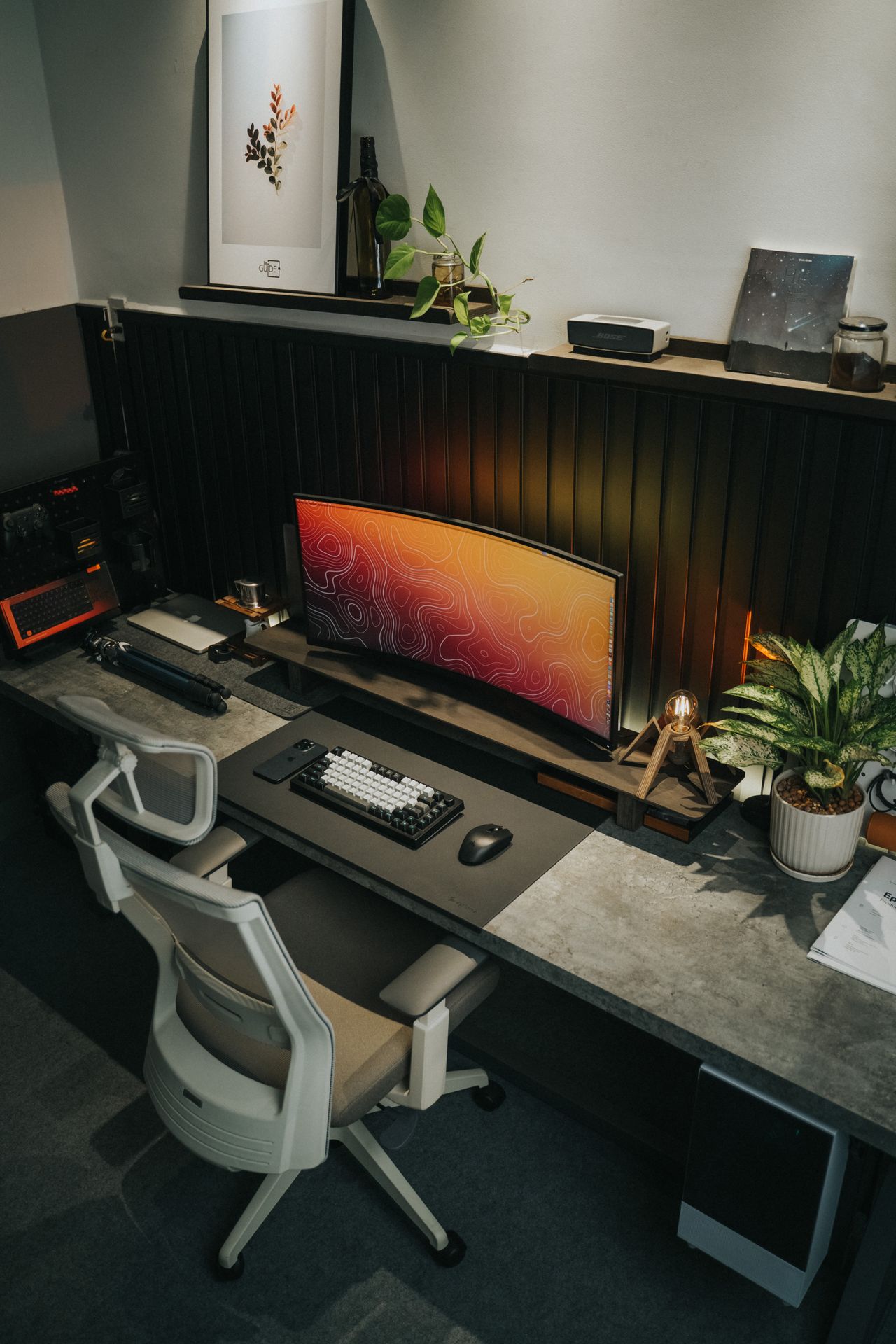
Photo via Pexels
If you sit for six or more hours a day, your chair matters more than any other piece of furniture in the room. A dining chair or a cheap fixed chair can leave you with an aching back by Friday. Look for a chair with adjustable height, a backrest that supports the curve of your lower spine, and armrests you can raise or lower. Your feet should rest flat on the floor and your screen should sit roughly at eye level, about an arm's length away.
Decent ergonomic chairs start at around £120, with well-known mesh models between £200 and £350. Set the seat height between 45 and 55 cm so your knees sit level with, or just below, your hips. If your office doubles as a guest room, you might also enjoy a small sofa for reading breaks — our guide to choosing a small office sofa shows compact styles that fit tight rooms, and our post on how to create a functional home office covers the full layout from scratch.
4. Add Shelves and Use the Wall Space
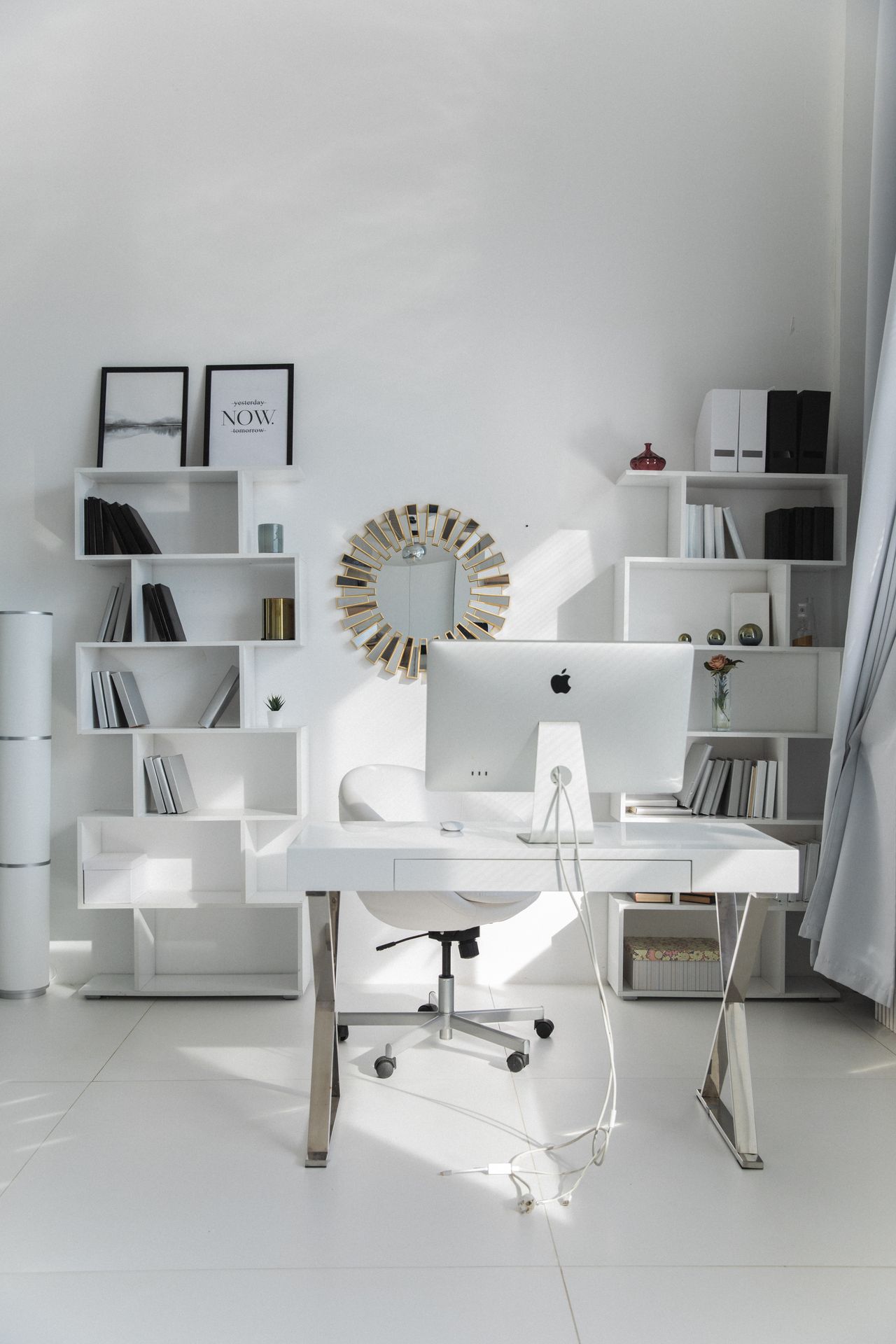
Photo via Pexels
When floor space runs out, the only way is up. Floating shelves above the desk keep books, files and a printer off your worktop while leaving the floor clear. Two or three shelves, each 80 to 120 cm long and 20 to 25 cm deep, hold a surprising amount. Fit the lowest shelf about 45 to 55 cm above the desk so you can reach it while seated without banging your head when you stand.
Simple shelf boards cost £8 to £20 each, and hidden brackets give that clean floating look for a few pounds more. Always fix into the wall studs or use the right wall plugs for your wall type, especially in older homes with crumbly plaster. Mix practical storage with a few pretty things — a framed print, a small plant, a favourite mug — so the shelves feel styled rather than stacked.
5. Layer Your Lighting Like a Pro
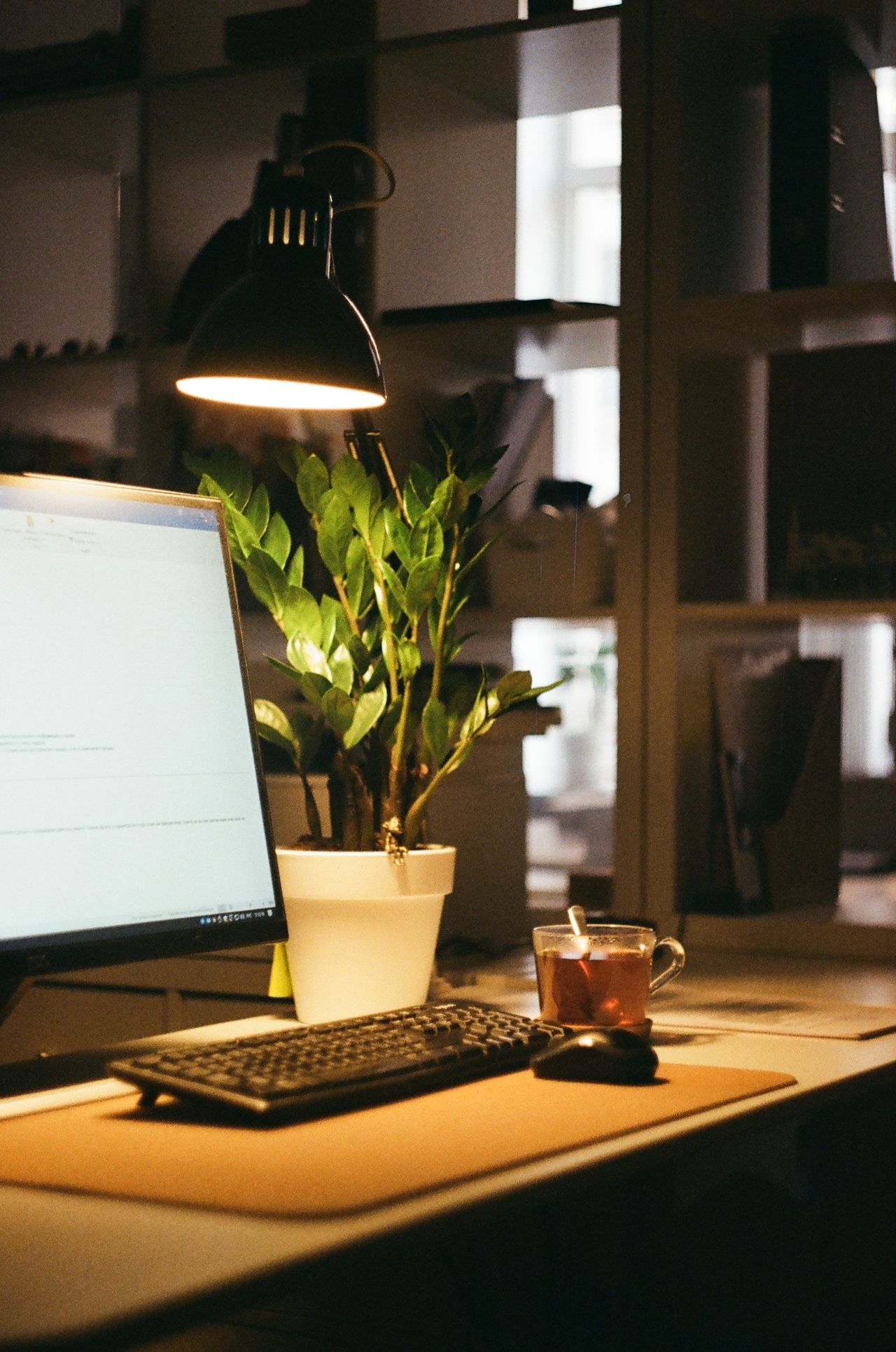
Photo via Pexels
One harsh ceiling light makes any office feel like a dentist's waiting room. The trick the designers use is layers: soft background light for the whole room, a focused task lamp on the desk, and a warm glow somewhere in between. A good desk lamp with an adjustable arm costs £20 to £50 and stops eye strain on dark winter afternoons, which arrive early in the UK.
Pick bulbs marked 2700K to 3000K for a warm, cosy feel, or 4000K if you prefer a crisper daylight look for detailed work. Place the lamp on the opposite side to your writing hand so your hand does not throw a shadow across the page. If your desk faces a wall, a small lamp behind the monitor softens the contrast between the bright screen and the dark room, which your eyes will thank you for by 5pm.
6. Tidy the Cables Once and For All
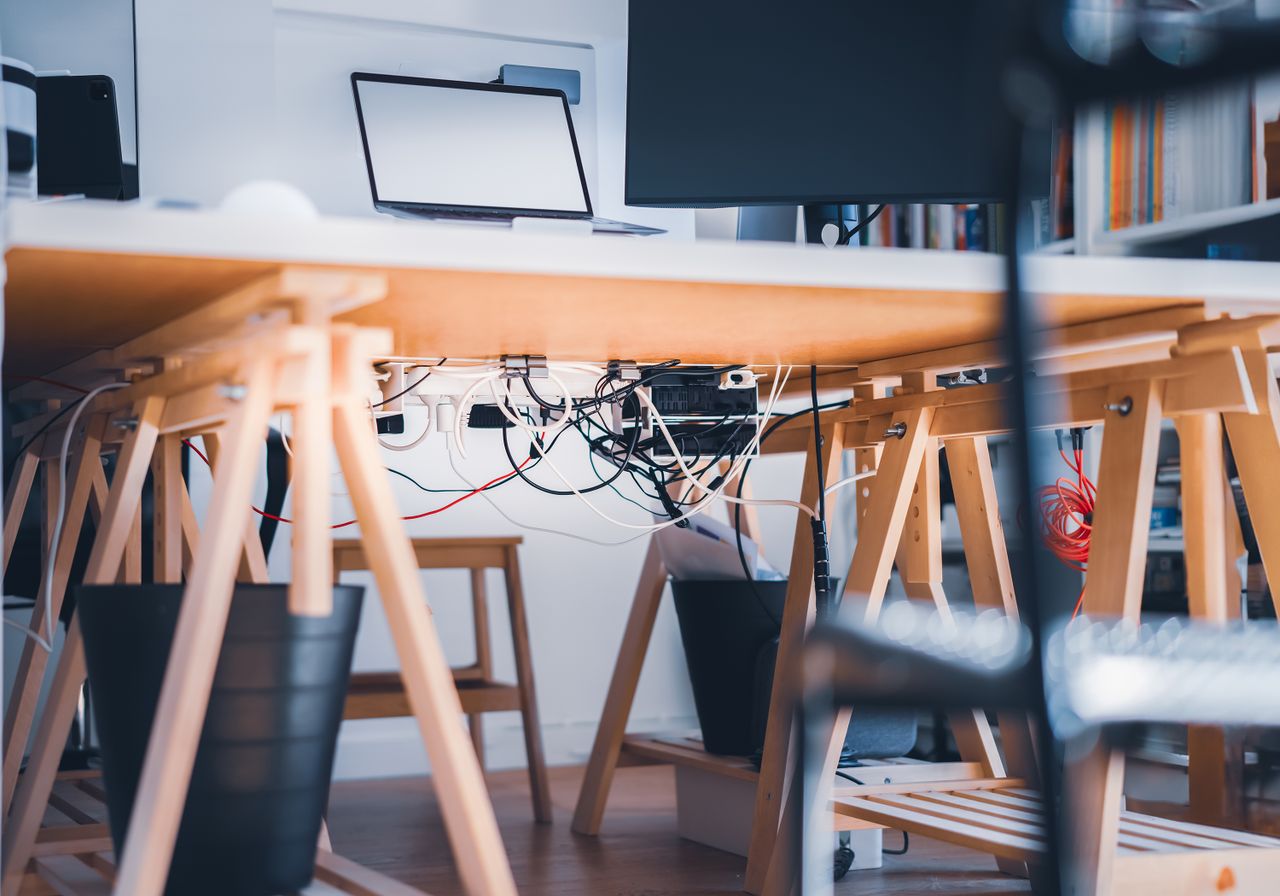
Photo via Pexels
Few things spoil a smart room faster than the knot of cables under the desk. The fix is cheap and takes about half an hour. Screw a cable tray or basket under the back edge of the desk (about £10 to £18), drop the extension lead and chargers into it, then bundle each cable with reusable Velcro ties, which cost around £5 for a pack. From your chair, the whole mess simply disappears.
Label both ends of each cable with a bit of tape and a pen — future you will be grateful when the printer plays up. Keep the router and any hot plugs out of the tray so air can move around them, and leave a little slack so you can pull the laptop out without yanking anything. Going wireless for your mouse and keyboard removes two more cables and makes the desktop feel calm at last.
7. Hang Art That Makes You Smile
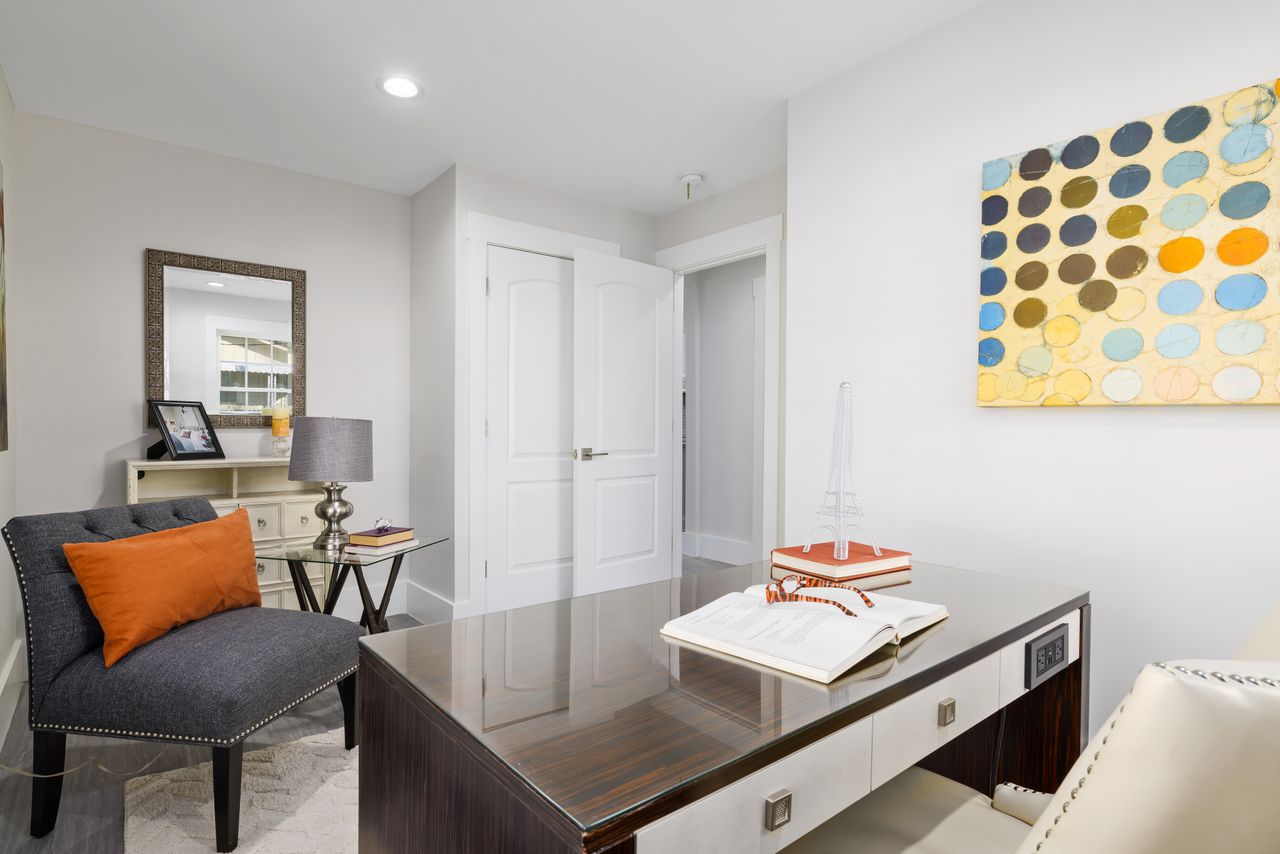
Photo via Pexels
Bare walls make a room feel unfinished, even when the furniture is lovely. One large print — 60 by 90 cm or bigger — often looks smarter than lots of tiny frames, and it gives the room a clear focal point. Charity shops and print shops are full of affordable finds from £10 to £40, and a simple frame in black, oak or gold lifts even a budget print.
Hang the centre of the picture at about 145 cm from the floor, which is average eye level, and keep it 15 to 20 cm above any furniture below it. A small gallery of three or four frames also works well; lay them out on the floor first and keep the gaps between frames even, around 5 cm. If you are styling the wall of a lounge that doubles as your office, our ideas for living room wall decorating will give you more layouts to try.
8. Bring in Plants for a Fresher Feel
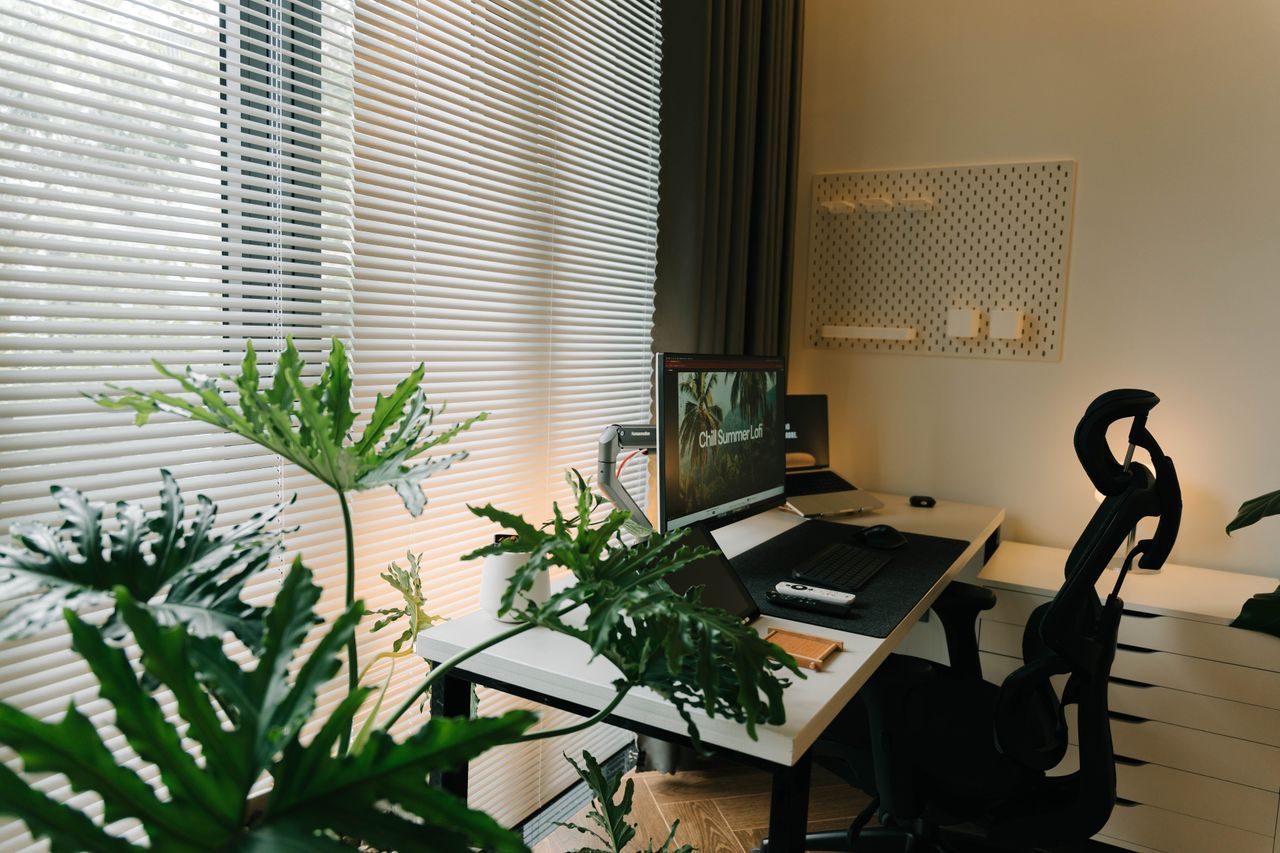
Photo via Pexels
A plant or two softens all the straight lines and hard tech in an office, and many people find a green view helps them concentrate. You do not need a jungle. One leafy plant on the floor beside the desk, one small pot on the desk and something trailing from a shelf is plenty. Easy, forgiving choices include a snake plant, a pothos that trails beautifully, and a spider plant — all happy in UK homes and cheap to buy at £6 to £15 each.
Think about light before you buy. A desk more than 2 metres from a window needs a tough, low-light plant like the snake plant, while a sunny sill suits herbs or a small jade plant. Use pots with drainage holes and a saucer underneath so you never water the desk by mistake. Group plants in threes at different heights for a look that feels planned rather than random.
9. Roll Out a Rug to Anchor the Zone
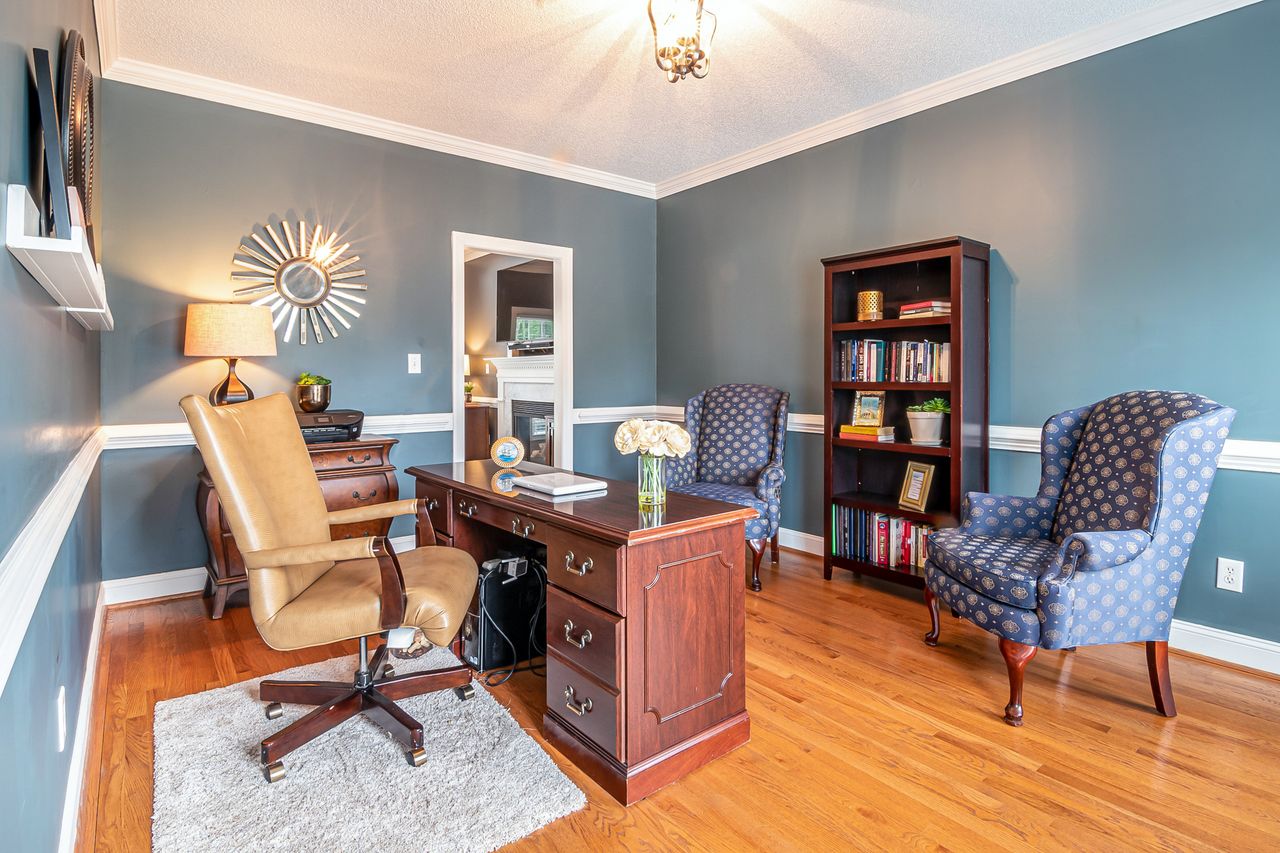
Photo via Pexels
A rug tells your brain where the office begins and ends, which is gold in a room that does two jobs. It also softens noise, warms up wooden or laminate floors, and protects the boards from chair wheels. Choose a rug wide enough that your chair stays on it when you roll back — for most desks, 160 by 230 cm works well, and 120 by 180 cm suits a small corner setup.
Flat-weave rugs are the practical winner under a rolling chair, because deep pile fights the castors and wears out fast. Prices start at about £35 for a simple flat-weave and rise to £150 or more for wool. A patterned rug is forgiving of crumbs and coffee splashes, and a washable rug is a blessing in a busy house. Add a thin anti-slip underlay (around £10) so the rug stays put on smooth floors.
10. Style a Backdrop Wall for Video Calls
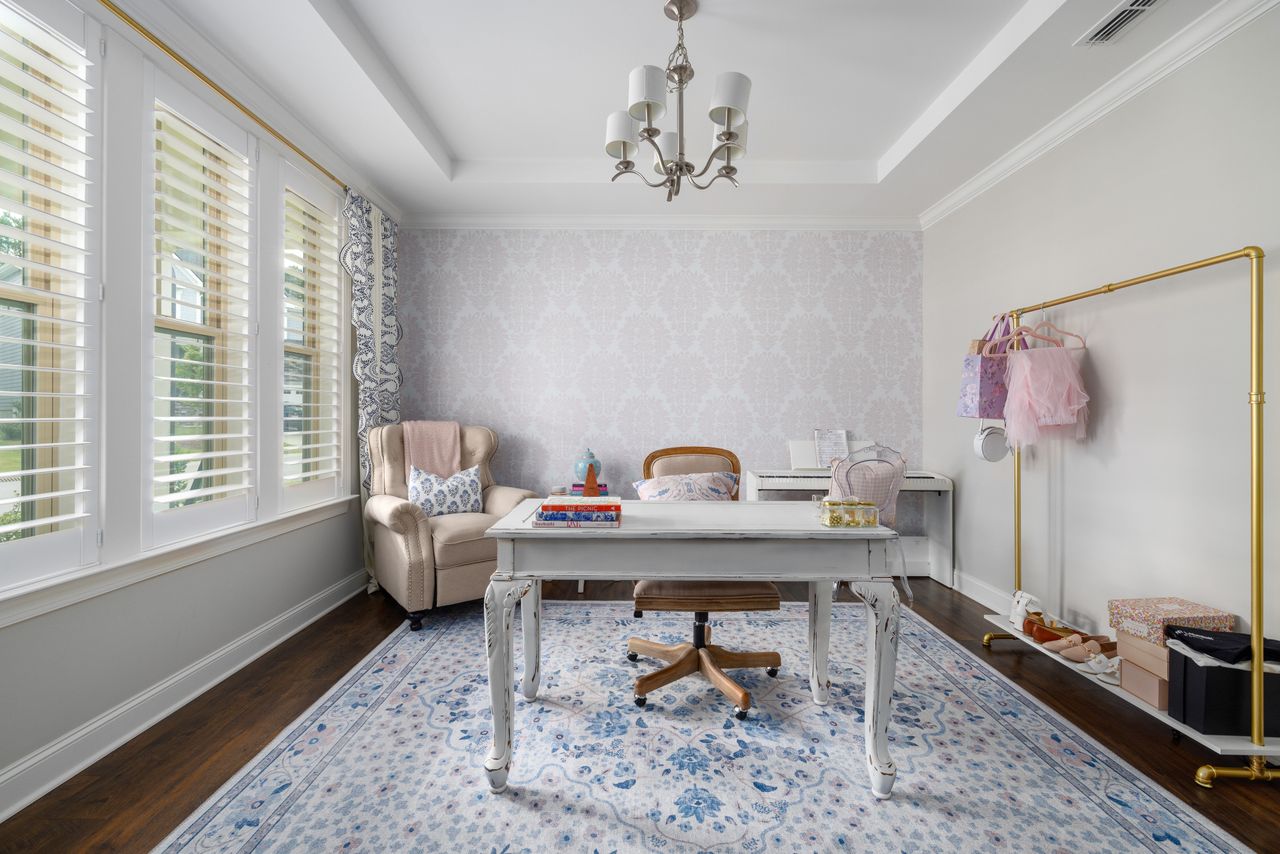
Photo via Pexels
Your colleagues see one wall of your home more than any other, so make it a good one. A tidy backdrop — a painted wall, a run of shelves or a length of patterned wallpaper like the one in this photo — looks calm and professional on screen. Sit roughly 1 to 1.5 metres in front of it: close enough that the backdrop fills the frame, far enough that you do not look pasted onto it.
Keep the scene simple. One or two shelves with books standing upright, a plant, and one picture is plenty; clear away laundry, clutter and anything you would not want your manager to study. Check your own view in the camera before a big call, and face a window or a lamp so the light falls on your face, never behind you. If the desk cannot move, a folding screen (from about £40) creates an instant backdrop and folds away at the weekend.
Frequently Asked Questions
How much does a home office makeover cost?
It depends on how far you go. A paint-and-tidy refresh with new art and a lamp can cost under £100. Adding a good chair (£120 to £350) and a desk (£60 to £250) brings a fuller change to roughly £300 to £600. Spend on the chair first, because you feel that upgrade every single day.
How can I fit an office into a small box room?
Box rooms in UK homes are often only about 2 by 2.5 metres, but that is enough. Choose a slim desk 100 to 120 cm wide, hang shelves instead of using a bookcase, and pick a compact chair with no bulky armrests. Light colours, a mirror and good lighting stop the room feeling like a cupboard.
What is the best colour for a home office?
Soft greens and dusty blues are favourites because they feel calm without being cold. Warm whites and gentle greys suit dark, north-facing rooms. If you love a bold shade, use it on one wall only and keep the rest light, so the room stays restful for long working days.
How do I make a rented room feel like mine without losing my deposit?
Skip the paint and use things that leave no marks: a big rug, art hung on removable picture strips, a folding screen as a backdrop and plants in pretty pots. Ask your landlord before drilling for shelves; many agree if you promise to fill the holes when you leave.
Where should the desk go in the room?
The happiest spot is near a window but not facing straight out of it, which can be distracting and causes glare on the screen. Side-on to the window gives you daylight without reflections. In a box room, a desk along the longest wall usually leaves the easiest path to the door.
Final Thoughts
You do not have to do all ten projects at once. Most people start with the free wins — tidy the cables, move the desk towards the light — then paint a wall one weekend and save the chair for payday. Each small change makes the next one easier, and soon the room starts working for you instead of against you.
However you use these home office makeover ideas, measure first, buy once, and choose pieces you genuinely like looking at. It is your room, eight hours a day. It should make you smile when you walk in with your morning tea.
Sources
- Wickes – Space Saving Hacks for Home Offices
- Space Station – Small Home Office Ideas
- Habitat – Home Office Ideas and Furniture Inspiration
- Taylor Wimpey – Home Office Interior Design Tips
Gallery
Photo via Pexels
Photo via Pexels
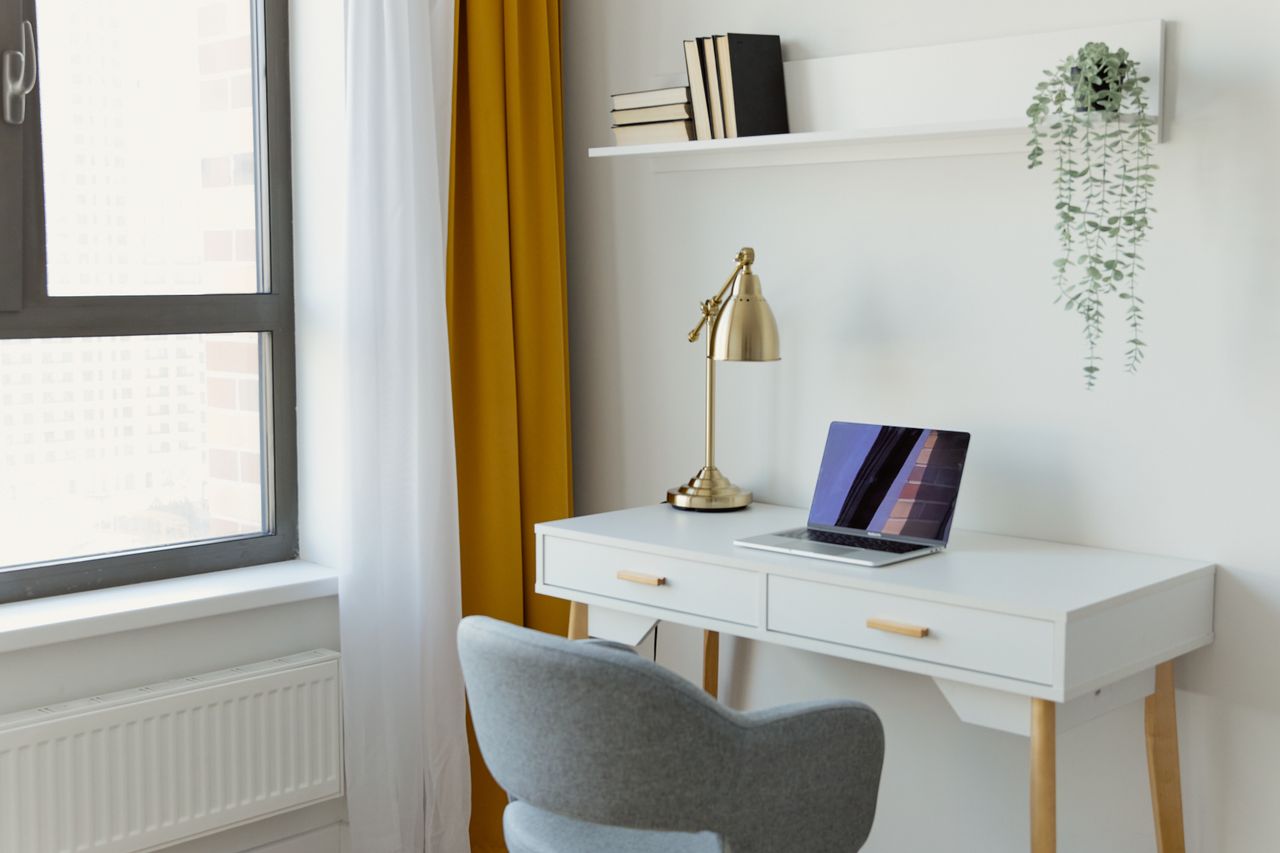
Photo via Pexels

No comments:
Post a Comment