Every December, German kitchens fill with the smell of cinnamon, cloves, and toasted almonds. If you are searching for german cookie recipes that actually work in an American kitchen, this list is your shortcut. Below you will find 15 beloved classics — from soft lebkuchen to star-shaped zimtsterne — each with the key ingredients, honest baking tips, and answers to the questions real bakers ask.

German Christmas cookies by candlelight — Photo: Lobo, via Wikimedia Commons
Table of Contents
- 1. Lebkuchen
- 2. Zimtsterne
- 3. Pfeffernüsse
- 4. Vanillekipferl
- 5. Spritzgebäck
- 6. Bethmännchen
- 7. Kokosmakronen
- 8. Mandelhörnchen
- 9. Springerle
- 10. Spekulatius
- 11. Linzer Plätzchen
- 12. Husarenkrapfen
- 13. Butterplätzchen
- 14. Elisenlebkuchen
- 15. Dominosteine
- FAQs
- Final Thoughts
1. Lebkuchen

Nürnberger lebkuchen at a market stall — Photo: FlickreviewR, via Wikimedia Commons
Lebkuchen is Germany's most famous Christmas cookie, a soft, cake-like gingerbread from Nuremberg with roots in medieval monasteries. Honey, warm spices, and candied citrus peel give it a deep, mellow flavor, and many are baked on thin Oblaten wafers. According to German Foods North America, Nuremberg has guarded its lebkuchen tradition for centuries.
You need honey, flour, brown sugar, eggs, and Lebkuchengewürz — the classic German spice blend of cinnamon, cloves, allspice, and cardamom. Rest the dough overnight so the spices bloom, bake at 350°F, and glaze while warm. Store finished lebkuchen in a tin with an apple wedge to keep them soft for weeks.
2. Zimtsterne

Zimtsterne — cinnamon stars with meringue tops — Photo: 4028mdk09, via Wikimedia Commons
Zimtsterne — 'cinnamon stars' — are chewy, snow-white stars made from a meringue of whipped egg whites, ground almonds, and cinnamon, with no flour at all. That makes them naturally gluten-free. Crisp meringue on top, soft almond center underneath: they are the cookie German children spot first on every Advent plate.
Whip the whites to stiff peaks, fold in the almond-cinnamon mix gently, and roll the dough between plastic wrap to avoid sticking. Bake low and slow at 300°F — pull them when the glaze is still white, since they firm up as they cool. Seal airtight at once; dry air is their enemy.
3. Pfeffernüsse

Glazed pfeffernüsse — 'pepper nuts' — Photo: Pelagic, via Wikimedia Commons
Pfeffernüsse means 'pepper nuts' — small, round spice cookies with black pepper, cloves, and cinnamon in the dough. They bake up firm with a crackled sugar glaze, and here is their secret: they taste better after two to four weeks in a tin, when the crumb softens and the spices mellow into something wonderful.
Mix flour, brown sugar, honey or molasses, eggs, and the spice blend, then chill the stiff dough before rolling marble-sized balls. Bake at 350°F until just set — they harden as they cool, so do not overbake. Toss warm cookies in powdered sugar or a thin glaze, then store sealed.
4. Vanillekipferl

Vanillekipferl — delicate vanilla crescents — Photo: Schlurcher, via Wikimedia Commons
These crescent-shaped butter cookies melt in your mouth — literally. Ground almonds or hazelnuts, lots of butter, and a heavy snowfall of vanilla sugar make them the most delicate cookie on the German Christmas plate. Austrians claim them too, and honestly, both countries bake them by the trayful every December.
The classic dough is egg-free: just flour, cold butter, sugar, and ground nuts. Shape small crescents with cool hands and bake at 350°F until the tips turn pale gold. Let them rest 10 minutes on the tray — they are fragile hot — then roll gently in vanilla sugar while still warm.
5. Spritzgebäck

Spritzgebäck — piped butter cookies — Photo: Olivia Fries, via Wikimedia Commons
Spritzgebäck are buttery piped cookies — the dough is 'spritzt,' or squirted, through a cookie press into S-shapes, rings, and ridges. Plain butter, sugar, flour, and vanilla make a crisp, tender bite that takes beautifully to chocolate-dipped ends or a shower of sprinkles. Kids love pressing the shapes.
Keep the dough cool but pliable — too warm and the piped ridges melt flat. Press directly onto ungreased baking sheets (the dough needs grip) and bake at 375°F for 8 to 10 minutes. Dip cooled ends in melted chocolate and let set. They keep two weeks in a tin.
6. Bethmännchen

Bethmännchen — Frankfurt's marzipan specialty — Photo: AlexanderKlink, via Wikimedia Commons
Bethmännchen are Frankfurt's marzipan treasure: soft almond-paste domes studded with exactly three halved almonds. Legend says a Frankfurt banking family created them for four sons — after one died, the fourth almond was dropped. Bittersweet, but the cookie is pure celebration.
Blend marzipan with powdered sugar, a little flour, and rose water, then form small balls. Press three almond halves into each dome and brush with egg wash for shine. Bake at 325°F until just golden. They stay fresh for weeks in a tin — if they last that long.
7. Kokosmakronen

Kokosmakronen with chocolate drizzle — Photo: Netha Hussain, via Wikimedia Commons
Kokosmakronen are Germany's answer to the coconut macaroon: chewy mounds of shredded coconut bound with whipped egg whites and sugar. Crisp edges, soft centers, and often a chocolate base or drizzle. They are naturally gluten-free and dangerously easy to eat by the handful.
Whip egg whites with sugar to soft peaks, fold in coconut and a splash of vanilla, then drop spoonfuls onto Oblaten wafers or parchment. Bake at 325°F until the edges turn golden. Cool fully before drizzling chocolate — warm macaroons melt it into a puddle.
8. Mandelhörnchen
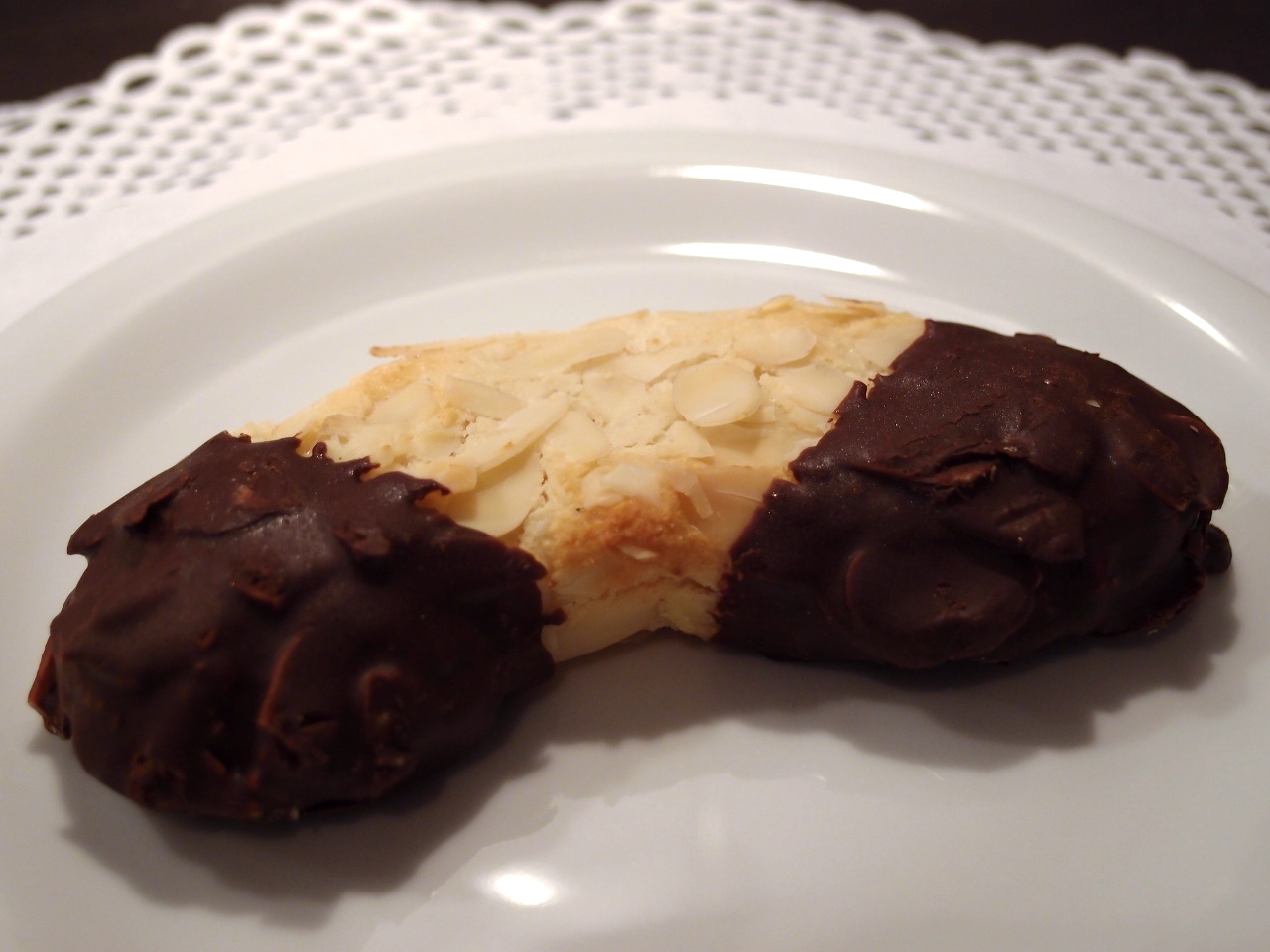
Mandelhörnchen — almond crescent with chocolate ends — Photo: SKopp, via Wikimedia Commons
Mandelhörnchen are the bakery-case classic: crescents of sweet almond paste studded with flaked almonds, their ends dipped in dark chocolate. Chewy, rich, and intensely almond — one is never enough. German bakeries sell them year-round, but they belong on every Christmas cookie tray.
Mix almond paste with powdered sugar and egg whites until smooth, shape into crescents, and roll in flaked almonds. Bake at 350°F until lightly golden — overbaking dries them out. Dip the cooled ends in melted dark chocolate and let set on parchment.
9. Springerle

Springerle — molded anise cookies — Photo: Frank C. Müller, via Wikimedia Commons
Springerle are edible art: pale anise cookies pressed with carved wooden molds into pictures of flowers, animals, and holiday scenes. A Swabian specialty with centuries of history, they taste of sweet anise and have a crisp shell over a soft center. Deutsche Welle counts them among Germany's most traditional Christmas treats.
Beat eggs and sugar for a full 10 minutes — the batter must be thick and pale. Press in flour and a little anise oil, mold firmly, then let the cookies dry uncovered overnight; this crust keeps the design sharp in the oven. Bake at 300°F on an anise-dusted tray.
10. Spekulatius

Spekulatius — stamped spice cookies — Photo: Zerohund, via Wikimedia Commons
Spekulatius are thin, crisp spice cookies stamped with windmill and farm scenes, baked for St. Nicholas Day on December 6 — Britannica notes the saint's feast day has been celebrated with treats for centuries. Cinnamon, cloves, and cardamom give them their warm snap, and the German version is the Christmas-market original.
Cream butter and brown sugar, add flour, baking powder, and the spice blend, then chill the dough well — cold dough holds the stamped design. Press into a floured mold or roll and cut, then bake at 350°F until the edges brown. Store in a tin; they stay crisp for weeks.
11. Linzer Plätzchen

Linzer Augen — jam sandwich cookies — Photo: Haeferl, via Wikimedia Commons
Linzer Plätzchen — little 'Linzer eyes' — are jam sandwich cookies: two buttery hazelnut shortbread rounds with raspberry or red currant jam peeking through cut-out windows, dusted with powdered sugar. They look like stained glass and taste like the holidays. The Linzer torte they are named for comes from Austria.
Work ground hazelnuts, flour, butter, sugar, and a pinch of cinnamon into a dough and chill it firm. Cut equal tops and bottoms, bake at 350°F until pale, then spread jam on the solid rounds and cap with the windowed ones. Dust with powdered sugar just before serving so it stays snowy.
12. Husarenkrapfen

Husarenkrapfen — jam thumbprints — Photo: Karin Greiner, via Wikimedia Commons
Husarenkrapfen — 'hussar's buttons' — are tender thumbprint cookies rolled in chopped hazelnuts with a jewel of apricot or raspberry jam in the center. Also called Engelsaugen, or 'angel eyes.' Buttery, nutty, and just tart enough from the jam, they vanish from the cookie tin first.
Cream butter and sugar, mix in flour and ground hazelnuts, then roll balls in chopped nuts. Press a thumbprint deep into each center — the jam needs room. Bake at 350°F, then fill the warm wells with jam. They keep well, and the jam centers stay glossy for days.
13. Butterplätzchen

Butterplätzchen — decorated cut-out cookies — Photo: DaB., via Wikimedia Commons
Butterplätzchen are the classic cut-out butter cookies — simple rounds, stars, and hearts, brushed with egg wash and finished with sprinkles or colored sugar. Every German child has decorated a tray of these. Pile them high on a plate, and see our guide to how to style a dining table to make the spread shine.
Rub cold butter into flour, sugar, and a pinch of salt, add an egg, and chill the dough at least one hour. Roll ¼-inch thick, cut shapes, and bake at 350°F until the edges just turn gold. Decorate cooled cookies with icing and sprinkles — this is the one to bake with kids.
14. Elisenlebkuchen

Chocolate-glazed elisenlebkuchen — Photo: Netha Hussain, via Wikimedia Commons
Elisenlebkuchen is lebkuchen's luxurious older sister: a Nuremberg specialty made almost entirely of ground almonds and hazelnuts, with little or no flour. Named for Elisabeth, a Nuremberg baker's daughter, says German Foods North America. Dense, moist, and intensely nutty, it is the connoisseur's Christmas cookie.
Fold ground nuts, candied peel, sugar, and eggs into a thick batter — no creaming needed. Spread onto Oblaten wafers and bake at 325°F until set. Brush warm cookies with chocolate glaze or a thin sugar icing. They keep for weeks and taste better after a few days in the tin.
15. Dominosteine

Dominosteine — layered gingerbread cubes — Photo: SKopp, via Wikimedia Commons
Dominosteine are little layered cubes: gingerbread base, sour cherry or apricot jelly, a slab of marzipan, all sealed in chocolate. Invented in Dresden in 1936 by chocolatier Herbert Wendler, they are Germany's favorite store-bought Christmas treat — and surprisingly fun to assemble at home.
Bake a thin sheet of lebkuchen-style gingerbread and cut it into squares. Stack each with jelly and a marzipan square using a dab of apricot jam as glue. Chill firm, then dip in melted dark chocolate. Let set on a rack — the layers show beautifully in cross-section.
FAQs
What is the difference between lebkuchen and pfeffernüsse?
Lebkuchen is a broad family of honey-spice gingerbread — soft, often nutty, sometimes baked on wafers. Pfeffernüsse are one small, round, glazed member of that family: firmer, bite-sized, and made to age in the tin.
Why did my zimtsterne turn out dry and rock-hard?
They overbaked. Pull them when the glaze is still white — they firm up as they cool. Seal them airtight right away; a wedge of apple in the tin keeps them chewy.
How long do these cookies keep?
Many german cookie recipes improve with age. Pfeffernüsse, lebkuchen, and springerle keep 3–4 weeks in a sealed tin; zimtsterne and macaroons about 2 weeks. Keep tins cool and airtight.
What is the wafer under lebkuchen — do I eat it?
That is an Oblaten, an edible wafer that stops sticky dough from clinging to the tray. Eat it — it is part of the cookie. Find Oblaten at European delis or online.
Do springerle really need to dry overnight?
Yes. The overnight rest forms a dry crust that locks the molded design in place so it survives baking. Skip it and your pictures melt flat.
What is Lebkuchengewürz, and can I make it myself?
It is the German gingerbread spice blend — cinnamon, cloves, allspice, nutmeg, ginger, cardamom, and coriander. Mix your own from ground spices; there is no single official ratio.
Final Thoughts
These 15 german cookie recipes carry centuries of Christmas tradition in every bite, from medieval Nuremberg to your own oven. Bake a few kinds each Advent weekend and you will have a full cookie tin by Christmas Eve. For the rest of your holiday menu, try these dairy free crockpot meals — easy festive dinners that cook while you bake.
German Christmas Cookie Gallery
A few more glimpses of the season — the baking tradition germany.travel showcases every December at markets across the country.

Lebkuchen stall at a Christmas market — Photo: Globetrotter19, via Wikimedia Commons

Raw cookie cut-outs ready for the oven — Photo: Sciencia58, via Wikimedia Commons

Decorated lebkuchen hearts — Photo: Kora27, via Wikimedia Commons

No comments:
Post a Comment