If your bedroom has baseboard heaters, you know the layout puzzle well. The bed only fits on one wall, but that wall has a heater. The dresser would be perfect under the window, except the heater runs right there. Push furniture against the wall like normal, and you block the heat, scorch the wood, or worse, create a real fire risk. The good news is that furniture around baseboard heaters can be arranged safely and attractively once you know the clearance rules and a few workarounds that designers and heating pros actually use.
This guide starts with the safety numbers that matter, including the difference between electric and hot-water heaters, and then walks through the bed, the dresser, the desk, and the curtains one by one. You will learn how to float furniture, pick pieces with legs and open bases, and make a small room work without pushing anything against a hot heater. Measure once, leave the gaps the heater needs, and the room will be both warmer and safer.

Photo: A bedroom with a bed and a nightstand beside an orange headboard wall. Source: Pexels.
Table of Contents
- 1. The Clearance Rules That Come First
- 2. Electric Heaters Run Hotter Than Hot-Water Ones
- 3. Bed Placement That Keeps Bedding Safe
- 4. Dressers and Nightstands Beside a Heater
- 5. Desks and Chairs That Do Not Block the Heat
- 6. Curtains, Bedding, and Soft Furnishings
- 7. Floating Furniture to Free the Heater Wall
- 8. Furniture With Legs and Open Bases
- 9. Heater Covers and Heat Shields
- 10. Small-Room Layouts That Still Work
- FAQs
- Final Thoughts
1. The Clearance Rules That Come First

Photo: A white electric baseboard heater with a control dial against a wood-paneled wall. Source: Wikimedia Commons.
Every baseboard heater works by convection: cool air enters at the bottom, warms over the element or hot-water pipe, and rises out of the top, and anything that blocks that path makes the heater work harder while heating the room less. As a safe planning rule, keep at least 12 inches of open space in front of an electric baseboard heater, at least 6 inches at each side, and at least 12 inches above it, and never let bedding, curtains, paper, or clothing touch the unit. Some manufacturers allow 6 inches in front for certain models, but the 12-inch rule is the safer default, and your heater's own manual always wins over any general guide, so check it before you finalize a layout.
Measure clearances from the heater's front face, not from the wall, and remember that bedding, blankets, and tablecloths count as part of the furniture, because they drape, slip, and fall. A bed that sits 12 inches from the heater is not safe if the comforter hangs 10 inches past the frame and brushes the top. Mark the clearance zone on the floor with painter's tape while you plan, walk the room at night with the heater on, and feel for trapped heat behind any piece that sits close. If the wall or the furniture feels unusually hot, the gap is too small, no matter what the tape measure says.
2. Electric Heaters Run Hotter Than Hot-Water Ones

Photo: A white column radiator mounted on a plain wall. Source: Pexels.
Not all baseboard heaters are the same, and the difference changes how strict you must be. Electric baseboard heaters use a heating element that can reach very high internal temperatures, so their outer cases get hot enough to scorch fabric and dry out wood over time, which is why the 12-inch front clearance matters most for them. Hydronic heaters, also called hot-water baseboards, circulate heated water from a boiler through a pipe, and their surfaces usually run much cooler, often below 100 degrees Fahrenheit on the case, though they still need airflow to heat the room and still should never be covered with bedding or boxes.
To tell which type you have, look for a power cord and a thermostat dial on the unit itself, which points to electric, or for copper pipes entering the ends and a boiler elsewhere in the home, which points to hydronic. If you are unsure, treat the heater as electric and keep the full clearances, because the stricter rule is safe for both types. Either way, vacuum inside the heater cover at the start of heating season, with the power off for electric units, since dust buildup inside a blocked heater is a fire risk all on its own.
3. Bed Placement That Keeps Bedding Safe
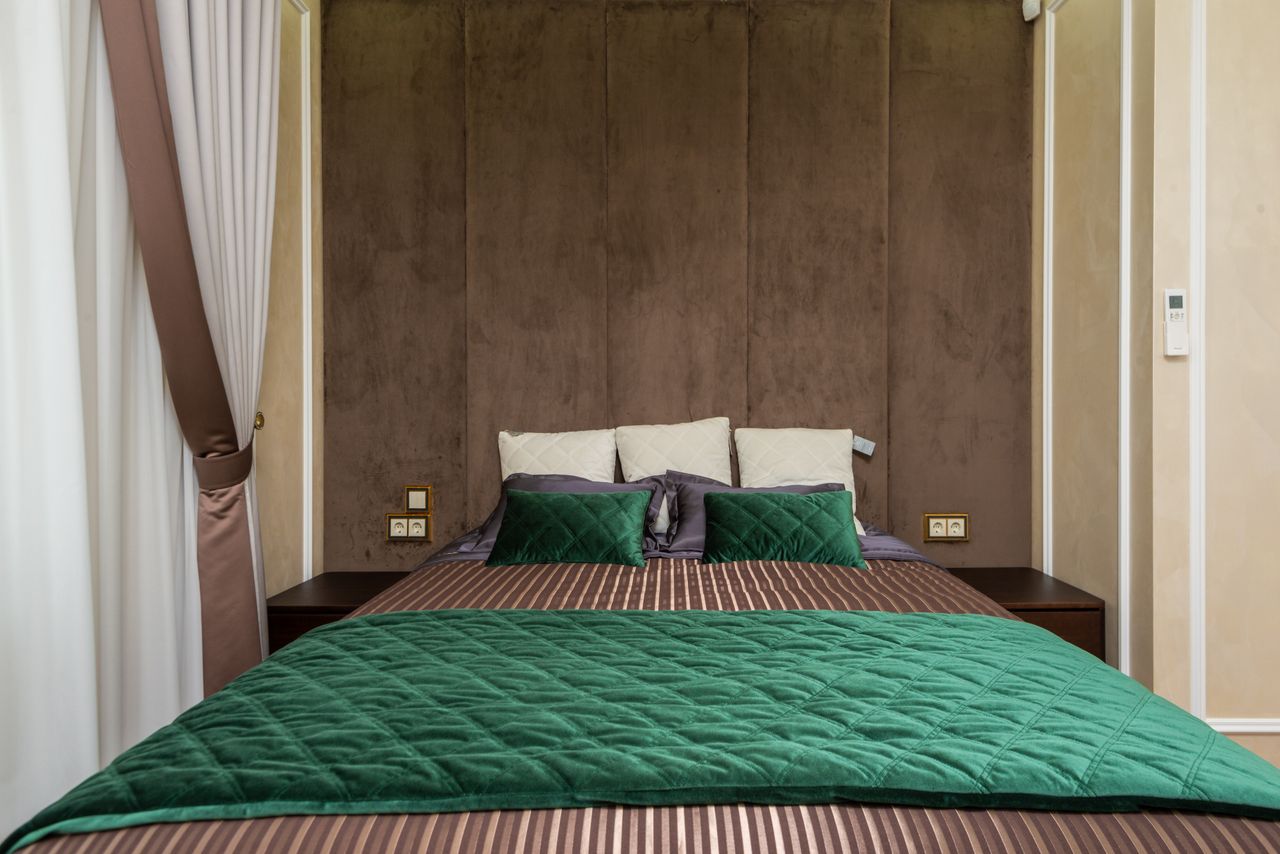
Photo: A bedroom with a green bedspread, a padded headboard wall, and nightstands on both sides. Source: Pexels.
The bed is the hardest piece to place, because it is large, heavy, and covered in exactly the soft materials a heater should never touch. The safest layout puts the bed on a wall with no heater, with the headboard on that wall and the long side facing into the room, so no bedding runs along the heated wall at all. If the only wall that works has a heater, put the bed so that only the headboard end or the foot end faces the heater, not the long side, because that blocks the shortest length of heater and keeps the long drape of blankets away from the heat. Keep the frame and every inch of bedding at least 12 inches from the heater, and tuck the comforter in on the heater side at night so it cannot slip down in your sleep.
A bed frame with legs helps more than a low platform here, because air can move under the frame and the heater's convection current is less choked, though legs alone do not replace the clearance gap. Wall-mounted headboards are another smart trick: mount the headboard to the wall above the heater height, or on the opposite wall, so the bed can sit a few inches forward without the headboard touching anything hot. If a child or a pet sleeps in the room, add a simple guard habit too: check every evening that no blanket, pillow, stuffed toy, or laundry pile has migrated into the clearance zone. When you are choosing pieces for the room, our guide on boho bedroom decor has sizing and spacing advice for bedroom pieces that applies here too.
4. Dressers and Nightstands Beside a Heater

Photo: A bedroom with a black dresser, an armchair, and a window with sheer curtains. Source: Pexels.
Dressers and nightstands cause trouble when they are long, low, and pushed flat to the wall, because a wide dresser can cover several feet of heater and trap a pocket of hot air behind it. The fix is placement, not a new dresser: flank the heater instead of covering it, putting a nightstand on one side and a taller, narrower piece on the other, so the heater breathes between them. Keep at least 6 inches of side clearance between any wood piece and the heater's end, and at least 12 inches in front, and watch for scorch marks or dried, cracked finish on the side nearest the heat, which are early warnings that the gap is too small.
Tall dressers on legs beat long low consoles on a heater wall, because they block less of the rising warm air and leave the lower heater slots open. Avoid storing paper, photos, candles, or aerosol cans in the drawer nearest the heater, since that drawer warms up first, and never drape a runner or a cloth over a dresser that overhangs the heater. If the dresser must sit on the heater wall and the room is tight, pull it forward on small furniture spacers or blocks on the back legs, so the gap stays constant even if someone pushes the piece while cleaning.
5. Desks and Chairs That Do Not Block the Heat

Photo: A bedroom desk and chair beside a bed with a mint headboard. Source: Pexels.
A desk on a heater wall is workable if the desk is the right shape. A simple writing desk on legs, with open space beneath and no modesty panel running to the floor, lets warm air rise past it, while a solid desk with closed sides and a back panel acts like a dam across the heater. Keep the desk at least 12 inches out from the heater, route no power strips or charging cables across the top of the unit, and choose a chair that tucks fully under the desk so it does not drift back into the clearance zone when you stand up. Paper is the hidden hazard here, because a stack of notebooks, a printer tray, or a pile of mail left on the floor beside the heater can dry out and scorch over a heating season.
If you work from the bedroom, the best spot is usually the wall beside the heater, not directly over it, with the desk perpendicular to the heated wall so you face into the room and the heat flows past your side rather than into your legs. Add a small rug under the chair, but keep the rug's edge out of the clearance zone, and check the chair's fabric and any throw draped over it each week. A desk that floats 12 inches off the wall may look slightly unusual at first, but after a week you will stop noticing the gap, and your feet will notice the warm air that finally reaches them.
6. Curtains, Bedding, and Soft Furnishings

Photo: A bedroom with long gold curtains beside glass doors. Source: Pexels.
Soft furnishings are the most common clearance failure, because curtains and bedding move. Long curtains that pool on the floor can be pulled by a draft, a pet, or a child straight onto a heater, and a bed skirt that hangs to the floor can do the same. The safe rule is simple: curtains over a baseboard heater should end at least 6 to 8 inches above the top of the heater, and sill-length or cafe-length curtains are the safest choice on a heater wall. If you love long curtains, hang them on a different wall, or use a shorter panel on the heater window and a longer panel on the room's other window, so the look stays balanced without the risk.
Bedding needs the same discipline. Tuck in the heater side of the comforter, skip the bed skirt on the heater side, and keep throws, pillows, and laundry off the floor near the unit. Upholstered chairs and ottomans should also stay a full 12 inches out, because loose fabric and fringe can droop toward heat over time, and a chair that looks fine in summer can sit closer in winter once a thick throw is added. Make a habit of the nightly glance: heater clear, nothing draped, nothing stored on top. It takes five seconds, and it is the habit that prevents most baseboard heater fires.
7. Floating Furniture to Free the Heater Wall

Photo: An empty sunlit room with radiators under large windows. Source: Pexels.
Floating furniture, meaning pieces pulled away from the wall instead of pushed flat against it, is the single most useful layout trick for heater rooms. A bed floated 12 to 18 inches off the heater wall, with a narrow console or shelf behind the headboard to close the visual gap, keeps the heat path open while the room still looks intentional. A sofa or reading chair floated the same way, with a slim table behind it, does the same in a sitting corner, and the gap behind the furniture becomes a warm-air channel instead of a dust trap. The room may feel slightly smaller on paper, but it feels warmer and less cramped in practice, because air actually circulates.
To make floating look deliberate, anchor the floated piece with a rug that extends under its front legs, and use the wall behind it for art hung above heater height, at least 12 inches above the unit, rather than for furniture. Avoid filling the gap with storage boxes, shoes, or books, since that recreates the blockage you just removed. Renters like this approach because it needs no drilling and no new furniture, just a willingness to pull things forward a few inches. Our guide to master bedroom sitting area ideas has more bedroom arrangement tricks that work the same way.
8. Furniture With Legs and Open Bases

Photo: A light wood dresser with a mirror and a lamp beside a window. Source: Pexels.
When you shop for a heater room, legs are your friend. Furniture on tall, open legs lets warm air pass underneath and around it, while skirted sofas, floor-length bed skirts, and solid plinth bases seal the heater off at the bottom, which is exactly where it needs to breathe. Look for nightstands and dressers on legs at least 4 to 6 inches tall, open-shelf consoles instead of closed cabinets on a heater wall, and bed frames that lift the mattress well off the floor. Metal and solid wood legs handle nearby warmth better than plastic or glued joints, and a quick check after the first cold week will tell you if a finish is drying or cracking near the heat.
Open bases help with cleaning too, because you can vacuum the heater and the floor beneath the furniture without moving heavy pieces, and dust is less likely to build up inside the heater. If you already own a skirted or solid-base piece you love, do not put it on the heater wall: move it to a plain wall and put a leggy piece in its place, since swapping two pieces costs nothing and solves the problem permanently. When buying new, bring your heater measurements to the store, including the heater's height and the clearance zone, so a salesperson cannot talk you into a beautiful low console that will smother the unit by December.
9. Heater Covers and Heat Shields

Photo: A beige panel radiator mounted on a brick wall. Source: Pexels.
Heater covers and heat shields can improve an ugly heater and protect curious hands, but only if they are made for your exact heater type and do not choke its airflow. A proper baseboard cover is a vented metal or wood enclosure with slots at the bottom for intake and at the top for warm air to escape, and it must keep the same clearances as the bare heater: furniture and bedding still stay 12 inches out from the cover, not from the wall behind it. Never use a solid wood box, a towel, a blanket, or a decorative panel laid across the top, because trapped heat can damage the heater and, with electric units, create a fire risk that looks harmless from the outside.
Before buying a cover, check the manufacturer's instructions and, for rentals, get written permission, since a cover changes how the heater operates and a landlord may need to approve it. Measure the heater's full length, including end caps and the thermostat, and choose a cover that leaves the thermostat exposed or includes a matching cutout, because a covered thermostat reads the wrong temperature and cycles badly. A good cover should feel warm, not scorching, on its surface, and the room should heat as well as before. If the room gets colder after fitting a cover, the cover is blocking too much air, and it should come off.
10. Small-Room Layouts That Still Work

Photo: A small bedroom with a bed, a desk by the window, and a wall-mounted television. Source: Pexels.
Small bedrooms feel impossible with heaters, because every wall seems to have one and every inch counts. The winning approach is to treat the heater as a no-go strip on the floor plan, not as an obstacle to squeeze around: draw the 12-inch zone on your plan, place the bed first on the wall with the shortest heater run, and let the remaining pieces flank, not cover, what is left. A twin or full bed instead of a queen, a wall-mounted nightstand instead of a floor one, and a desk that folds down or slides under a shelf can free surprising amounts of space. Keep the center of the room clear for walking, since a clear path also keeps people from shoving furniture back against the heater in the dark.
Use vertical storage to make up for the lost wall space: tall wardrobes on plain walls, shelves mounted at least 12 inches above the heater, and hooks on the back of the door for robes and bags that would otherwise pile near the unit. Mirrors on plain walls bounce light and make the room feel larger without touching the heater wall at all. If the room still will not work, talk to a heating professional about relocating a short heater section or adding a second small unit on another wall, because moving a heater is a real option during a remodel, and it is cheaper than living for years with a bed that blocks the only heat source.
FAQs
How far should a bed be from a baseboard heater?
Keep the bed frame and all bedding at least 12 inches from an electric baseboard heater, and at least 6 inches at the sides. Tuck the comforter in on the heater side so it cannot drape onto the unit overnight.
Can I put a dresser in front of a baseboard heater?
No, not directly in front of it. A dresser covering a heater traps heat, reduces warmth in the room, and risks scorching the wood. Place dressers beside the heater with side clearance, or float them 12 inches out from the wall.
Are hot-water baseboard heaters safer for furniture?
They run cooler on the surface than electric heaters, but they still need airflow and should never be covered with bedding, boxes, or curtains. Use the same clearance habit for both types unless your manual says otherwise.
Can curtains hang over a baseboard heater?
Only if they end well above it. Keep curtain hems at least 6 to 8 inches above the top of the heater, and choose sill-length curtains on heater windows. Long curtains that pool on the floor are a fire risk on a heater wall.
What should I do if my room only fits one layout?
Float the bed 12 to 18 inches off the heater wall, use leggy furniture, and keep the clearance zone taped and clear. If even that fails, ask a heating professional about moving or splitting the heater, rather than blocking it.
Final Thoughts
A heater wall is not a ruined wall. It is a wall with one rule: leave it room to breathe. Once the 12-inch front gap, the 6-inch side gaps, and the space above the unit are part of your floor plan, the rest of the room falls into place more easily than most people expect. Float the bed, pick leggy pieces, shorten the curtains on that one window, and check the gap each night. The room will be warmer, the furniture will last longer, and you will sleep better knowing nothing soft is resting against a hot heater.
Sources
- EngineerFix: How far should furniture be from a baseboard heater?
- EngineerFix: Can you put a bed against a baseboard heater?
- Baseboarders: Electric baseboard heater safety guide
Gallery

Photo: A dark vintage radiator on a tiled wall. Source: Pexels.

Photo: An ornate bedroom with a canopy bed, a fireplace, and a chandelier. Source: Pexels.

Photo: An ornate bedroom with a radiator under the window. Source: Pexels.

No comments:
Post a Comment