If you grew up in Quebec, this French Canadian pea soup recipe probably tastes like childhood. Known in French as soupe aux pois, it is a thick, golden soup built on dried yellow peas and a smoky ham hock, the kind of humble food that carried families through long winters.
I have made this soup more times than I can count, on the stovetop and in the slow cooker, and the method below is the one I keep coming back to. Here are ten ideas that will help you get the texture thick, the flavour deep, and the leftovers worth fighting over.

Photo: Cnrowley via Wikimedia Commons
- 1. What Makes It Soupe aux Pois
- 2. Buy the Peas in the Bag
- 3. A Ham Hock Beats Diced Ham
- 4. Dice the Vegetables Small
- 5. Let the Slow Cooker Do the Work
- 6. Simmer Low, Stir Little
- 7. A Nod to the Habitant Can
- 8. It Is Better on Day Two
- 9. Bread Is Not Optional
- 10. Double It for the Freezer
1. What Makes It Soupe aux Pois
Real soupe aux pois is yellow, not green. The colour comes from dried yellow split peas, which break down into a thick, almost creamy purée as they cook.
Green split peas make a fine soup, but the flavour is grassier and the colour is wrong for the Quebec classic. If the bag says yellow, you are on the right track.

Photo: Kari Sullivan from Austin, TX via Wikimedia Commons
2. Buy the Peas in the Bag
Look for 500 g bags of dried yellow peas in the bean aisle at Loblaws or Metro; they usually cost under $3. Whole or split both work, though split peas break down faster.
Skip the canned kind for this soup. Dried peas give you the thick body that makes the spoon stand up, which is exactly what you want.

Photo: Bean appreciator via Wikimedia Commons
3. A Ham Hock Beats Diced Ham
One smoked ham hock, about 500 g, will flavour the whole pot. It releases gelatin and smoky pork flavour as it simmers, which diced ham stirred in at the end never quite manages.
Fish the hock out when the meat starts falling off the bone, chop the meat, and stir it back in. A ham hock usually costs $4 to $6 at the butcher counter.

Photo: Hunkerrat via Wikimedia Commons
4. Dice the Vegetables Small
One onion, two carrots, and two celery stalks, all diced small, are all the vegetables this soup needs. Small pieces melt into the soup instead of floating around as chunks.
Soften them in a spoonful of butter for five minutes before the peas go in. That little head start takes the raw edge off the onion.

Photo: Pigup via Wikimedia Commons
5. Let the Slow Cooker Do the Work
This soup was made for the slow cooker. Add 500 g peas, the ham hock, the diced vegetables, a bay leaf, and 2.5 L of water in the morning, then cook on low for 8 hours.
The peas break down on their own with the long, gentle heat. Give it a stir before serving and mash a few peas against the side of the pot if you want it thicker.

Photo: Janine from Mililani, Hawaii, United States via Wikimedia Commons
6. Simmer Low, Stir Little
On the stovetop, bring the pot to a boil, then drop it to the barest simmer and leave it alone for about two and a half hours. Peas scorch easily, so low heat matters more than frequent stirring.
If the soup gets too thick, thin it with a splash of hot water. If it is too thin, take the lid off for the last 30 minutes and let it reduce.
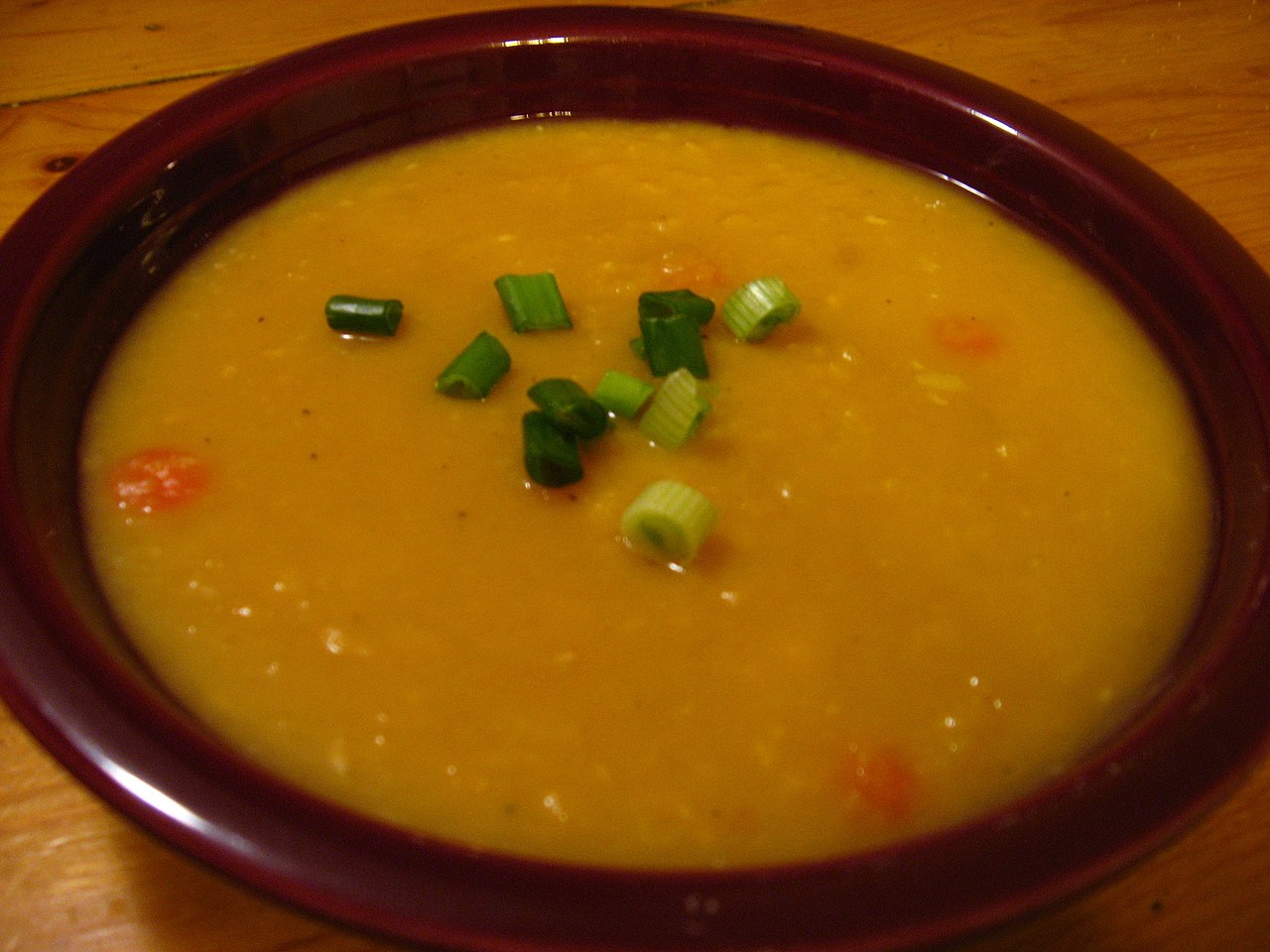
Photo: Qfamily via Wikimedia Commons
7. A Nod to the Habitant Can
Many of us grew up on canned Habitant pea soup, and there is no shame in that nostalgia. The canned version taught a whole generation what this soup should taste like: thick, smoky, and deeply savoury.
Homemade is better, but borrow the can's lesson and do not skimp on the pork. That smoky backbone is the whole point of the dish.

Photo: Campbell's Soup Company via Wikimedia Commons
8. It Is Better on Day Two
Like most pea and bean soups, this one improves overnight in the fridge. The flavours settle, the texture thickens, and the reheated bowl somehow tastes richer than the first.
Make it on Sunday and eat it Monday and Tuesday. It might be the best lunch of your week.

Photo: jeffreyw via Wikimedia Commons
9. Bread Is Not Optional
A thick slice of crusty bread is the traditional partner here, for dunking and for scooping up the last of the bowl. In Quebec, many families would not serve this soup without it.
If you want to keep the theme going, fry up a batch of Newfoundland-style fried bread alongside; my toutons are made for exactly this kind of dunking.

Photo: Takeaway via Wikimedia Commons
10. Double It for the Freezer
This soup freezes beautifully for up to three months. Cool it completely, pack it into 500 mL containers, and leave a little headroom for expansion.
Thaw overnight in the fridge and reheat gently, adding a splash of water if it thickened too much. February-you will be grateful.

Photo: JIP via Wikimedia Commons
Frequently Asked Questions
Do I need to soak the peas first?
No. Yellow split peas cook down fine without soaking; just rinse them and pick out any small stones before they go in the pot.
Can I make this French Canadian pea soup recipe vegetarian?
Yes. Skip the ham hock, use vegetable broth instead of water, and add a teaspoon of smoked paprika for that smoky depth.
What can I use instead of a ham hock?
A smoked pork chop, a leftover ham bone, or 250 g of salt pork all work well. Even bacon ends will do in a pinch.
Why did my soup turn out thin?
You likely added too much water or did not cook it long enough. Simmer it uncovered until it thickens, or mash some peas against the side of the pot.
How long does it keep?
Four to five days in the fridge in a sealed container, or up to three months in the freezer.
Final Thoughts
This is the soup I make when the first real cold snap hits and the windows frost up overnight. It asks for almost nothing — peas, pork, vegetables, time — and gives back a pot of pure comfort.
If you try this French Canadian pea soup recipe, make the double batch. Serve it with bread, share it with neighbours, and keep the freezer stocked. And when you want another slow, comforting pot, my Quebec baked beans and cretons are the natural next projects.
Sources
- Flavour Network: The Lip-Smacking History of Split Pea Soup in Canada
- Wikipedia: Pea soup
- Wikipedia: Split pea
- Wikipedia: Ham hock
- Wikipedia: Slow cooker
Gallery

Photo: Mx. Granger via Wikimedia Commons

Photo: Oneka36 via Wikimedia Commons

Photo: Tiia Monto via Wikimedia Commons

No comments:
Post a Comment