Dining rooms deserve better than blank walls. The right dining room wall art turns weeknight dinners into occasions and gives your guests something to admire between courses. You do not need a big budget or a design degree. You need the right size, the right hanging height, and art that matches the mood of your table. These 12 ideas work in real American homes, from classic gallery walls to chalkboard paint, and each one comes with the measurements you need to hang with confidence.

Frank Lloyd Wright's Robie House dining room — Photo: w_lemay, via Wikimedia Commons
Table of Contents
- 1. Build a Gallery Wall
- 2. Hang One Oversized Statement Piece
- 3. Use a Mirror to Double the Light
- 4. Create a Plate Wall
- 5. Style Floating Shelves with Small Art
- 6. Choose Food-Friendly Still Life Prints
- 7. Bring In Botanical Prints
- 8. Hang a Woven Textile
- 9. Add a Chalkboard Wall
- 10. Anchor Art to Your Sideboard
- 11. Try a Metal Wall Sculpture
- 12. Light Your Art Like a Gallery
- FAQs
- Final Thoughts
- Gallery
1. Build a Gallery Wall
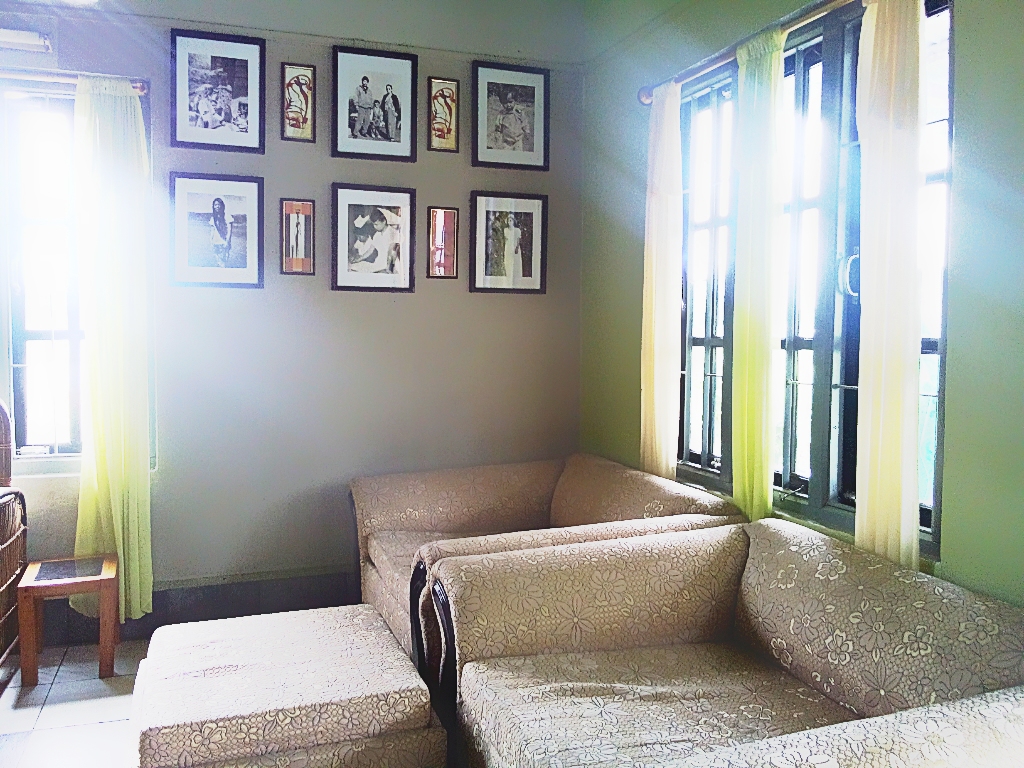
A family photo gallery wall — Photo: Thomas TK Tungnung, via Wikimedia Commons
A gallery wall is the most forgiving way to fill a big dining room wall. Start by laying your frames on the floor and shuffling them until the arrangement feels balanced. Keep 2 to 3 inches between frames so the group reads as one piece instead of clutter. Mix frame sizes freely, but repeat one element — the same black frame, the same white mat, or one color that appears in every picture — to keep the whole thing calm.
Center the arrangement so its middle sits 57 to 60 inches from the floor, the height museums use. Keep the total width within two-thirds of the sideboard or table below it: a 72-inch sideboard wants an arrangement no wider than about 48 inches. Family photos, travel prints, and kids' drawings all belong here — the dining room is where your life happens, so let the wall show it.
2. Hang One Oversized Statement Piece

Large-scale art in a historic dining room — Image: National Park Service, via Wikimedia Commons
If many small frames feel fussy to you, go the opposite way: one big piece. A single oversized canvas or framed print makes a dining room feel intentional in seconds, and it is easier to hang than a dozen small frames. Measure your sideboard or table, multiply the width by 0.66, and shop for art close to that number. A 60-inch table pairs beautifully with a 40-inch-wide canvas.
You do not need gallery prices. Large canvas prints from American print shops cost far less than originals, and a simple float frame makes even a budget print look expensive. Pick art that borrows one or two colors from your rug, chairs, or curtains so the big piece feels connected to the room instead of dropped in from nowhere.
3. Use a Mirror to Double the Light

Mirrors used as wall decor at grand scale — Photo: Eric Kilby, via Wikimedia Commons
A mirror counts as wall art, and in a dining room it works overtime. Hung opposite a window, it bounces daylight across the table and makes the whole room feel larger. An ornate gold frame leans traditional, while a simple round mirror with a thin black frame suits modern rooms. Either way, size it like art: about two-thirds the width of the furniture below it.
Think about what the mirror will reflect before you hang it. A chandelier, a window, or a pretty wall is ideal; a blank ceiling or a cluttered counter is not. Hang it so the center sits at eye level, around 57 to 60 inches from the floor. The same trick rescues small powder rooms, where a well-placed mirror is often the entire decorating plan.
4. Create a Plate Wall

A decorative plate wall display — Photo: AIDEPCUL, via Wikimedia Commons
Decorative plates are a dining room classic for a reason: they connect to food, add color, and cost very little at thrift stores. Gather 7 to 11 plates in one color family — blue and white is timeless — and hang them with adhesive plate hangers rated for each plate's weight. Trace each plate on kraft paper, tape the templates to the wall, and adjust the layout until it feels right.
Odd numbers look best, and mixing patterns within one palette keeps things interesting without chaos. Leave 2 to 4 inches between plates. If you have plaster walls, use proper anchors; a plate that crashes mid-dinner is memorable for the wrong reasons. This is also a lovely way to show off travel souvenirs or family heirlooms.
5. Style Floating Shelves with Small Art

A styled wall shelf with greenery — Photo: AndeyWiki, via Wikimedia Commons
Two floating shelves turn a blank wall into a changeable art display. Mount them 12 to 18 inches apart, with the lower shelf about 60 inches from the floor, and lean framed prints, small canvases, and a vase or two against the wall. Because nothing is nailed through a frame, you can swap pieces with the seasons in minutes.
This is the renter's best friend: two shelves mean only four to six small holes, easily patched later. Keep shelves 8 to 12 inches deep so frames sit securely. Take styling cues from our modern apartment guide — a trailing plant, a stack of art books, and one sculptural object per shelf is plenty.
6. Choose Food-Friendly Still Life Prints

A framed still life painting — Photo: J. Passepartout, via Wikimedia Commons
Still life art belongs in dining rooms. Paintings of fruit, bread, tableware, and flowers echo what happens at the table, so they always feel appropriate. According to GalleryThane, still life prints are especially suitable because they naturally connect with food, table settings, and gathering. A peach, a loaf of bread, a bottle of wine — simple subjects with timeless appeal.
Hang still life prints above the sideboard where guests see them while seated. Vintage-style prints in thrifted wood frames suit traditional rooms; a single bold modern still life suits minimal spaces. Keep the palette warm — reds, golds, and deep greens feel appetizing, while cold grays can feel chilly next to a dinner table.
7. Bring In Botanical Prints

A vintage botanical wall chart — Photo: Wolfmann, via Wikimedia Commons
Botanical prints bring the freshness of plants with none of the watering. Vintage educational wall charts — the kind that once hung in classrooms — make wonderful large-scale art, and reproductions are easy to find online. A cacao or citrus chart nods to food and drink, which makes it doubly right for a dining room.
The designer trick is oversized matting: put a modest print in a wide white mat and a simple frame, and it instantly looks gallery-grade. Hang a row of three or four matching botanicals above a long sideboard, spaced 2 to 3 inches apart, with their centers at 57 to 60 inches from the floor.
8. Hang a Woven Textile

A large-scale woven fiber installation — Photo: PAULIX04, via Wikimedia Commons
A woven wall hanging softens a dining room in two ways: visually, with texture and warmth, and acoustically, by soaking up echo. Dining rooms with hard floors and bare walls can sound harsh; a textile calms the clatter of dishes and conversation. Hang it from a wooden dowel or a slim brass rod with simple brackets.
Size it generously — a textile narrower than 24 inches can look lost on a big wall. Keep woven pieces on the wall farthest from the stove to avoid cooking splatter. Natural fibers like wool, cotton, and jute suit farmhouse and boho rooms; a flat-weave kilim-style piece suits traditional spaces.
9. Add a Chalkboard Wall

A chalkboard menu adds casual charm — Photo: Wilfredor, via Wikimedia Commons
A chalkboard wall makes the dining room interactive. Paint one wall — or just a framed section — with chalkboard paint and use it for the week's menu, a favorite quote, or the kids' drawings. It is especially fun in family dining rooms and open kitchens, where the board becomes part of daily life.
Use chalk markers instead of dusty chalk for crisp lines that do not smudge every time someone walks past. Update the board with the seasons: write out your Thanksgiving menu in November and guests will talk about it as much as the turkey. Two coats of paint plus 24 hours of curing give the smoothest writing surface.
10. Anchor Art to Your Sideboard

Art anchored above a dining room sideboard — Photo: Ijon, via Wikimedia Commons
The most common dining room art mistake is hanging a small frame on a huge wall with no relationship to the furniture. Fix it with the two-thirds rule: your art — one piece or a grouping — should span about two-thirds the width of the sideboard or table below it. According to Stone and Gray, anchoring art to the sideboard instead of floating it on the wall is what makes the arrangement read as deliberate.
Above a sideboard, choose one large framed print, a matching pair, or a balanced trio. Leave 6 to 12 inches between the top of the sideboard and the bottom of the frame so the two feel connected. This is the spot where dining room wall art earns its keep — it is the backdrop of every seated dinner, so make it count.
11. Try a Metal Wall Sculpture

A metal bas-relief wall sculpture — Photo: Historic American Buildings Survey, via Wikimedia Commons
Not all wall art is flat. A metal wall sculpture — brushed steel branches, a copper sunburst, a blackened-steel abstract — adds shadow and dimension that prints cannot. Under a picture light or directional sconce, metalwork throws gentle shadows that shift through the evening, which feels alive during long dinners.
Check the weight before you buy and use anchors rated well above it; metal pieces are heavier than they look. Keep the sculpture clear of traffic paths so sleeves and shoulders never brush it. In modern dining rooms, a single metal piece can carry the entire wall.
12. Light Your Art Like a Gallery

A wall sconce casting warm light — Photo: w_lemay, via Wikimedia Commons
The right light makes a $40 print look like $400. A picture light mounted above the frame, or a pair of sconces flanking it, washes the art in a warm pool that draws every eye at the table. Battery-powered picture lights now run for months on a charge, so you can add gallery lighting with no electrician.
Choose warm light around 2700K — it flatters both art and faces. Center the light on the piece and angle it so the beam covers the art without glare. Put the lights on a dimmer if you can: bright for homework at the table, low and golden for dinner parties.
FAQs
What size art should hang above a dining room sideboard?
Aim for art about two-thirds the width of the sideboard. A 60-inch sideboard wants art roughly 40 inches wide, whether that is one piece or a grouping.
How high should I hang art in the dining room?
Center the art 57 to 60 inches from the floor. Above furniture, leave 6 to 12 inches between the furniture top and the frame's bottom edge.
Can I mix different frame styles on one wall?
Yes. Keep one unifying element — the same mat color, the same frame finish, or one color repeated in every piece — and mixed frames look collected, not chaotic.
What kind of art works best in a dining room?
Still life, botanical prints, landscapes, and warm abstracts all shine. Food-connected subjects like fruit or tableware feel especially at home here.
Is a mirror a good substitute for wall art?
Absolutely. A well-sized mirror adds light and depth, and it follows the same sizing rules as framed art.
Final Thoughts
Beautiful dining room walls come down to three decisions: the right size, the right height, and art that suits the way you eat. Start with the two-thirds rule, hang the center at 57 to 60 inches, and choose pieces that make you happy to sit down at the table. Try one idea this weekend — even a single well-hung print changes the whole room — and build from there.
Gallery

A historic dining room, circa 1900 — Image: DPLA, via Wikimedia Commons

A modern dining area with warm wood tones — Photo: Shixart1985, via Wikimedia Commons

An elegant dining table setting — Photo: AgnosticPreachersKid, via Wikimedia Commons

No comments:
Post a Comment