Business casual sounds simple until you are standing in front of your closet at 7 a.m. wondering if those pants are too casual or that top is too dressy. Every office draws the line in a slightly different place, and that guessing game is exactly why so many women search for business casual outfits for women before a new job, a big meeting, or the first day back after working from home. The good news is that business casual is not a mystery once you learn a few reliable outfit formulas. When the pieces fit well, the fabrics look smooth, and the shoes are clean and closed, you almost always land in the safe zone.
In this guide you will find 10 complete outfits that real women wear to real offices across the United States and Canada, from law-firm-adjacent formality to creative-agency relaxed. Each idea gives you the exact pieces, the colors that work best, the fit and length rules that keep the look professional, and the shoes that finish it, with honest price ranges throughout. At the end, the FAQ section answers the questions women ask again and again online: Are jeans really allowed? Which shoes are always safe? And how many outfits do you actually need for a five-day week?

Photo: Wikimedia Commons
What You Will Find in This Guide
- 1. Tailored Blazer With Dress Trousers
- 2. Fine-Knit Sweater With a Midi Skirt
- 3. Button-Down Shirt With Dark Jeans
- 4. The Wrap Dress, the One-Piece Wonder
- 5. Flowy Blouse With Wide-Leg Pants
- 6. The Cardigan Set, Soft but Structured
- 7. Monochrome: One Color, Head to Toe
- 8. Plaid Blazer With a White Shirt
- 9. Summer Business Casual With Linen
- 10. Winter Layers With a Coat and Boots
- FAQs About Business Casual Dress Codes
- Final Thoughts
1. Tailored Blazer With Dress Trousers

Photo: RODNAE Productions via Pexels
This is the outfit to reach for on presentation days, client meetings, and any morning when you want zero doubt about looking professional. Start with a single-breasted blazer in navy, black, charcoal, or deep teal, worn over a simple shell top or fine-knit tee in a neutral color, with straight-leg tailored trousers that skim the ankle. The blazer should button without pulling, and its shoulder seam should sit right at the edge of your shoulder. Trousers look sharpest when the hem ends at the ankle bone, with no bunching over the shoe. A decent blazer runs $50 to $120 at stores like H&M, Quince, or J.Crew Factory, and trousers are usually $35 to $70.
For shoes, loafers, low block heels of 1 to 2 inches, or clean pointed flats all work. Add a structured tote that fits a laptop and one piece of simple jewelry, like small hoops or a watch. My honest advice: buy the blazer in the best fabric you can afford, because it does the heavy lifting in this outfit. A smooth, lined blazer in a midweight fabric instantly makes a $30 pair of trousers look twice the price, while a thin, wrinkly blazer drags the whole look down.
2. Fine-Knit Sweater With a Midi Skirt

Photo: Wikimedia Commons
A soft knit top with a longer skirt is the comfort outfit that still reads polished, and it is a favorite in offices where people sit at desks all day. Choose a fine-gauge sweater, meaning the knit looks smooth rather than chunky, in merino wool, a cotton blend, or a good acrylic. Solid colors like burgundy, forest green, navy, camel, and classic red look the most professional. Tuck the front of the sweater into a midi skirt that falls below the knee, ideally 2 to 4 inches past it. A-line and gentle pleated skirts move beautifully and never look tight, while a straight pencil midi works if it has a little stretch and a back slit for walking.
The small detail that makes this outfit work is the tuck. A half-tuck at the front defines your waist so the sweater does not swallow your shape, and a slim belt over the skirt waistband finishes the line. Wear loafers, ballet flats, or low heels, and add opaque tights in cooler months. Sweaters in this style cost $30 to $60, and a good midi skirt is $35 to $65. If you enjoy building cozy combinations for the colder half of the year, our guide to casual fall outfits has more cool-weather pairings in the same spirit.
3. Button-Down Shirt With Dark Jeans

Photo: Pexels
Yes, jeans can be business casual, but only the right jeans, styled the right way. The rules women on fashion forums repeat, and stylists agree with, are simple: dark indigo or black wash only, no rips, no fading, no distressed hems, and a straight, slim, or relaxed tapered fit that looks like a trouser from a distance. Skinny jeans are fading out of office wear, and baggy styles read as weekend wear. Pair them with a crisp button-down shirt in white, light blue, or a fine stripe, tucked in fully with a leather belt. The photo shows the same shirt with a black pencil skirt, its most polished form; swap in dark denim and the formality drops exactly one notch, the sweet spot for most offices.
Finish with loafers, ankle boots, or low heels, never sneakers, in offices that allow denim at all. A blazer over the top, like the looks in ideas 1 and 8, buys you extra safety on meeting days. Budget around $40 to $80 for jeans with a trouser-like finish and $30 to $60 for a no-iron button-down. One warning from experience: if your office is new to you, save the denim outfit for your second week, after you have seen what your manager actually wears. First impressions are easier in trousers.
4. The Wrap Dress, the One-Piece Wonder
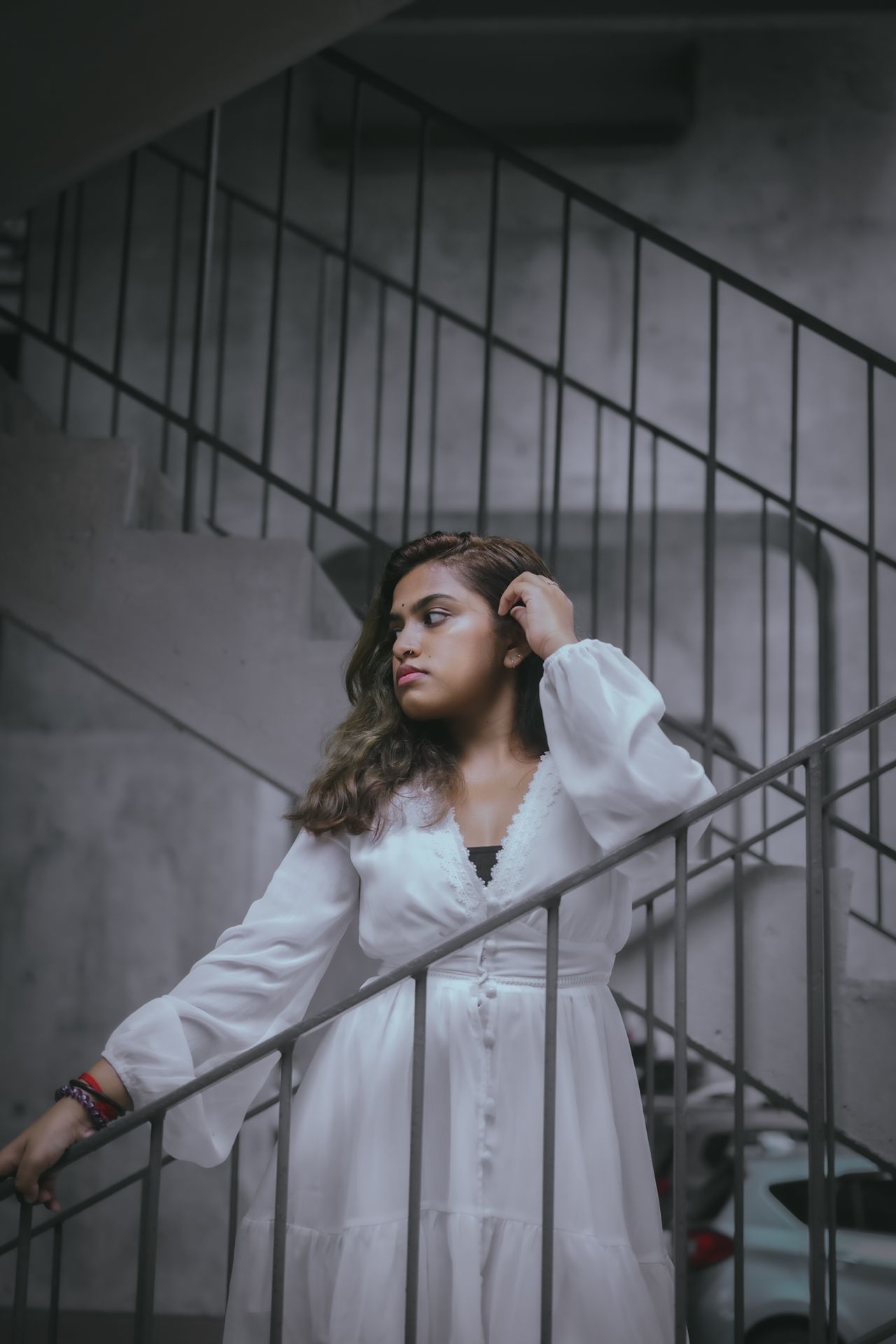
Photo: Pexels
On mornings when your brain will not cooperate, a wrap dress is the fastest correct answer. It is one piece, it always looks intentional, and the adjustable waist flatters nearly every body type. For work, choose a true wrap or faux-wrap style (faux-wrap is sewn shut, so there is no gaping risk) in a matte jersey or crepe that does not cling. The hem should land at the knee or just below, and the neckline should sit high enough that you never have to adjust it. Solid colors and small prints like tiny dots or subtle geometrics are the safest; large tropical prints read as vacation wear. Long or three-quarter sleeves, like the white dress in the photo, keep the look office-ready without a layer.
Wear it with closed-toe flats, loafers, or a low block heel, and keep jewelry simple, because the neckline already draws the eye. In winter, add opaque tights, ankle boots, and a long cardigan or blazer. A good wrap dress costs $45 to $90 and earns its place fast. If the neckline on a true wrap feels low on you, a small hidden snap or a thin camisole underneath fixes it in seconds.
5. Flowy Blouse With Wide-Leg Pants

Photo: Andrea Piacquadio via Pexels
Wide-leg pants have quietly become the most comfortable trousers in the modern office, and a soft blouse is their natural partner. Look for high-rise, full-length wide-leg trousers in a drapey fabric like crepe, Tencel, or a polyester blend that falls straight from the hip. The hem should nearly touch the floor with your shoes on, skimming the top of the shoe rather than pooling. Black, navy, charcoal, and deep olive are the most versatile. On top, wear a blouse with a little softness, such as a gentle ruffle, a tie neck, or soft gathers, in a color that contrasts gently with the pants. The rust blouse in the photo shows how one warm, interesting top can carry a whole outfit of plain neutrals.
Because both pieces have volume, the tuck matters here too: tuck the blouse in fully and add a slim belt so your waist stays visible. Pointed flats or a low heel lengthen the leg line under wide hems. Wide-leg trousers run $40 to $75, and blouses $30 to $60. One fit check before you buy: sit down in the fitting room. If the waistband digs in when seated, size up, because you will live in these for eight hours at a desk.
6. The Cardigan Set, Soft but Structured
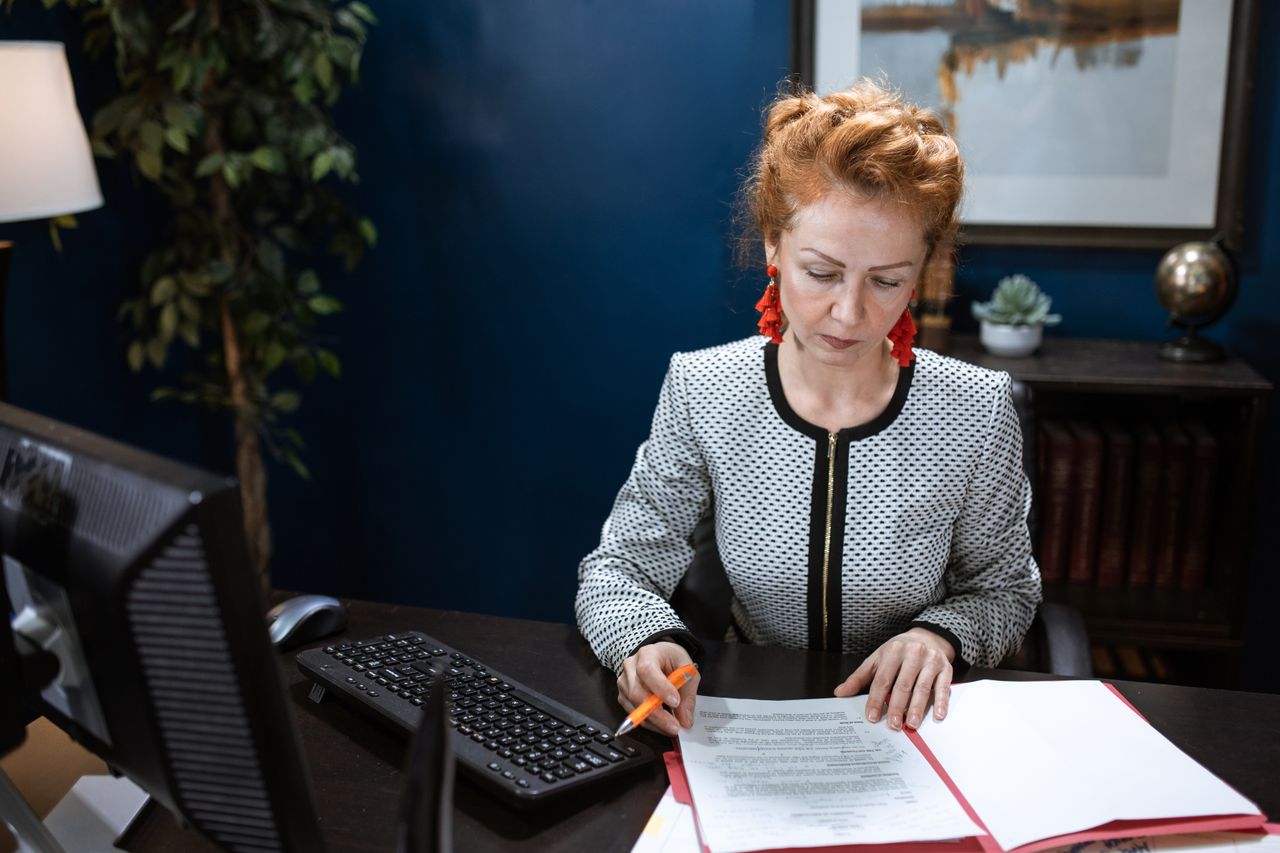
Photo: Pexels
A cardigan outfit walks the line between cozy and professional better than almost anything, as long as the knit has some structure. The modern version is a matching set: a fitted cardigan worn buttoned as a top, or a cardigan over a same-color shell, often called a twin set. Look for fine knits with clean edges, small buttons, and a length that ends at the hip bone. A knit jacket style, like the black-and-white patterned one in the photo, reads even more polished and works beautifully over trousers or a pencil skirt. Pair the set with tailored trousers or a midi skirt, not jeans, if your office leans formal.
Colors like cream, soft gray, navy, and black-and-white patterns mix with everything you already own. Expect to pay $35 to $70 for a cardigan and $20 to $40 for the matching shell. The mistake to avoid is the slouchy, oversized cardigan; that shape belongs to weekends. Choose a tighter weave that holds its shape through the day instead of a thin knit that stretches out by noon.
7. Monochrome: One Color, Head to Toe
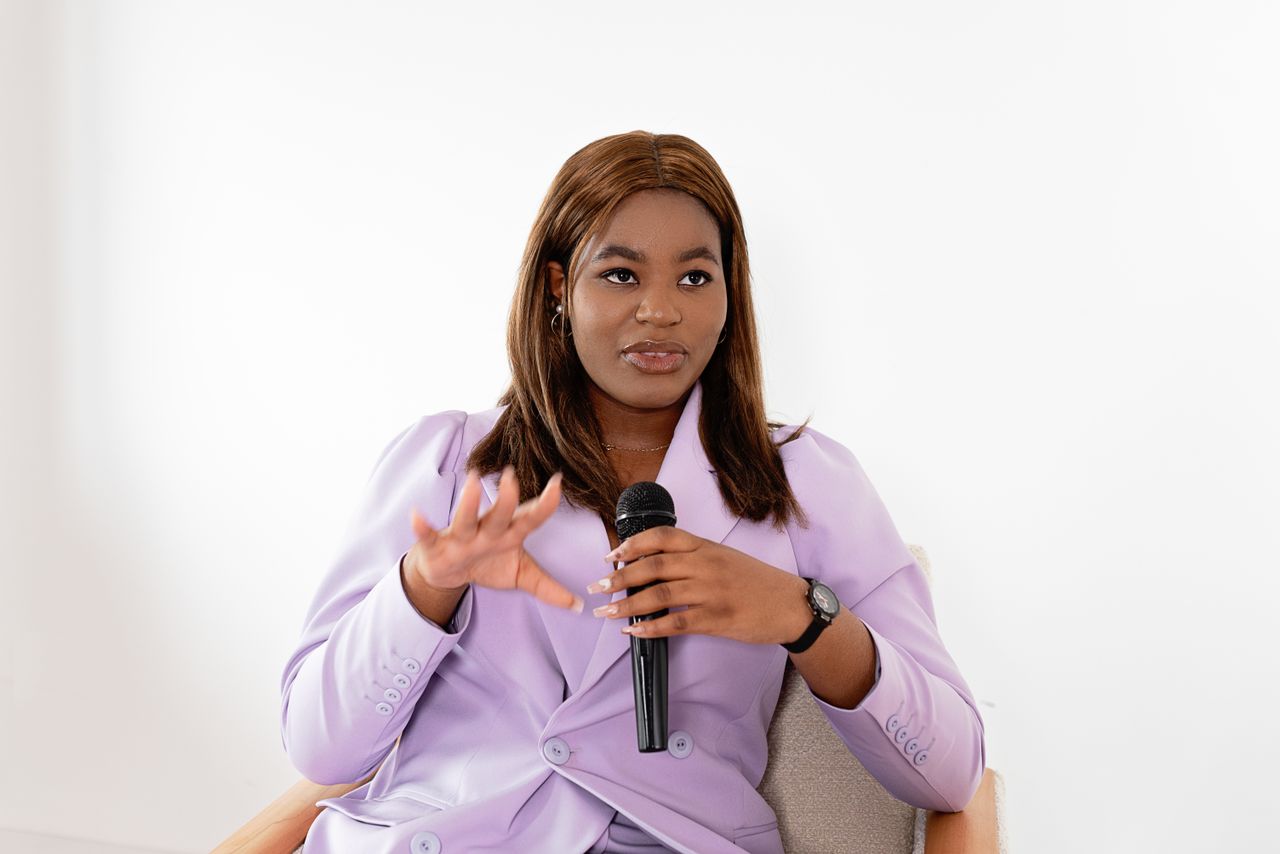
Photo: Mikhail Nilov via Pexels
Dressing in one color family from top to bottom is the stylist trick that makes any outfit look more expensive. The safest versions use neutrals: all cream, all camel, all gray, or all navy. A cream sweater with cream trousers and tan loafers looks calm and pulled together with almost no effort. Once you trust the formula, softer colors work too; the lavender suit in the photo shows how a single gentle color can look confident and modern rather than matchy. The secret is mixing textures within the color, like a knit top under a smooth blazer, so the outfit has depth instead of looking like a uniform.
Keep the shades in the same temperature family: warm creams with warm tans, cool grays with cool blues. Shoes can match the outfit or go one shade darker. This approach also makes a small wardrobe feel bigger, because every piece already matches every other piece. If you are building a capsule work wardrobe on a budget, starting with one color family is the smartest first step I know.
8. Plaid Blazer With a White Shirt

Photo: Pexels
A plaid or checked blazer adds pattern and personality while staying completely office-safe, and it is the easiest way to make a plain white shirt and black trousers feel new again. Choose a small-scale check in gray, navy, or brown tones; large, loud plaids can overwhelm and read casual. The fit rules are the same as any blazer: clean shoulders, a button that closes without strain, and sleeves that end at the wrist bone. Underneath, a white or ivory button-down keeps the pattern in charge. On the bottom, black or charcoal trousers or a straight skirt keep the look grounded.
This outfit shines in fall and winter, layered over a thin turtleneck on cold days. Loafers or ankle boots finish it well. Plaid blazers cost $55 to $110 at mid-range stores, and the pattern hides small wrinkles better than a solid, which makes it forgiving on long days. My tip: pull one color from the plaid, like the navy or burgundy thread in the check, and match your shoes or bag to it.
9. Summer Business Casual With Linen

Photo: Emmy E via Pexels
Summer is when business casual gets tricky, because heat pushes us toward beach fabrics while the dress code stays the same. Linen is the answer, done right. Choose linen blends (linen with cotton or a touch of viscose) instead of pure linen; they wrinkle far less and still breathe. A light, unlined blazer like the pale gray one in the photo, worn over a sleeveless shell that covers the shoulders properly, keeps you cool without crossing into tank-top territory. Linen-blend trousers in white, stone, or navy with a clean flat or a low sandal with a back strap complete the look. If you are wondering whether the pants in your closet pass the dress code, our honest breakdown of are linen pants business casual walks through exactly where the line sits.
Two summer rules protect the whole outfit. First, check fabric in daylight: white linen can be see-through, so choose lined trousers or wear nude-tone undergarments. Second, skip flip-flops and strappy party sandals no matter how hot it gets; a closed-toe flat or a neat loafer keeps the outfit professional. Expect $40 to $70 for linen-blend trousers and $45 to $90 for an unlined blazer. A small handheld steamer at your desk drawer fixes midday creases in two minutes.
10. Winter Layers With a Coat and Boots

Photo: Wikimedia Commons
In cold US and Canadian winters, your coat and boots are half the outfit, so choose them like they matter. A tailored wool coat or a classic belted trench in camel, black, or navy instantly polishes whatever is underneath, as the photo shows. Under the coat, layer a thin turtleneck or fine-knit sweater over a button-down, or wear a sweater dress with opaque tights. Ankle boots with a low, stable heel are the winter workhorse: they handle icy sidewalks better than pumps and look right with trousers, skirts, and dresses. Knee-high boots work beautifully with midi skirts and dresses, as long as the hem overlaps the top of the boot.
For very cold commutes, there is no shame in the two-shoe system: wear warm winter boots outside and change into loafers or flats at your desk. Half the offices in Toronto and Chicago quietly run on this system. A good wool coat costs $90 to $200 and lasts for years, and leather ankle boots run $70 to $140. For more cold-weather combinations that survive a real northern winter, see our warm winter work outfits guide, written with Canadian winters in mind.
FAQs About Business Casual Dress Codes
Are jeans business casual?
Sometimes. In most modern offices, dark indigo or black jeans with no rips or fading, worn with a blouse, button-down, or blazer and proper shoes, pass as business casual. Light washes, distressed styles, and skinny jeggings do not. Traditional industries like banking, law, and government often still say no to denim entirely, and jeans are never right for a first interview. When in doubt, dress one small step above the most casual person on your team.
What shoes are safe for business casual?
Loafers are the safest shoe in business casual, followed by ballet flats, pointed flats, low block heels of 1 to 2 inches, ankle boots, and clean closed-toe pumps. These work with trousers, skirts, and dresses alike. Avoid athletic sneakers, flip-flops, beach sandals, and very high or platform heels. In creative and tech offices, minimalist leather sneakers sometimes pass, but only spotless ones, and only after you have confirmed the office culture allows them.
How many outfits do I need for a work week?
Fewer than you think. Five bottoms (three trousers, one skirt, one dark jean), seven to eight tops, two blazers, and one wrap dress can mix into more than two weeks of outfits without an exact repeat. The trick is keeping everything in two or three color families so all the pieces match, like the monochrome idea above. In practice, 10 to 12 well-chosen pieces handle a full work week comfortably.
What are the gray areas I should avoid?
The repeat offenders are leggings worn as pants, sleeveless tops with thin straps, hems more than a couple of inches above the knee, sheer fabrics without a layer underneath, gym sneakers, and anything wrinkled or overly tight. Shoulders are a common gray zone: a wide, structured sleeveless shell is fine in many offices, but spaghetti straps are not. If you have to ask yourself three times whether something is appropriate, that is your answer; choose the safer option and save the doubtful piece for the weekend.
How can I build a business casual wardrobe on a budget?
Start with the pieces that appear in the most outfits: black trousers, navy trousers, one blazer, a white button-down, and loafers. That core costs roughly $250 to $350 at budget-friendly stores and already gives you a week of combinations. Then add one piece a month, like a wrap dress or a plaid blazer. Thrift and consignment stores are excellent for blazers and wool coats, which are expensive new but last for years. Spend on fit and fabric for the basics, and save on trend pieces.
Final Thoughts
Business casual stops being stressful the moment you stop guessing and start using formulas. A blazer with trousers, a sweater with a midi skirt, a wrap dress, a cardigan set: each of these is a complete answer you can repeat with small changes all season. Keep your colors in a few families, respect the fit rules, and let clean, closed shoes do quiet work for you. That is the real secret behind good business casual outfits for women; not more clothes, just the right combinations worn with confidence.
Start with the two or three ideas above that match your office and your weather, wear them on rotation for a couple of weeks, and notice how much easier your mornings get. Then add one new formula at a time. Your closet, and your 7 a.m. self, will thank you.
Sources
- Classy Work-Appropriate Outfits for Women — BLU'S
- Does Business Casual Include Jeans — Staedter Style
- The Ultimate Guide to Business Casual Shoes for Women — Dress For You Styling
- Ask Angie: Smart vs Business Casual — YouLookFab
- Effortless and Work-Ready Business Casual Guide — Style Vibes Daily
Gallery: More Business Casual Inspiration

Photo: Christina Morillo via Pexels — a gray blazer over a soft cream blouse is a meeting-day classic.

Photo: Pexels — a relaxed houndstooth blazer brings pattern and polish to plain separates.
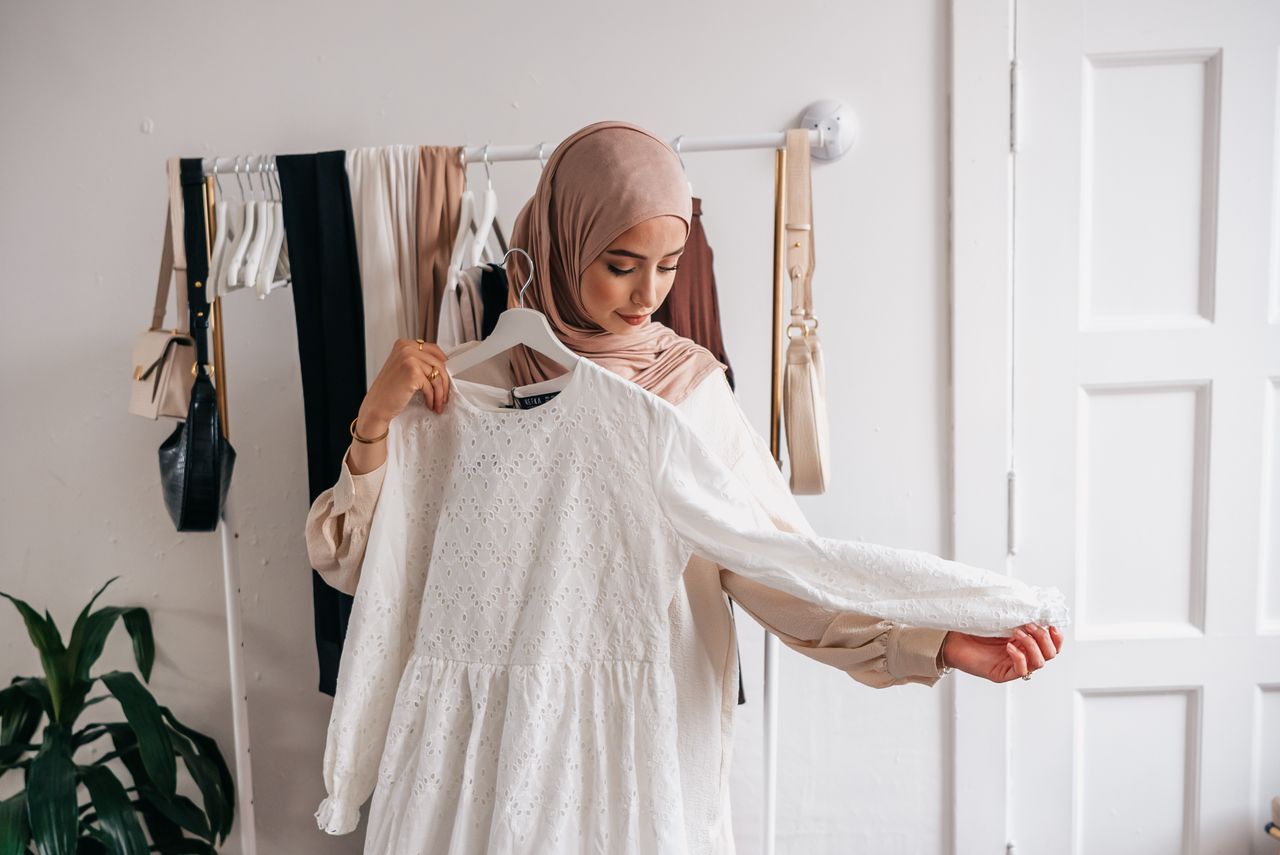
Photo: PNW Production via Pexels — a small rail of neutral pieces is the start of an easy capsule work wardrobe.

No comments:
Post a Comment