Black and white is the one color pairing that never goes out of style. A black-and-white bedroom set looks crisp, bold, and calm all at once, and it works with almost any decor you add later. If you are shopping for matching bedroom furniture, this high-contrast look is one of the safest bets you can make.
Below are 10 styling ideas focused on the furniture itself: the bed frame, nightstands, dresser, and mirror that make up a set. Each one includes real measurements, finish tips, and answers to questions shoppers ask most, like how tall nightstands should be and whether the pieces have to match exactly. Pick the ideas that fit your room size and budget.
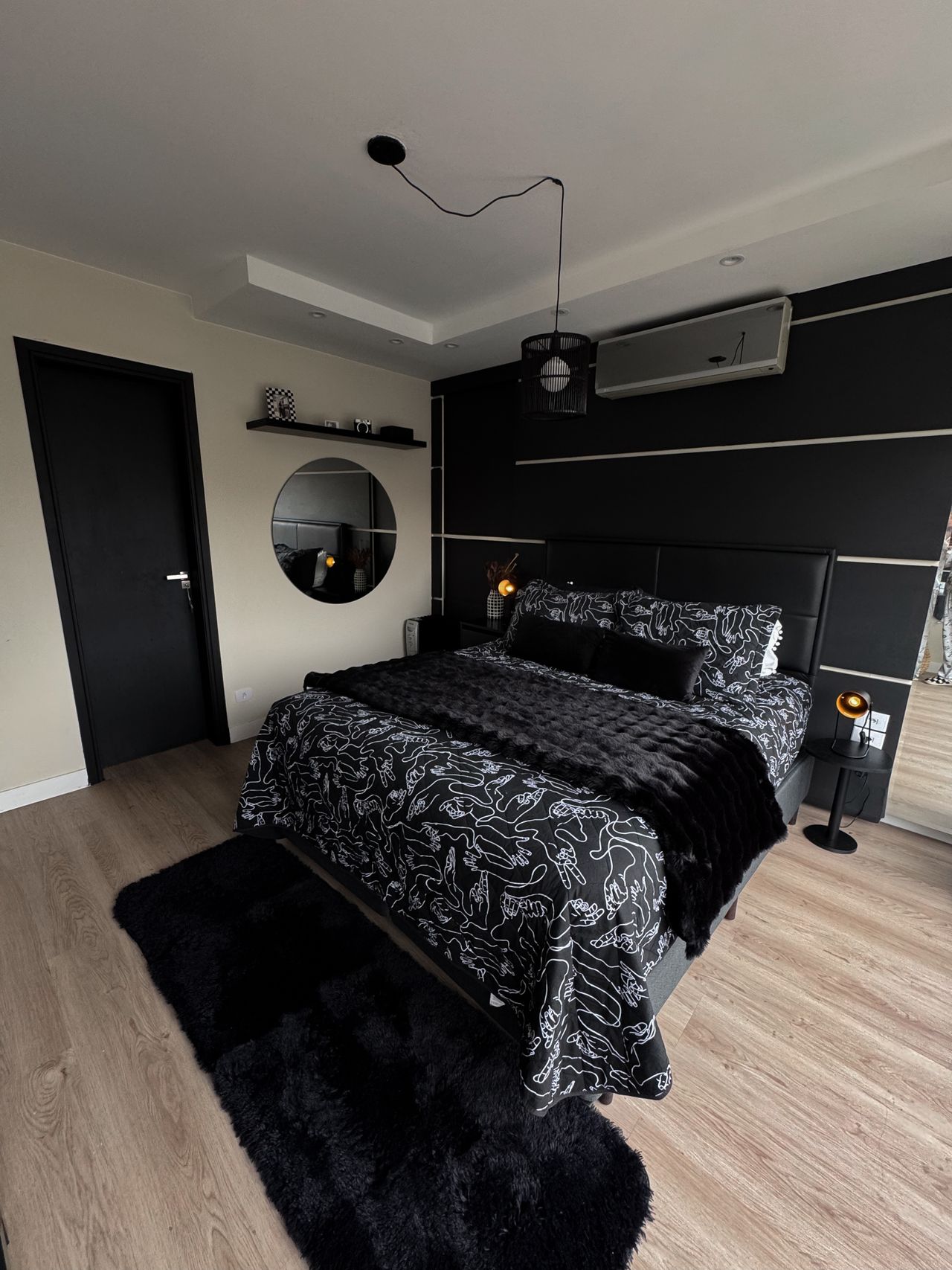
Photo via Pexels
Table of Contents
- 1. Know What a Bedroom Set Includes
- 2. Let the Bed Be the Hero Piece
- 3. Mix Matte Black with Gloss White
- 4. Pair a Black Bed Frame with White Nightstands
- 5. Choose a White Dresser with Black Hardware
- 6. Ground the Contrast with Rugs and Wood Tones
- 7. Balance Contrast in Small vs. Large Rooms
- 8. Metal vs. Wood Frames: Pick Your Black
- 9. Style Nightstands Like a Pro
- 10. Keep It Timeless with 60-30-10
- Frequently Asked Questions
- Final Thoughts
- Sources
- Gallery
1. Know What a Bedroom Set Includes
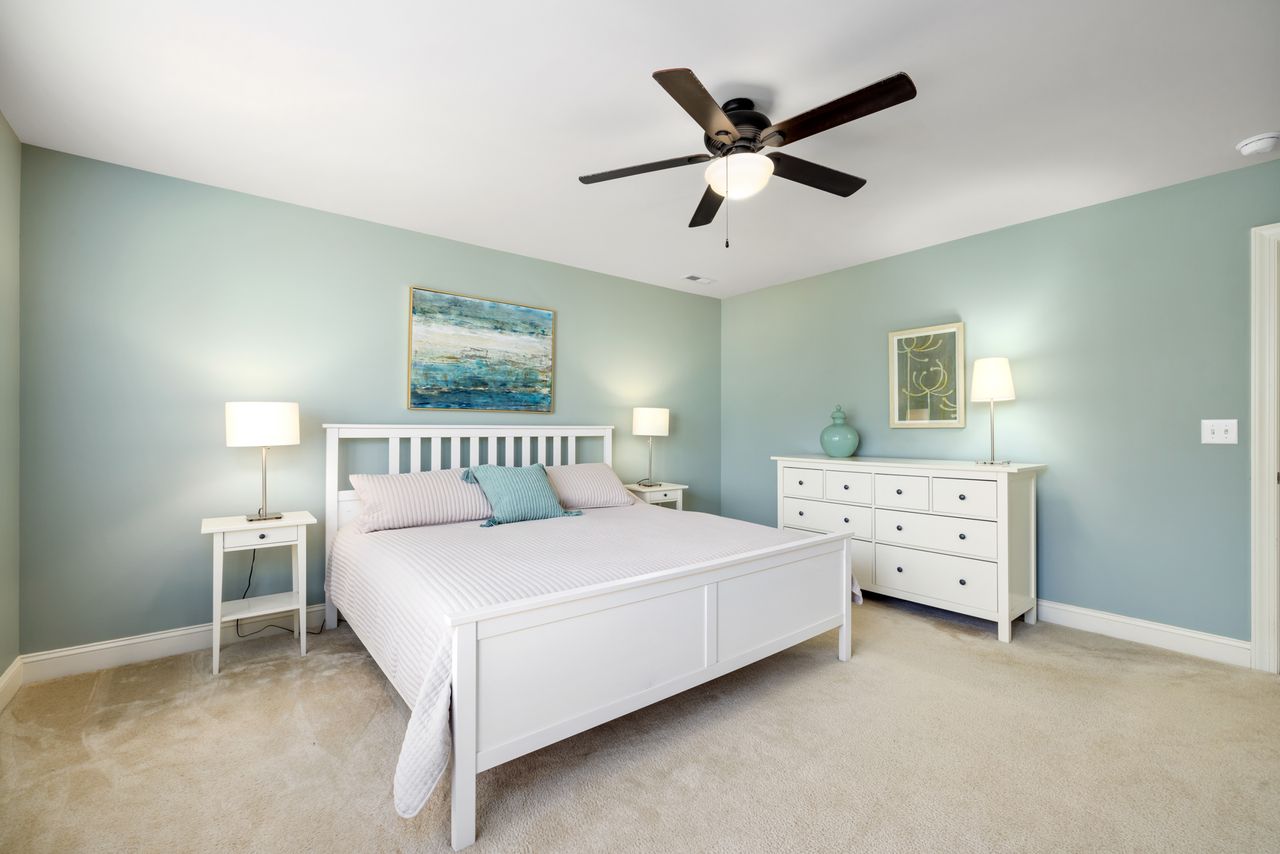
Photo via Pexels
A standard bedroom set has four core pieces: a bed frame (headboard, footboard, and side rails), two nightstands, a dresser, and a mirror that mounts on the dresser. Most bedroom sets black and white collections are sold as 3-, 4-, 5-, or 6-piece sets, with larger sets adding a chest of drawers or an armoire. Knowing the piece count helps you compare prices fairly, since a 3-piece set will always look cheaper than a 6-piece one.
Before you buy, measure your room and sketch the layout. A queen bed is 60 by 80 inches, and you want at least 24 to 30 inches of walking space on each side. A standard double dresser runs about 54 to 66 inches wide, so check that it fits on your longest free wall with room for the drawers to open fully.
2. Let the Bed Be the Hero Piece
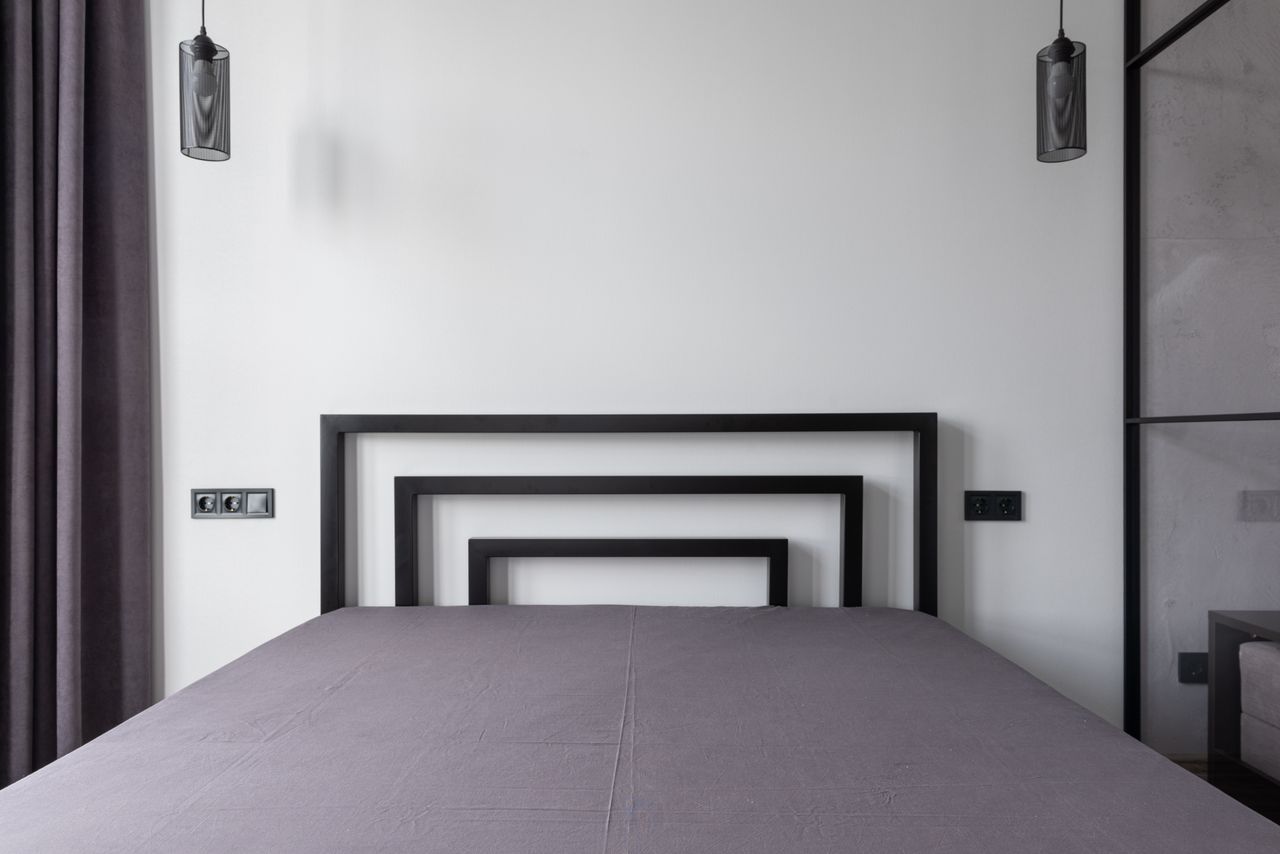
Photo via Pexels
The bed is the biggest piece of furniture in the room, so choose it first and let everything else support it. In a black-and-white set, a black headboard makes the strongest statement. Look for a headboard 48 to 60 inches tall for a queen or king bed; that height gives the bed real presence without overwhelming a standard 8-foot ceiling.
Once the hero bed is picked, keep the supporting pieces quieter. That is why so many monochrome sets pair a bold black bed with simpler white nightstands and a plain white dresser. For help comparing frame styles, read our guide to the types of bed frames before you shop.
3. Mix Matte Black with Gloss White
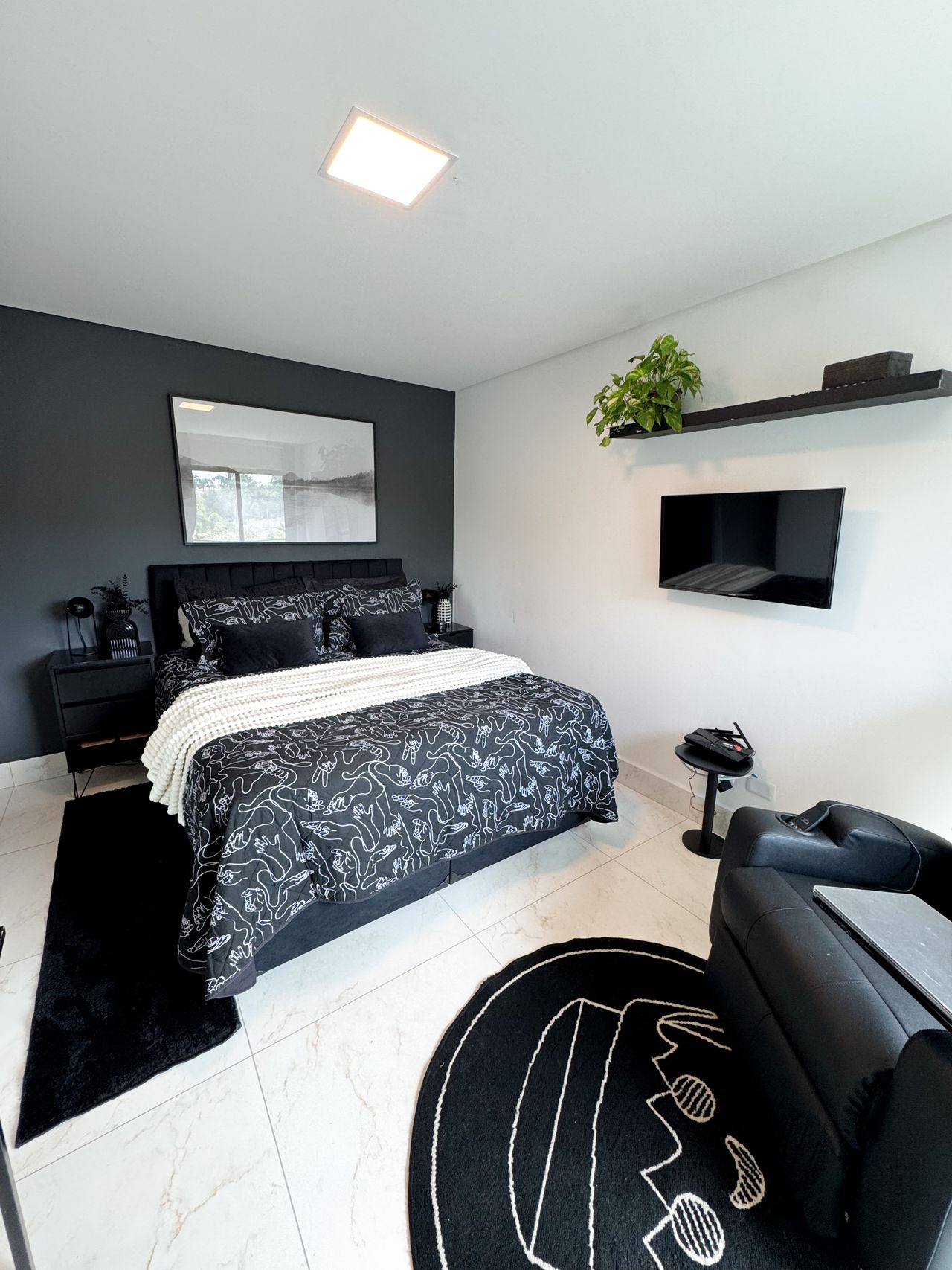
Photo via Pexels
Finish matters as much as color. Pairing a matte black bed with a high-gloss white dresser creates contrast in texture, not just color, and that is what makes the room feel designed rather than flat. Matte black hides dust and small scratches better, while gloss white bounces light around the room and is easy to wipe clean.
Try to keep sheens consistent within each color family: all your black pieces matte, all your white pieces the same gloss level. When finishes match, pieces from different sets or stores blend together, which gives you more freedom to mix and match instead of buying one boxed set.
4. Pair a Black Bed Frame with White Nightstands
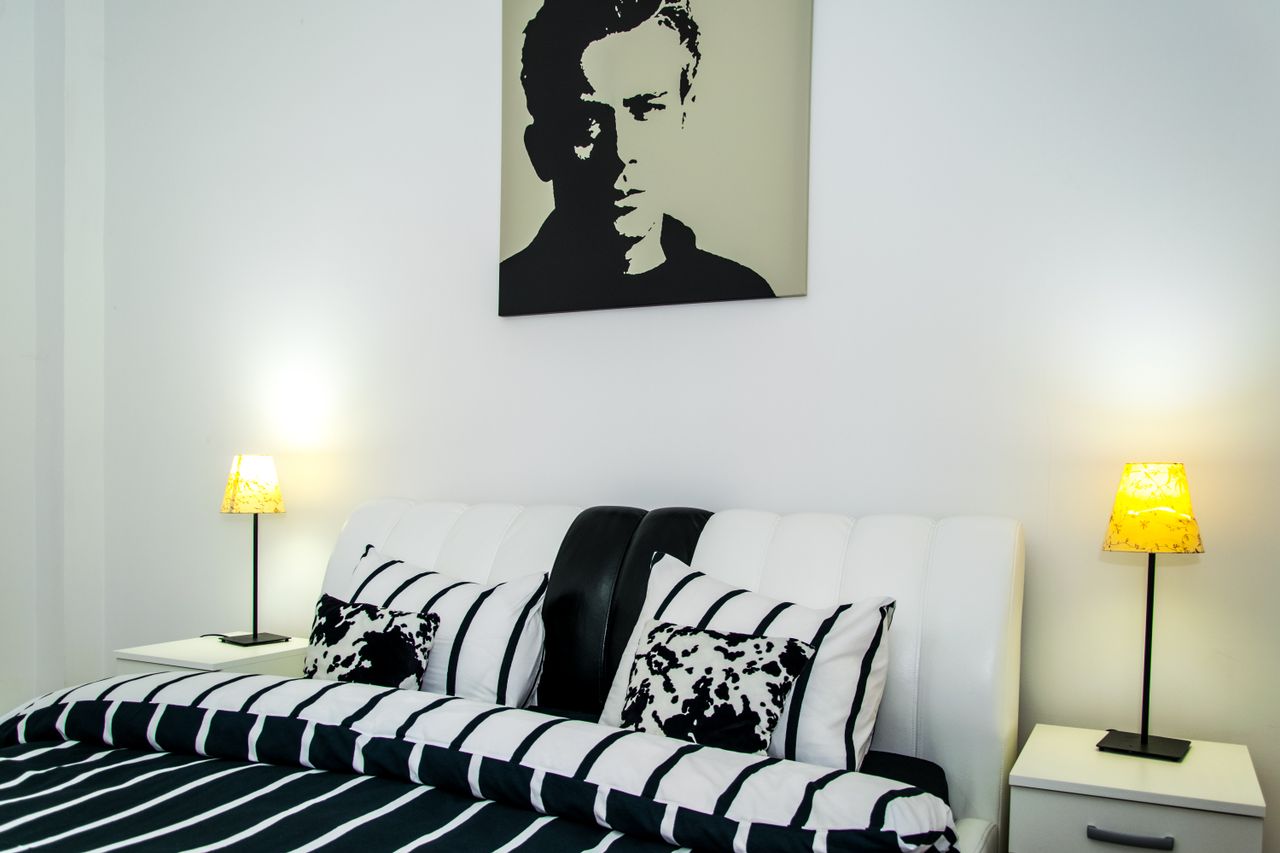
Photo via Pexels
The most loved combination in monochrome bedroom furniture is a black bed frame flanked by two white nightstands. The white tables act like bookends that frame the dark bed, and they keep the heavy black headboard from feeling like a dark hole in the room. This pairing works with upholstered, wood, and metal beds alike.
Size the nightstands to the bed. For a queen or king, each nightstand should be about 20 to 28 inches wide and 24 to 28 inches tall, with the top roughly level with the top of your mattress. A pair of matching table lamps on top, in black or white, finishes the symmetry.
5. Choose a White Dresser with Black Hardware
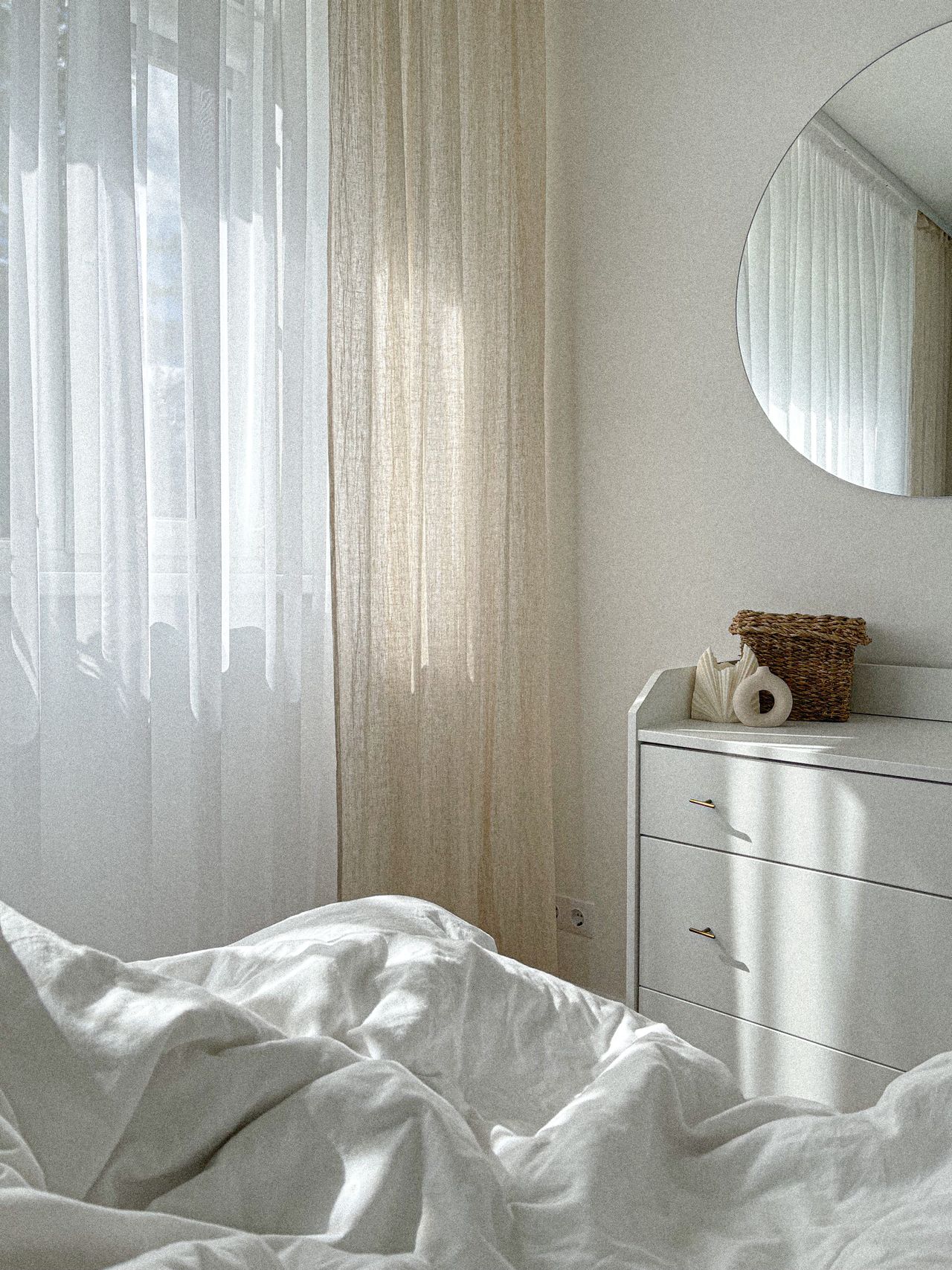
Photo via Pexels
A white dresser with black knobs or bar pulls is the easiest way to tie the two colors together in one piece. If the dresser you love comes with silver or wood knobs, swapping them is a 10-minute job: black bar pulls cost about $2 to $5 each at a hardware store, and most dressers need only 6 to 12 of them. That small change can make a plain white dresser look custom.
For a master bedroom, pick a dresser 54 to 66 inches wide with at least six drawers; anything narrower fills up fast. Hang the matching mirror or a round mirror above it, centered, with the bottom edge about 4 to 6 inches above the dresser top. For styling ideas once it is in place, see our dresser decor ideas.
6. Ground the Contrast with Rugs and Wood Tones
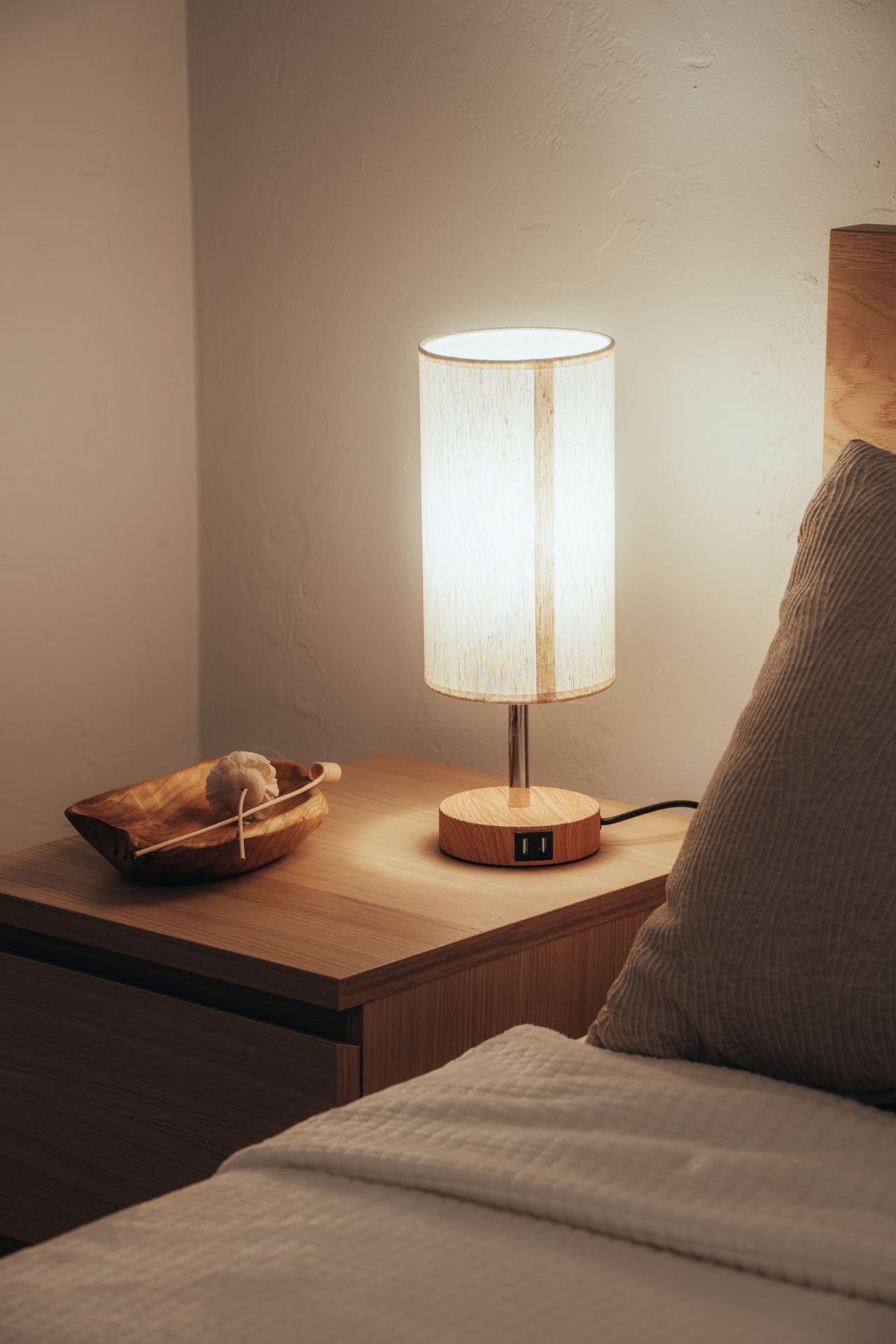
Photo via Pexels
Pure black and white can feel cold, so bring in one warm element to ground it. A natural wood nightstand, a wood bench at the foot of the bed, or oak picture frames add warmth without breaking the two-color scheme. Wood is technically a neutral here, so it supports the palette instead of competing with it.
A rug does the same job underfoot. For a queen bed, an 8-by-10-foot rug placed so the front two-thirds of the bed sits on it is the standard choice; for a king, go 9 by 12 feet. A black patterned rug on a light floor, or a light rug under a black bed, sharpens the contrast while making the room feel softer. Our warm aesthetic cozy bedroom guide has more ways to keep a monochrome room inviting.
7. Balance Contrast in Small vs. Large Rooms
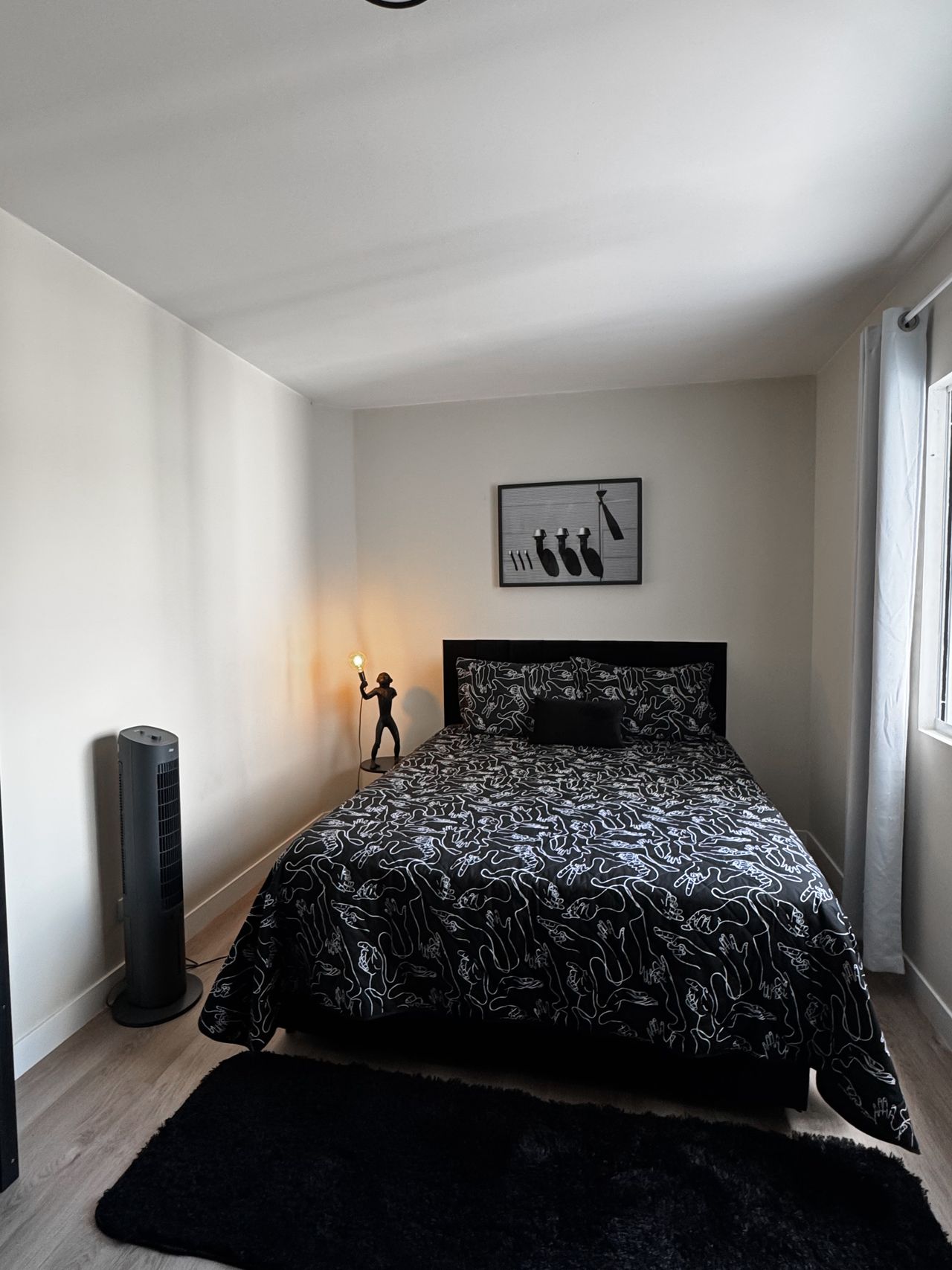
Photo via Pexels
Room size should decide which color leads. In a small bedroom, let white dominate: white walls, a white dresser, and white nightstands, with black reserved for the bed frame and a few accents. Dark furniture against light walls actually adds depth, so the room feels larger, not smaller, as long as black stays under about a third of what you see.
In a large bedroom, you can flip the ratio: a black upholstered bed, black nightstands, and a black accent wall keep a big room from feeling empty and echoey. A large mirror, at least 30 by 40 inches, doubles the light and makes either size room feel more open. If you are planning the layout, check our master bedroom size guide for standard dimensions.
8. Metal vs. Wood Frames: Pick Your Black
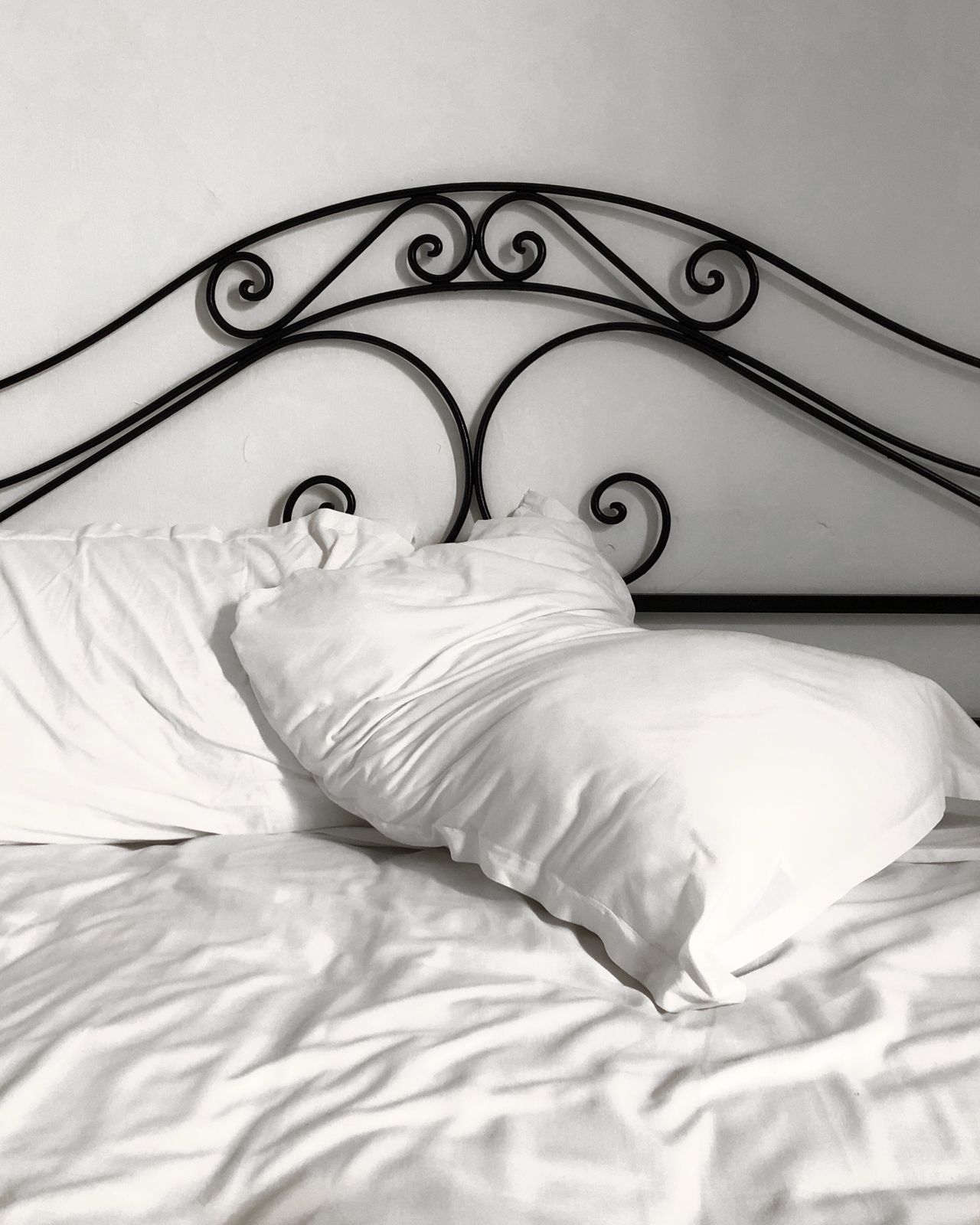
Photo via Wikimedia Commons
Black bed frames come in two main materials, and they give very different looks. A black metal or wrought-iron frame, like the scrollwork headboard above, feels light and airy because you can see through it. Metal platform beds are also budget-friendly, often $200 to $600 for a queen, and the powder-coat finish resists chips well.
A black wood frame feels solid, warm, and more traditional, and it usually costs more, roughly $400 to $1,500 for a queen depending on the wood. Wood also hides fingerprints better than glossy metal. If you want the airy look of metal with a softer feel, look for a black upholstered headboard, which splits the difference.
9. Style Nightstands Like a Pro
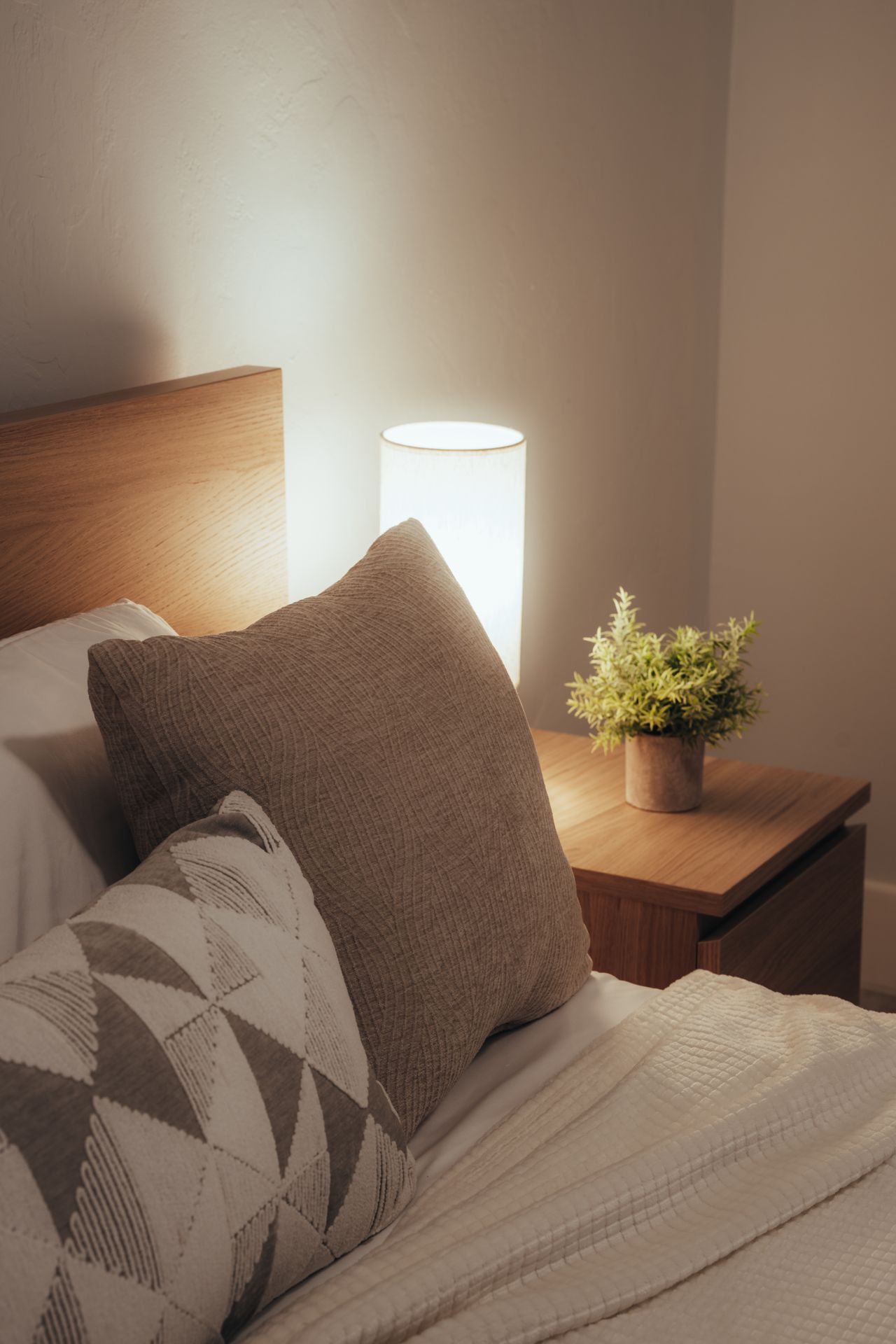
Photo via Pexels
Nightstands are small, so every item on top shows. Follow the rule of three: a lamp, one small decor piece like a plant or framed photo, and one useful item like a book or water carafe. That is it. Leave clear space for your phone and a glass of water, because a nightstand has a job to do, not just a look to keep.
Lamp scale matters most. The total lamp height should be 24 to 28 inches, and the bottom of the shade should sit at about your eye level when you are sitting up in bed reading. A shade 12 to 16 inches wide suits most nightstands; anything wider will crowd a 20-inch-wide table.
10. Keep It Timeless with 60-30-10
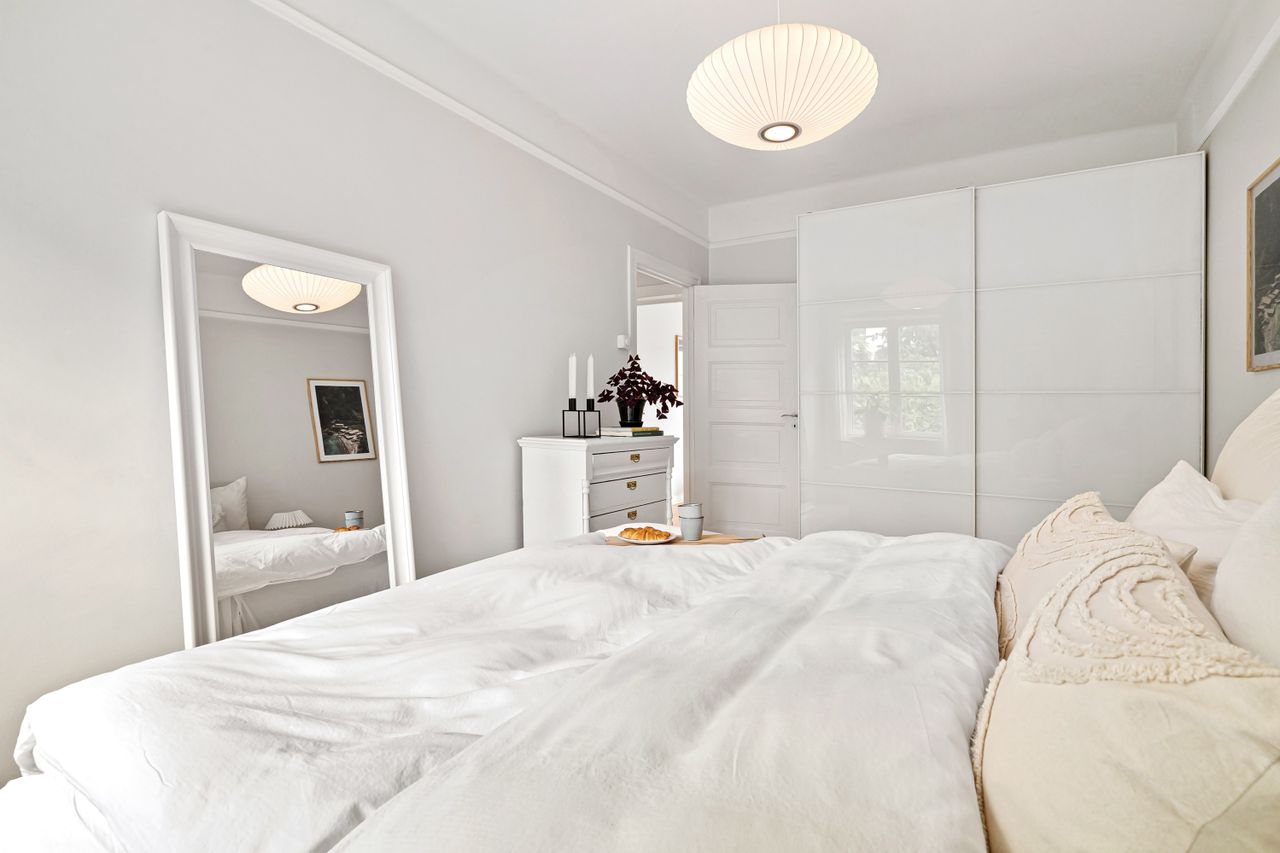
Photo via Pexels
The reason black-and-white rooms never look dated is the 60-30-10 rule: about 60 percent of the room in one dominant color, 30 percent in a secondary color, and 10 percent in an accent. In the room above, white does the heavy lifting at 60 percent (walls, bed, dresser), black takes 30 percent (hardware, frames, art), and a warm accent like wood or brass fills the final 10 percent.
When you shop, assign each piece a role before you buy. If the bed and dresser are both black, that is already a lot of visual weight, so keep walls, rug, and nightstands light. Sticking to the ratio keeps the contrast crisp instead of chaotic, and the room will still look current ten years from now. For rooms with extra space to style, browse our master bedroom with sitting area ideas.
Frequently Asked Questions
What pieces come in a typical bedroom set?
A typical bedroom sets black and white package includes a bed frame, two nightstands, a dresser, and a mirror. Five- and six-piece sets usually add a chest of drawers, and some include a bench or armoire instead.
Do my nightstands have to match my bed exactly?
No. Matching exactly is the safe choice, but the pieces only need to share a finish family. A black bed with white nightstands is a classic designer pairing, as long as the styles are similar in weight and simplicity.
How tall should nightstands be?
Look for nightstands 24 to 28 inches tall, with the tabletop roughly level with the top of your mattress. Most mattresses sit 24 to 26 inches off the floor, so a nightstand in that range keeps your lamp and water within easy reach.
Will black furniture make a small bedroom feel smaller?
Not if you keep black to about a third of the room. White walls, a light rug, and a large mirror reflect light and keep things airy, while the black bed frame adds depth that can actually make the walls feel farther away.
Does black furniture show dust and fingerprints?
Yes, especially in a high-gloss finish. Matte black hides dust far better than gloss, so choose matte for pieces you touch daily like nightstands and dresser fronts. A quick weekly wipe with a dry microfiber cloth keeps everything looking sharp.
Final Thoughts
A black-and-white bedroom set is one of the easiest ways to get a pulled-together room that will not date. Choose the bed first, balance black and white with the 60-30-10 ratio, size your nightstands to your mattress, and add one warm touch like wood or a soft rug. Do that, and your high-contrast bedroom will look sharp for years.
Sources
- 60-30-10 Color Rule: How to Use It (and When to Break It!) — Jasmine Alley (explains the 60-30-10 color proportions used in idea 10).
- What Is the 60-30-10 Rule in Interior Design? — The Glade Design (breaks down the 60/30/10 split across walls, furniture, and accents).
- Solid Pine Bedroom Furniture Set — Foter (lists typical set pieces: bed, nightstand, dresser, dresser mirror, and chest).
Gallery
Photo via Pexels
Photo via Pexels
Photo via Pexels

No comments:
Post a Comment