Fall dressing has one big problem: the weather cannot make up its mind. You leave home in 45°F chill, eat lunch in 70°F sunshine, and come back in a cold wind. The women who always look put together in October are not buying more clothes than you. They are layering smarter. The best layering tips for fall are really a small set of rules about thickness, proportion, and fabric — and once you learn them, getting dressed on a swingy day takes five minutes.
This guide walks through all ten rules in the order you actually get dressed: the thin base first, the warm middle, the polished top layer, and the boots and scarves that finish the job. Every tip uses pieces most closets already hold — tees, turtlenecks, cardigans, blazers, and one good coat — in US fall terms, from the first crisp September morning to the first real frost.
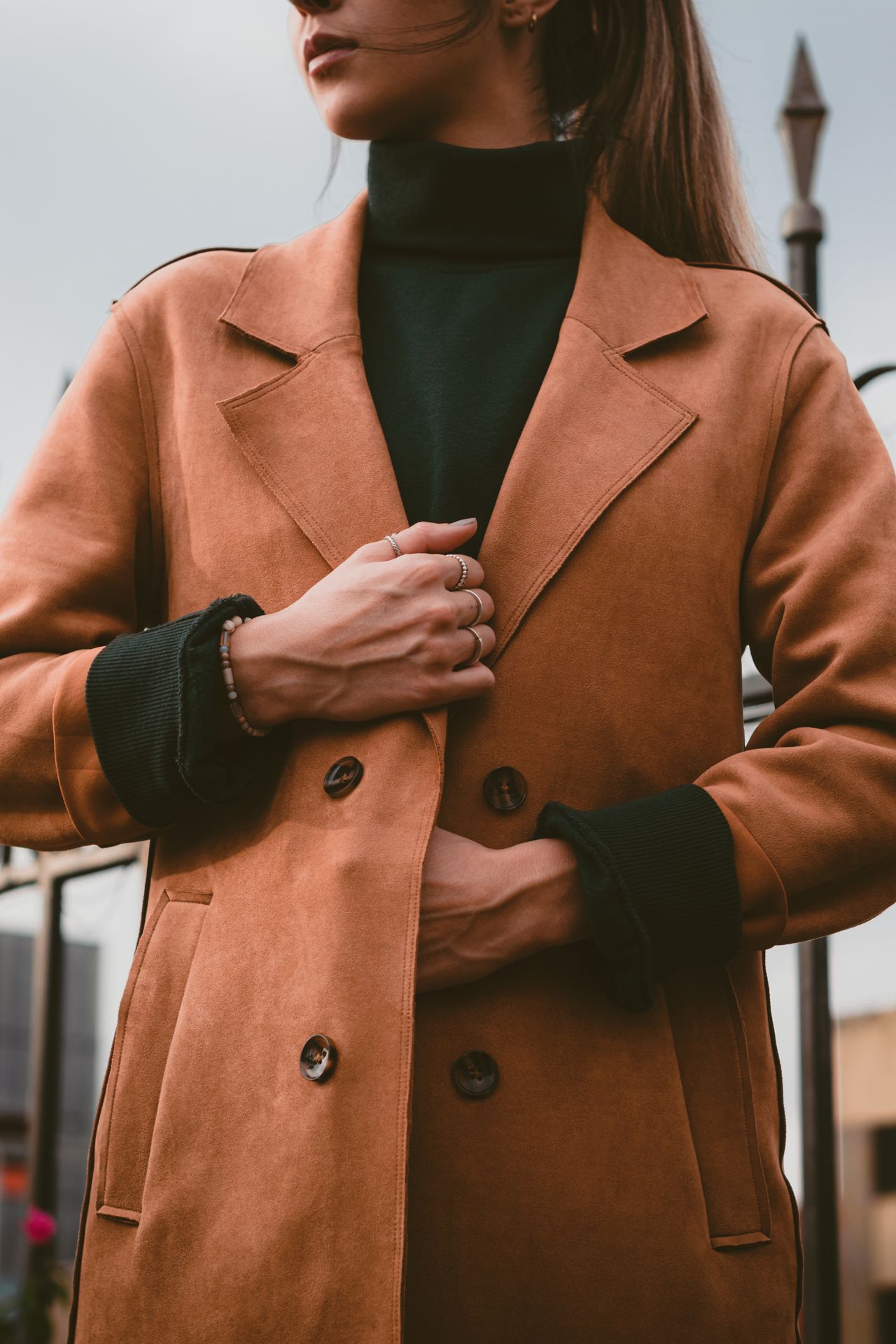
Photo via Pexels
Table of Contents
- 1. Start With a Thin, Fitted Base Layer
- 2. Follow the Rule of Three Layers
- 3. Mix Textures So Neutrals Look Rich
- 4. Play Long Over Short for Clean Lines
- 5. Find Your Waist With a Tuck or a Belt
- 6. Add a Blazer or Shacket as the Third Piece
- 7. Let Scarves, Hats and Gloves Do the Warming
- 8. Finish With Boots That Match the Hemline
- 9. Build a Fall Palette That Mixes Itself
- 10. Peel and Rebuild Through a Swingy Day
- Frequently Asked Questions
- Final Thoughts
- Sources
- Gallery
1. Start With a Thin, Fitted Base Layer
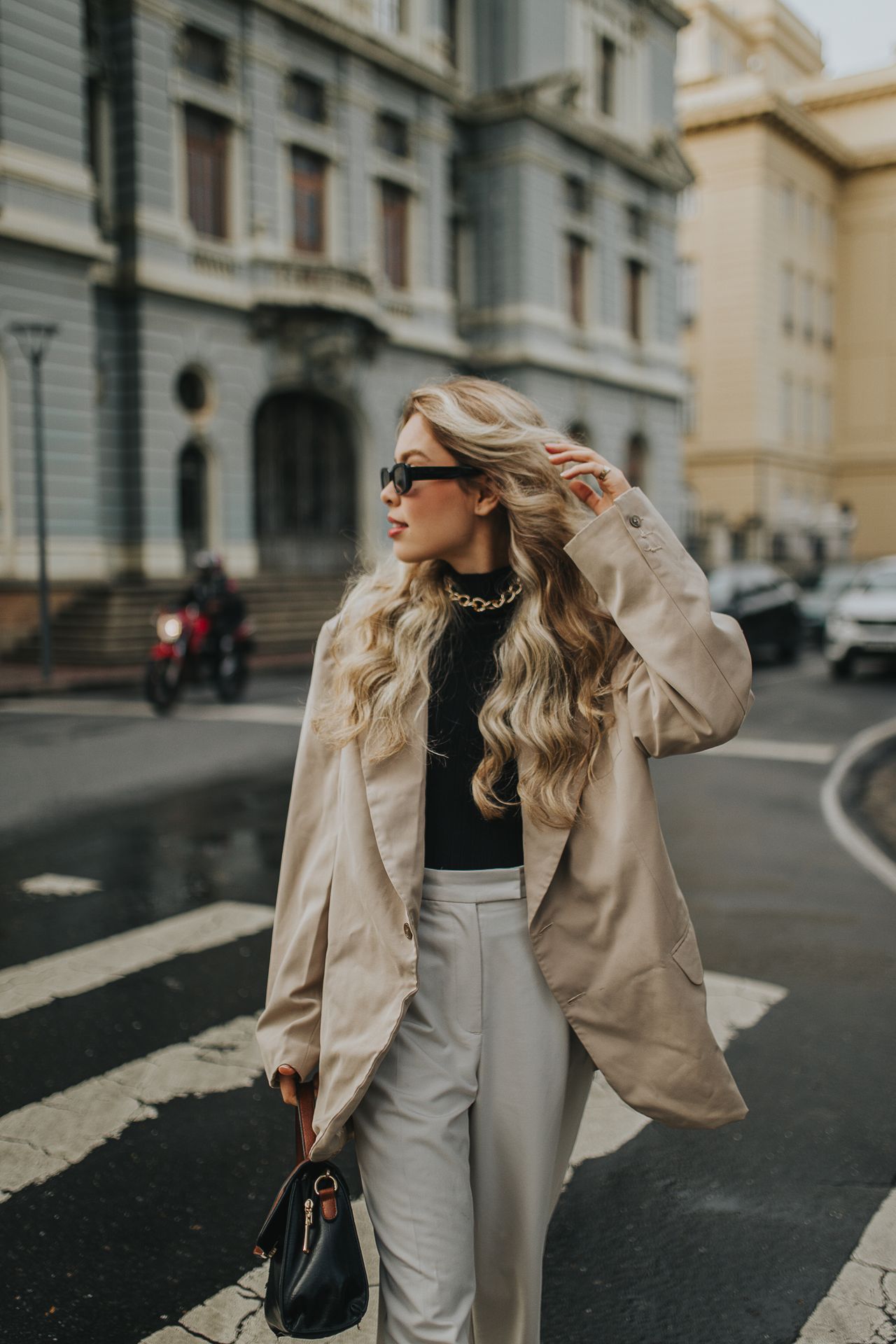
Photo via Pexels
Every good layered outfit stands on a base that is thin, smooth, and close to the body. Think a fitted long-sleeve tee, a fine merino turtleneck, or a silky camisole — fabrics that slide under a sweater instead of bunching beneath it. The base should follow your shape without squeezing, and its neckline should peek out cleanly at the collar. If your base is bulky or baggy, every layer above it inherits the bulk, and no coat can fix that.
Choose the fabric like an outdoors person would. Merino wool and synthetic heat-tech tops regulate temperature and never feel clammy, while plain cotton absorbs sweat and turns cold the moment you step into the wind. Tuck the base in, always — an untucked tee under a sweater creates a lumpy line at the hip. A $15 to $30 fitted merino or heat-tech top in black, cream, and gray will quietly carry half your fall wardrobe.
2. Follow the Rule of Three Layers
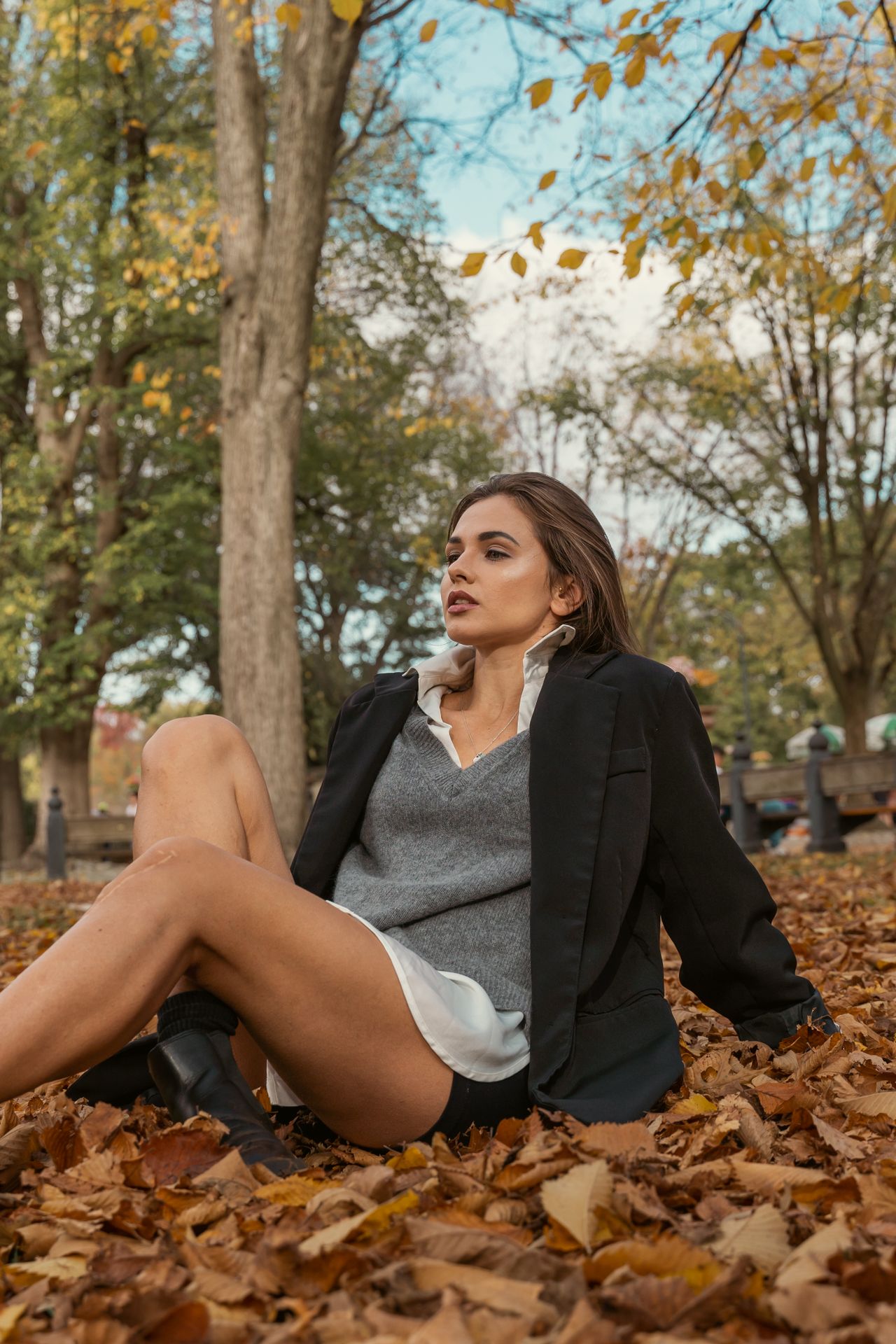
Photo via Pexels
Stylists build fall outfits in threes: a base layer for comfort, a middle layer for warmth, and a top layer for structure and weather. A turtleneck, a chunky cardigan, and a wool coat is the classic formula, and so is a tee, a flannel shirt, and a denim jacket. Three layers give the eye something to travel across, which is why the same sweater looks flat alone and interesting the moment a collar and a cuff appear at its edges.
The order has one strict rule: each layer should be equal to or thinner than the one above it. A thick sweater jammed under a slim jacket strains the seams and adds a stuffed look at the arms. Let a sliver of every layer show — half an inch of cuff at the wrist, an inch of shirt hem below the sweater, the collar standing above the coat. Those small reveals are what make layering read as deliberate instead of accidental.
3. Mix Textures So Neutrals Look Rich
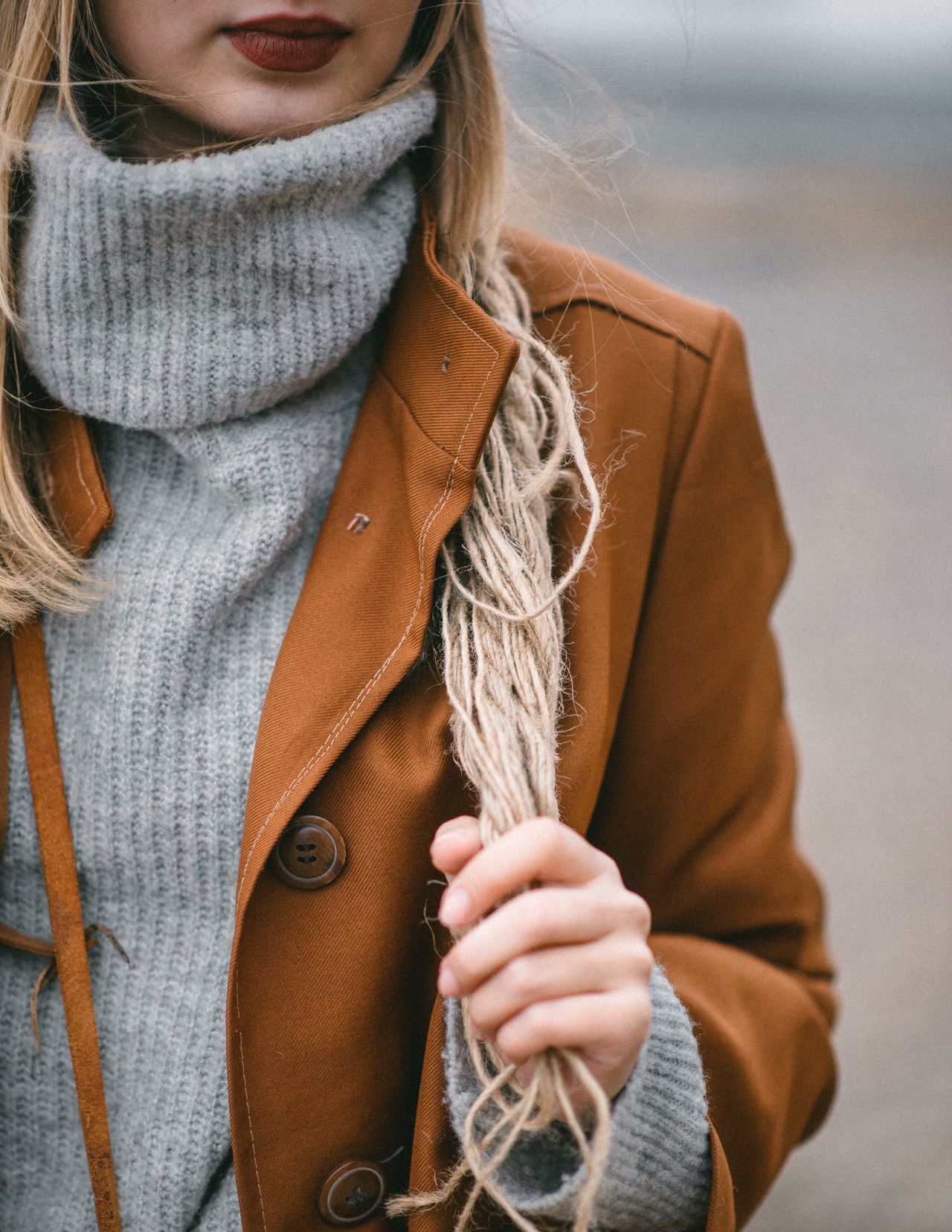
Photo via Pexels
Texture is the secret that lets you wear head-to-toe beige and look expensive instead of invisible. When colors stay quiet, interest has to come from surfaces: a ribbed knit against smooth wool, matte cotton under a leather jacket, rough denim beside soft cashmere. Aim for about three different textures in one outfit. A cream chunky sweater, dark straight jeans, and a suede boot already hit the mark without a single bright color.
Watch the balance between matte and shine. One glossy piece — a leather boot, a satin camisole edge, a patent belt — lifts an outfit of soft knits beautifully. Three shiny pieces at once start to compete. This is also where plaid earns its place: a plaid scarf or flannel brings pattern and texture together, and it explains why the same five neutral pieces can make a dozen fall outfits that never repeat themselves.
4. Play Long Over Short for Clean Lines
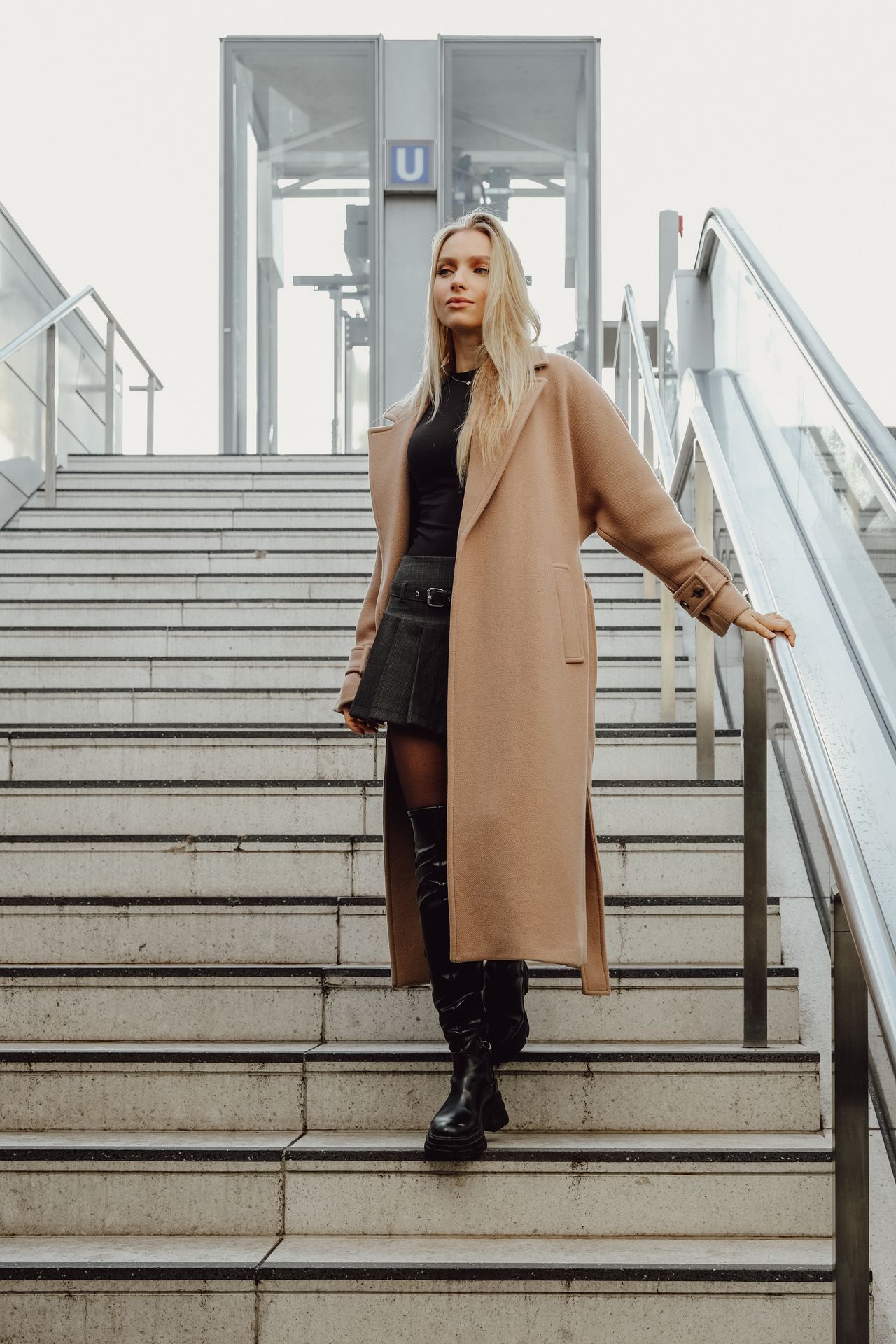
Photo via Pexels
Proportion is where layering either flatters or swallows you. The most reliable trick is contrast in length: a long coat over a shorter dress or skirt keeps the leg line visible and the silhouette tall, while a cropped jacket over a long dress does the same job in reverse. What rarely works is everything ending at the same spot — a sweater, jacket, and skirt all finishing at the hip cuts the body into one wide block.
Use the rule with dresses all season. A knee-length or longer coat over a mini dress and boots is a polished fall uniform, and a denim or leather jacket cropped at the waist sharpens a flowing midi dress. The same principle carries straight into cold weather — our guide on how to layer dresses for winter builds whole outfits on it. When in doubt, check the mirror for one long line and one short line; that contrast is the outfit.
5. Find Your Waist With a Tuck or a Belt
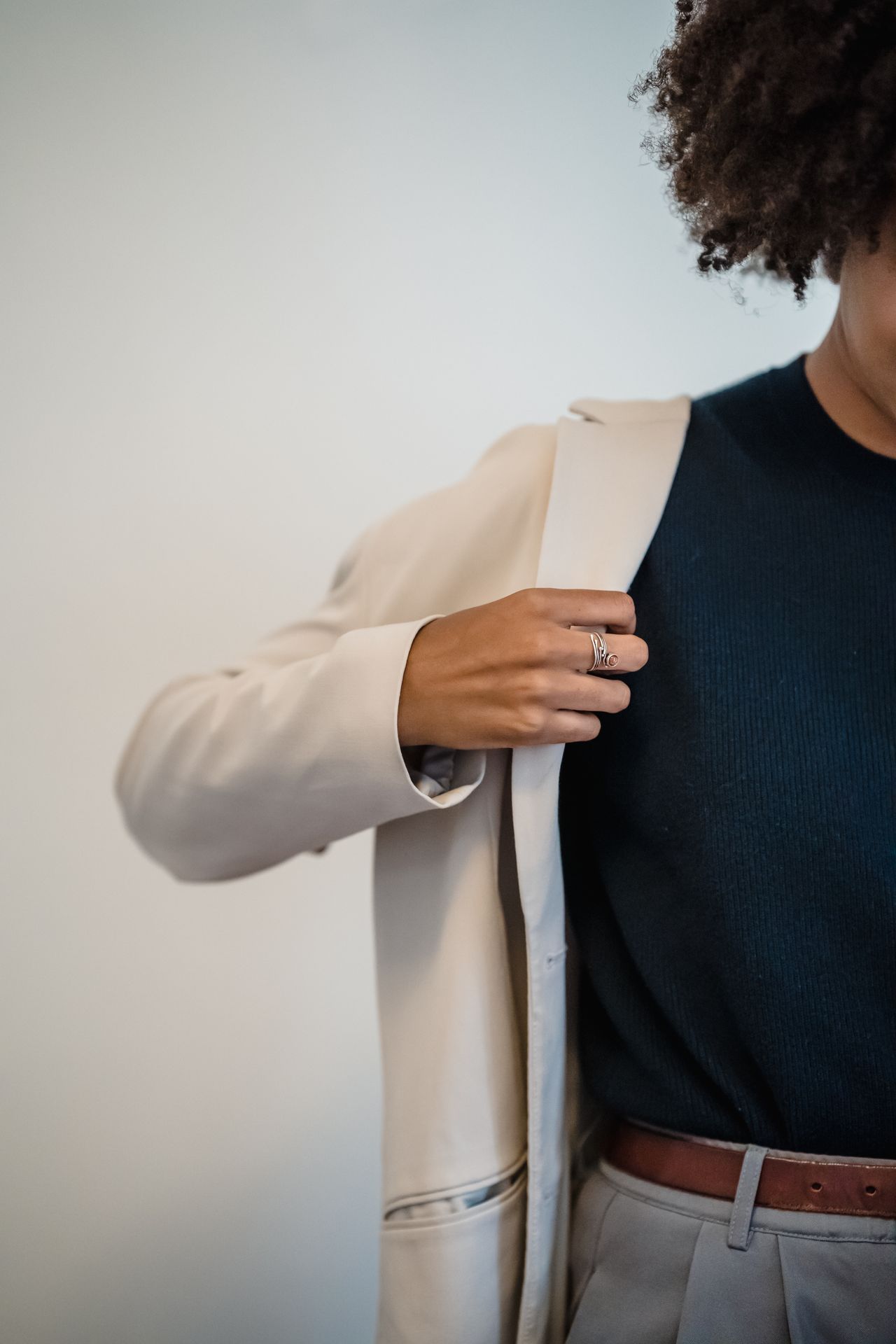
Photo via Pexels
Layers add volume by design, so the waist needs a deliberate signal. The easiest is the front tuck: tuck just the front center of your sweater or shirt into high-rise pants and let the sides fall — it shows the waistband, lengthens the legs, and still looks relaxed. High-rise bottoms are the layerer's best friend here, because they give every top something clean to tuck into and hold the whole stack in place.
A belt does the same job louder. Belt over a cardigan, a long blazer, or even a coat, and a shapeless stack becomes a silhouette. Match the belt to your boots to tie the outfit together, and keep it simple — one to one and a half inches wide in leather reads classic at any age. Even tying a flannel shirt or light sweater around your waist works: it marks the waist and doubles as your emergency layer later.
6. Add a Blazer or Shacket as the Third Piece
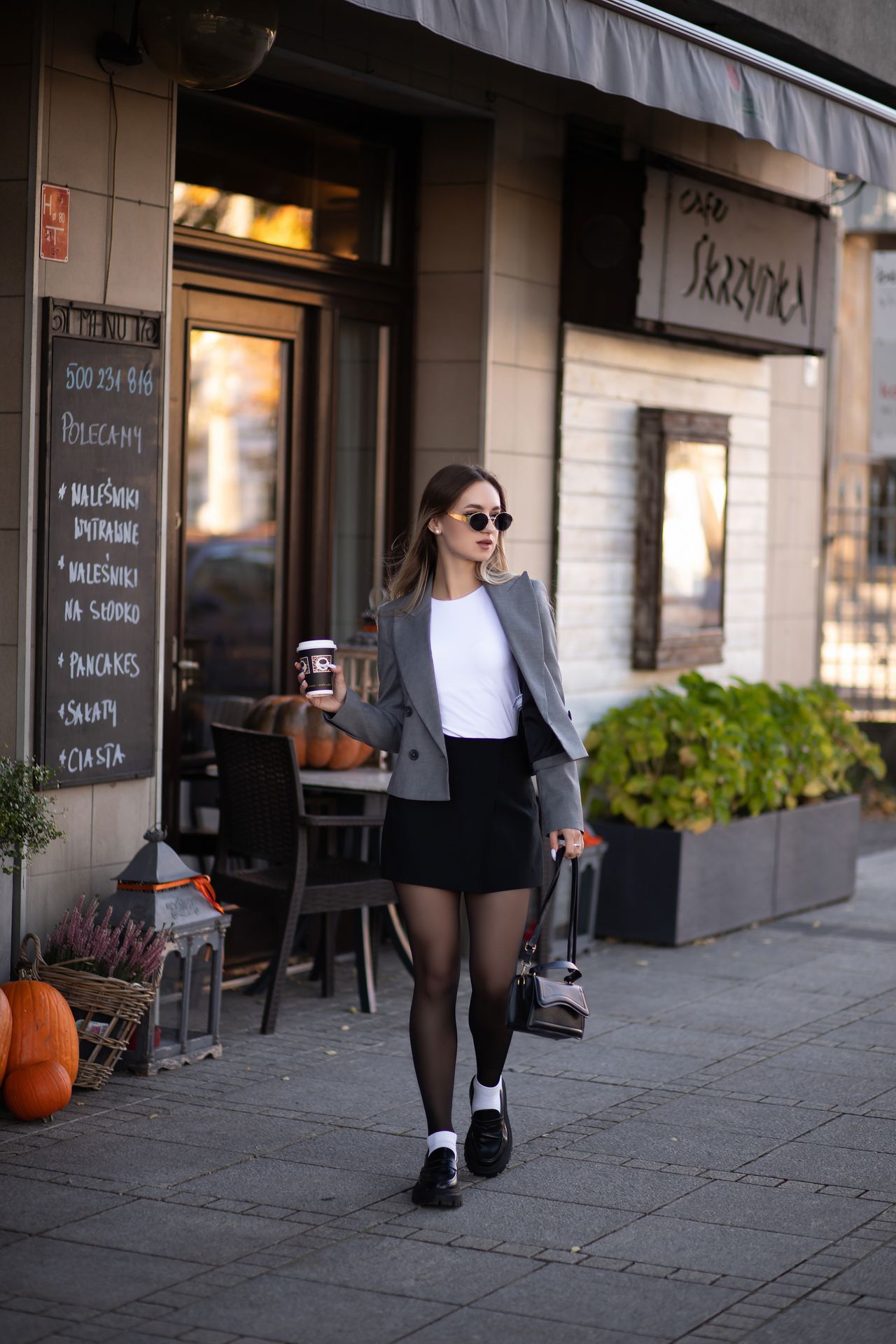
Photo via Pexels
The third piece is what turns clothes into an outfit. A blazer over a tee and sweater instantly reads as intentional and office-ready, because its shoulders and lapels give soft knits a frame. Choose one with a little room — if you cannot comfortably hug yourself in it over a sweater, size up. Plaid and herringbone blazers are fall classics, and a single-breasted cut layers cleanest under a coat later in the season.
The shacket — a shirt-jacket hybrid in flannel, wool, or corduroy — is America's fall workhorse for casual days. It is warmer than a shirt, lighter than a coat, and its pockets earn their keep. Wear it open over a turtleneck and jeans for errands, then button it as your outer layer on a mild afternoon. Between a good blazer and a good shacket, most women can build a third piece for every outfit they own.
7. Let Scarves, Hats and Gloves Do the Warming
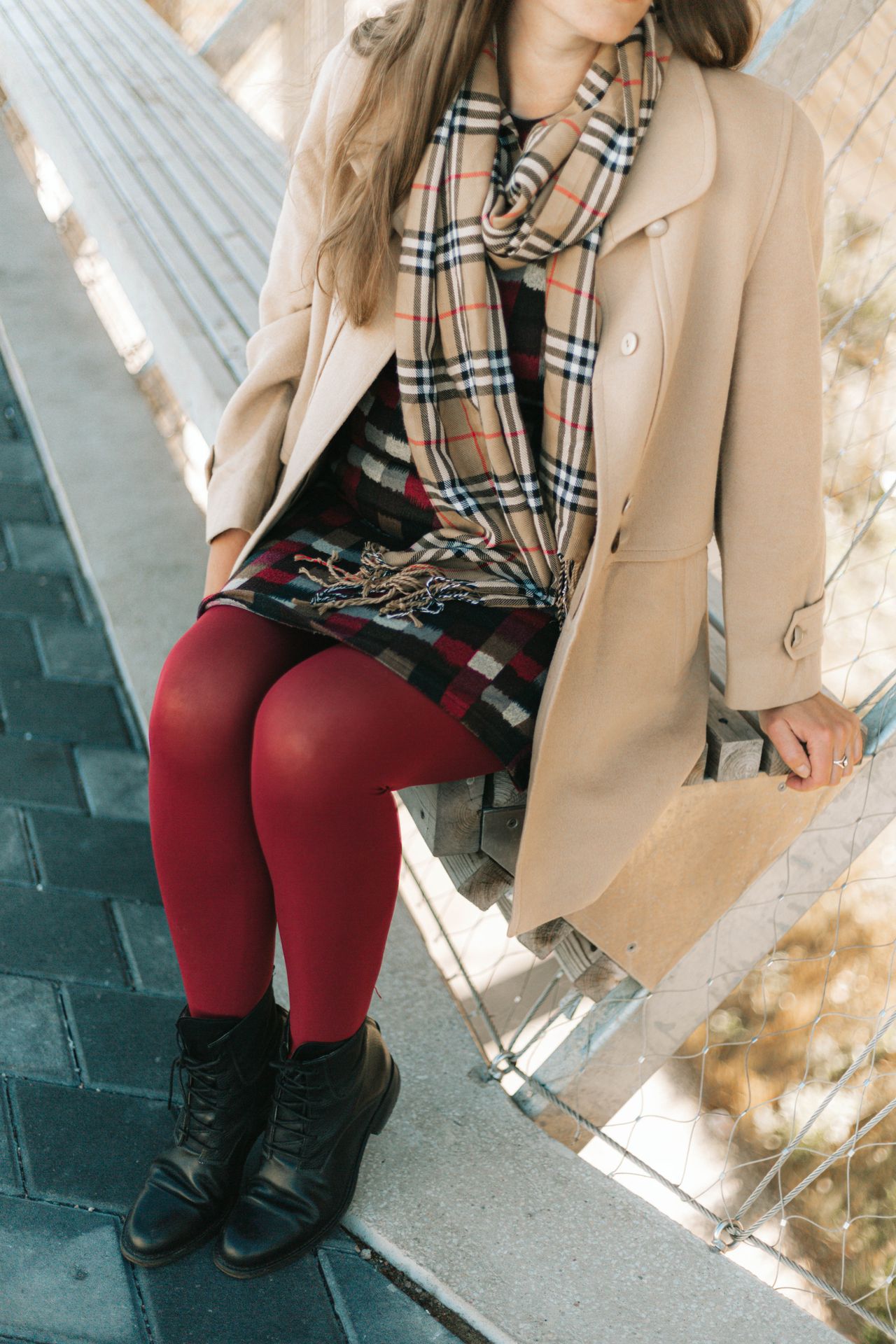
Photo via Pexels
Accessories are the layer you can add without adding bulk to your body. A blanket scarf in plaid or a rich solid works as a shawl over a sweater, a wrap on a chilly porch, and the outfit's one big color statement. Drape it long in front to draw a slimming vertical line, or belt it over a plain sweater to make it look like a designed layer rather than an afterthought. In many fall outfits, the scarf is doing more styling work than everything under it.
Hats and gloves pull their weight too. A wool fedora or a simple beanie keeps real warmth in — a large share of your comfort on a windy day is decided at your head and neck — and leather gloves make even a basic coat-and-jeans outfit look finished. Keep one set in a fall color family like camel, burgundy, and forest, and they will mix with nearly every coat you own.
8. Finish With Boots That Match the Hemline
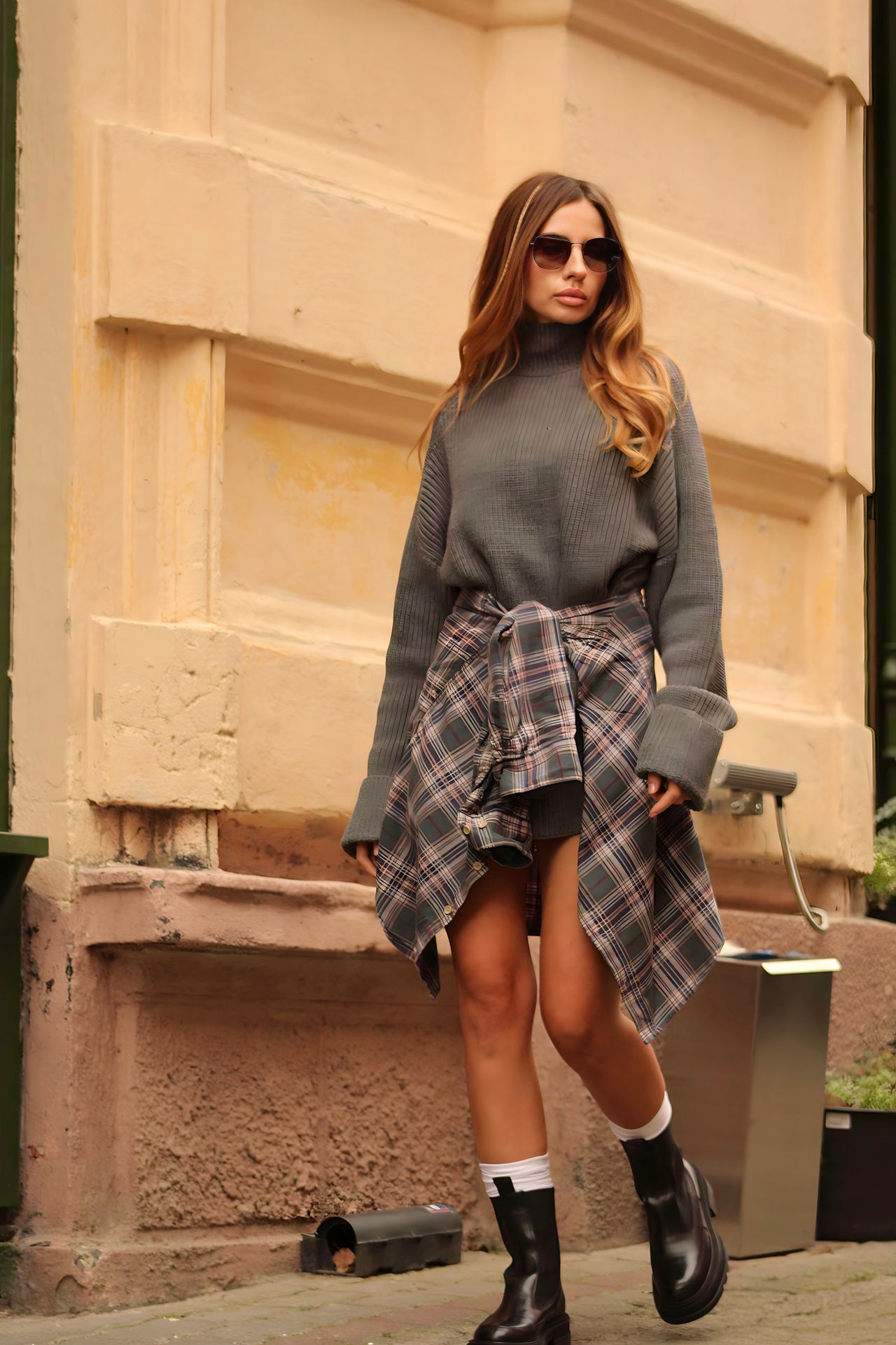
Photo via Pexels
Boots decide whether a layered outfit looks grounded or unfinished, and the whole game is the gap. With ankle boots and cropped or straight pants, show a small sliver of ankle or sock — about an inch — so the leg line stays clean. With midi skirts and dresses, choose knee-high boots that disappear under the hem, leaving no bare gap at all. Halfway choices, like a boot that ends awkwardly at the widest part of the calf, shorten almost everyone.
Keep two pairs and you are covered: a flat or low-heeled ankle boot for walking days and a knee-high with a modest heel for dresses. Our readers' favorite pairings are in the guide to knee-high boots with dresses for fall. Color-wise, one black pair and one brown or taupe pair will carry a whole season of outfits, and matching your boots to your belt or bag makes the layers above them look even more deliberate.
9. Build a Fall Palette That Mixes Itself
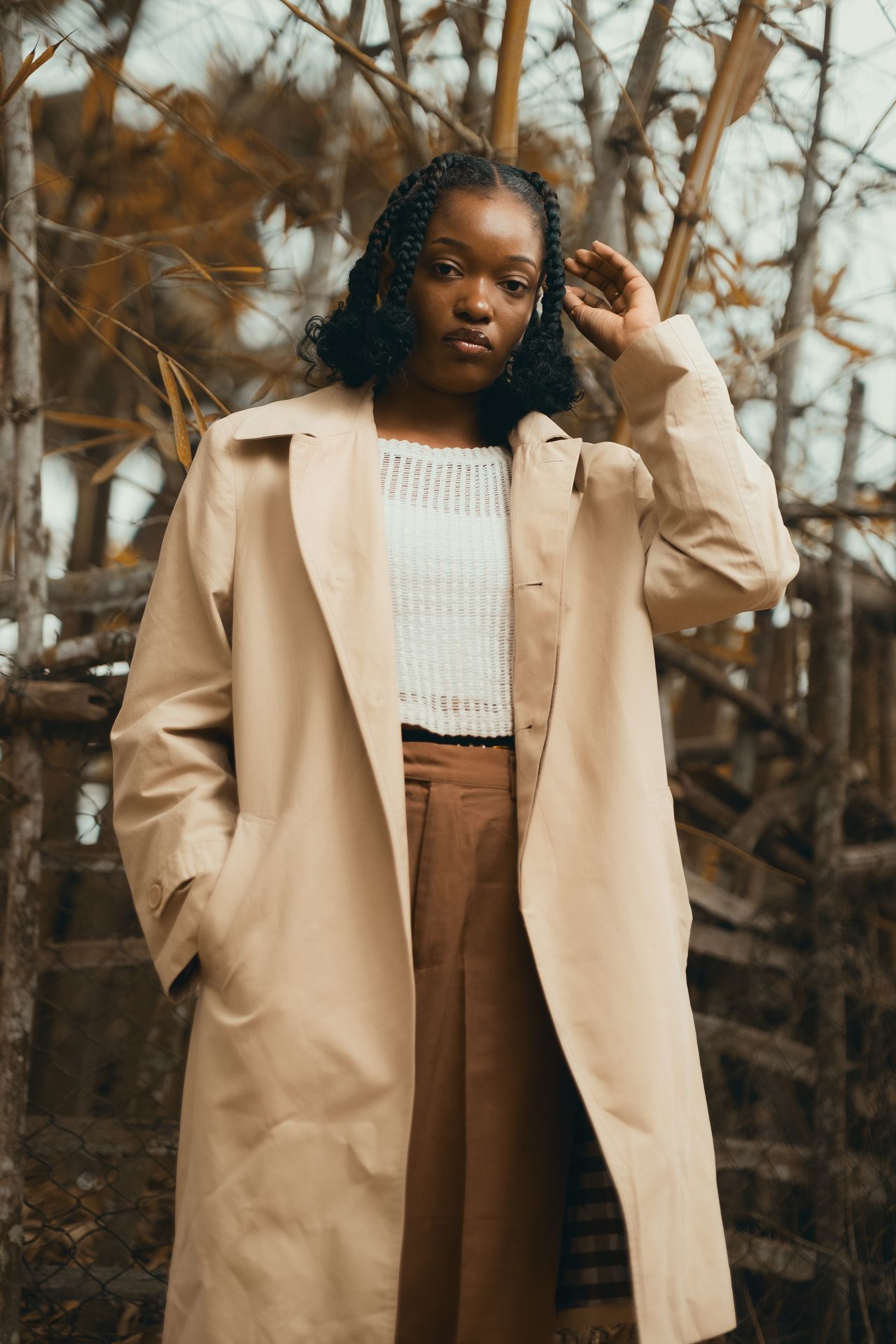
Photo via Pexels
Layering gets ten times easier when your closet colors already agree with each other. Pick a base of three or four neutrals — say camel, cream, chocolate brown, and charcoal — then add two accent colors, like burgundy and olive. When every sweater, coat, and scarf comes from that short list, almost any three pieces you grab will combine into a working outfit, and packing for a fall weekend trip becomes a five-minute job.
This is the thinking behind a fall capsule wardrobe, and it is why the casual fall outfits our readers love all seem to share the same backbone of jeans, knits, and one good coat. You do not need to start over: pull your fall clothes out, group them by color, and notice your natural palette. Most of us already have one — the goal is simply to stop buying pieces that refuse to layer with it.
10. Peel and Rebuild Through a Swingy Day
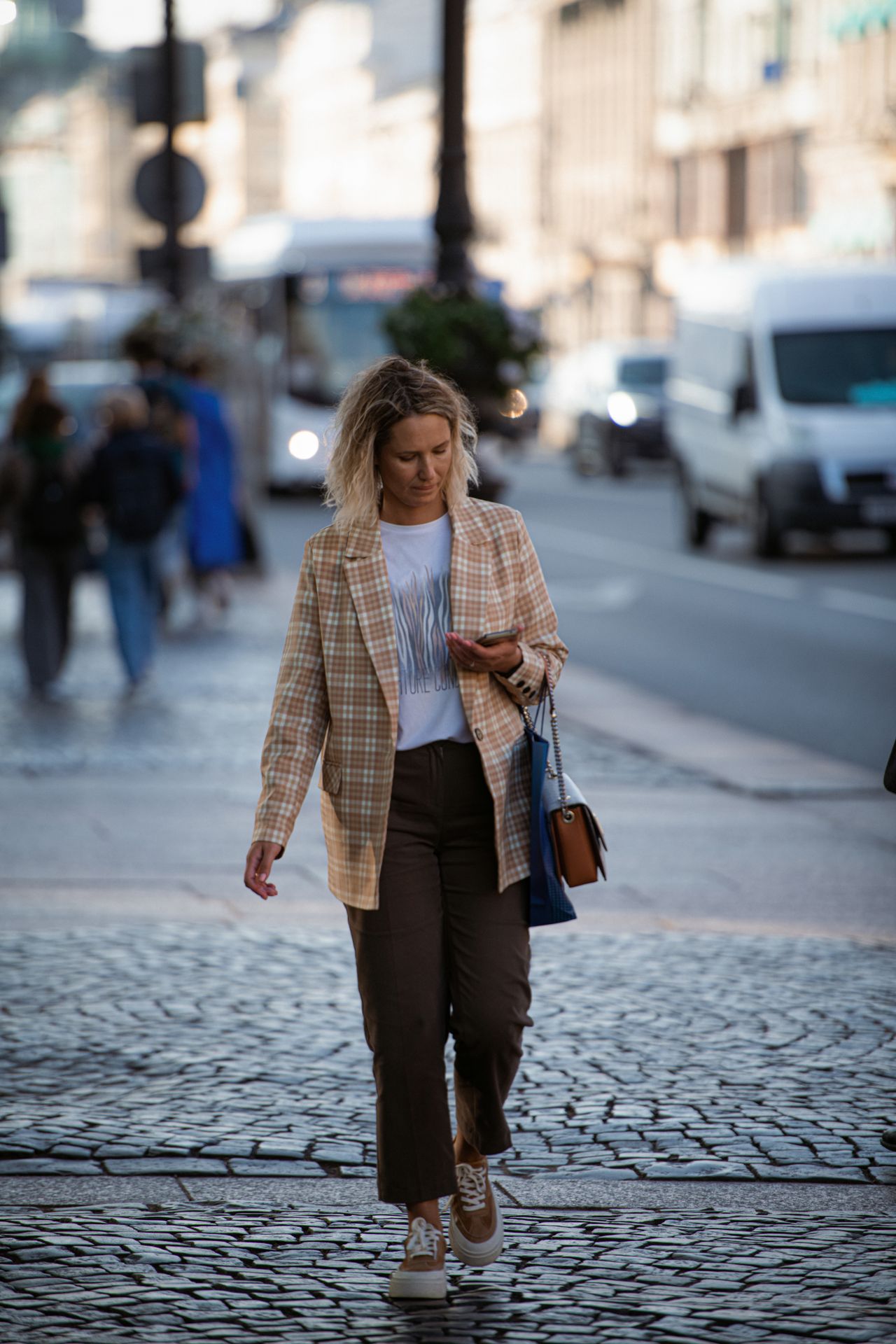
Photo via Pexels
The final skill is treating your outfit as adjustable all day. Dress in the morning for the coldest moment — the commute, the school run — with all three layers on. As the day warms, peel in order: coat first, then the middle knit, carrying them over your arm or in a tote. Because the base layer was chosen to look good alone, the outfit still works at every stage, which is the entire point of building it in the right order.
Plan the rebuild too. A cardigan tied at the waist or folded in your bag goes back on for the evening chill without a second thought. Choose breathable fibers for anything worn all day, and before you leave home, do the sit-down test: if the stack feels tight when you sit, one layer is too thick or too small. Fall days can swing 30 degrees between dawn and dusk — a well-layered outfit treats that swing as a feature, not a problem.
Frequently Asked Questions
How do I layer without looking bulky?
Order and fit do the work. Keep the thinnest, most fitted layer closest to your body and let each layer above get a little more room. Define the waist with a front tuck or a belt so the eye sees your shape, and limit yourself to one genuinely chunky piece per outfit. If two thick knits are fighting, swap the lower one for a fine-gauge knit.
What are the three layers of an outfit called?
The base layer sits against your skin and manages comfort — a fitted tee or turtleneck. The middle layer insulates, trapping warmth — a sweater, cardigan, or flannel shirt. The outer layer protects and polishes — a blazer, shacket, or coat. Scarves, hats, and gloves are sometimes called the finishing layer on top of the three.
Can I layer a dress in the fall?
Absolutely, and dresses are some of the easiest pieces to layer. Slip a thin turtleneck under a sleeveless or short-sleeve dress, add tights and knee-high boots, and finish with a long coat. Or wear a fine sweater over a midi dress so it reads as a skirt. The long-over-short rule keeps the proportions clean either way.
At what temperature should you start layering?
Most people feel the change below about 60°F — that is base-plus-sweater weather, with a jacket for mornings. In the 40s, add the full outer coat, scarf, and boots. In the 50s with sunshine, two layers and a carried third usually do it. Let your morning low, not the afternoon high, decide the outfit.
How many layers is too many?
Three visible layers plus accessories is the sweet spot for fall. You have gone too far when you cannot bend your arms comfortably, when every layer ends at the same place, or when the outfit hides your shape completely. If you are too warm standing still indoors at home, you will be too warm everywhere — shed the middle layer and carry it.
Final Thoughts
Great fall style is not about owning more — it is about order, proportion, and texture. A thin fitted base, a warm middle, a structured third piece, boots that respect the hemline, and colors that all get along: that is the whole system. Practice it for two weeks and it becomes automatic, the way it clearly is for the women whose outfits you admire on the street.
Start tomorrow morning with whatever your closet already holds. Pick your base, add one middle, choose one topper, and check the mirror for one long line and one short line. Adjust, tuck, belt — and walk out ready for whatever the day decides to do with the temperature.
Sources
- Chico's — The Art of Fall Layering
- Coffee, Chaos and Giggles — A Woman's Guide to Fall Layering
- FitInView — Fall Layering Guide
Gallery
Photo via Pexels
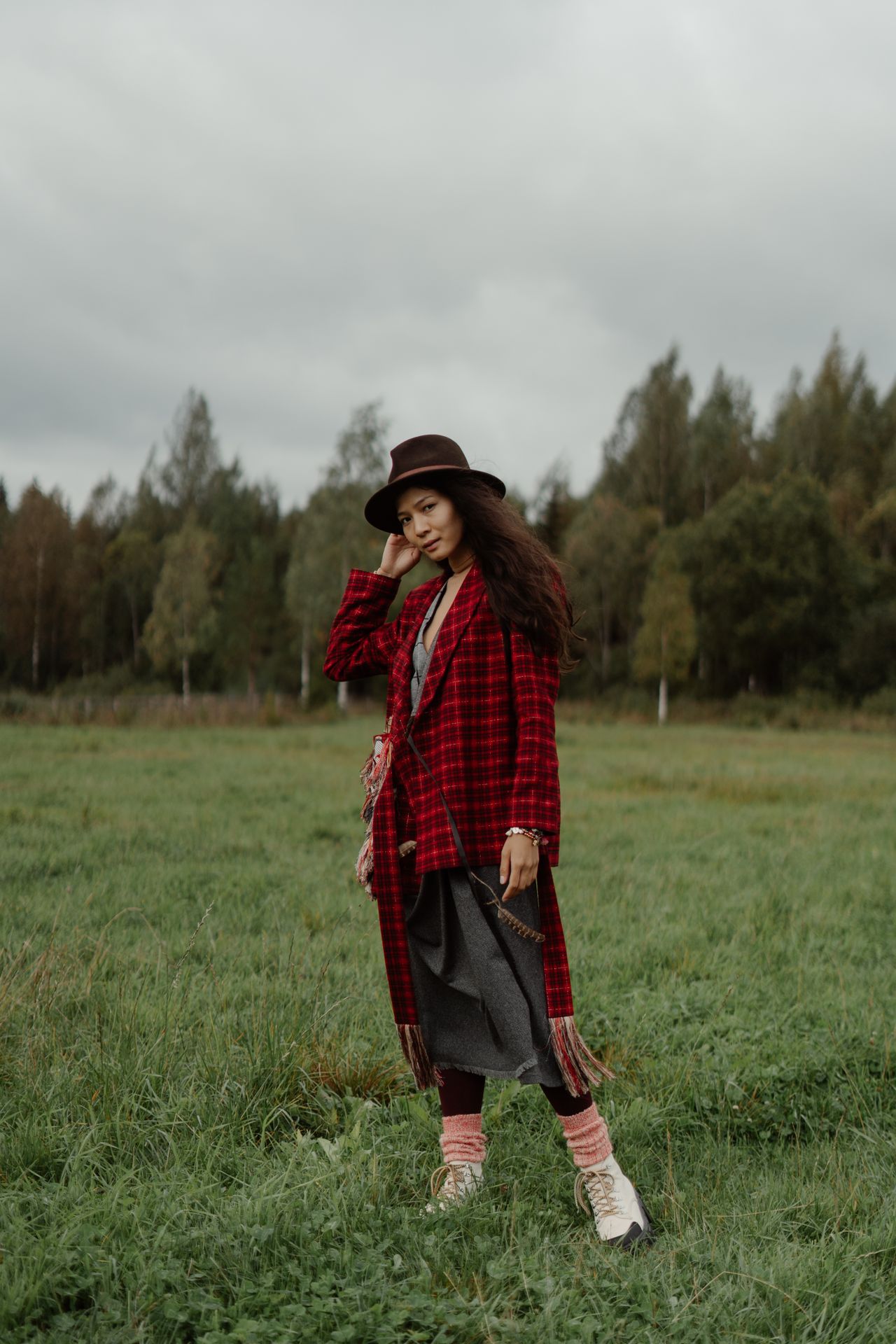
Photo via Pexels
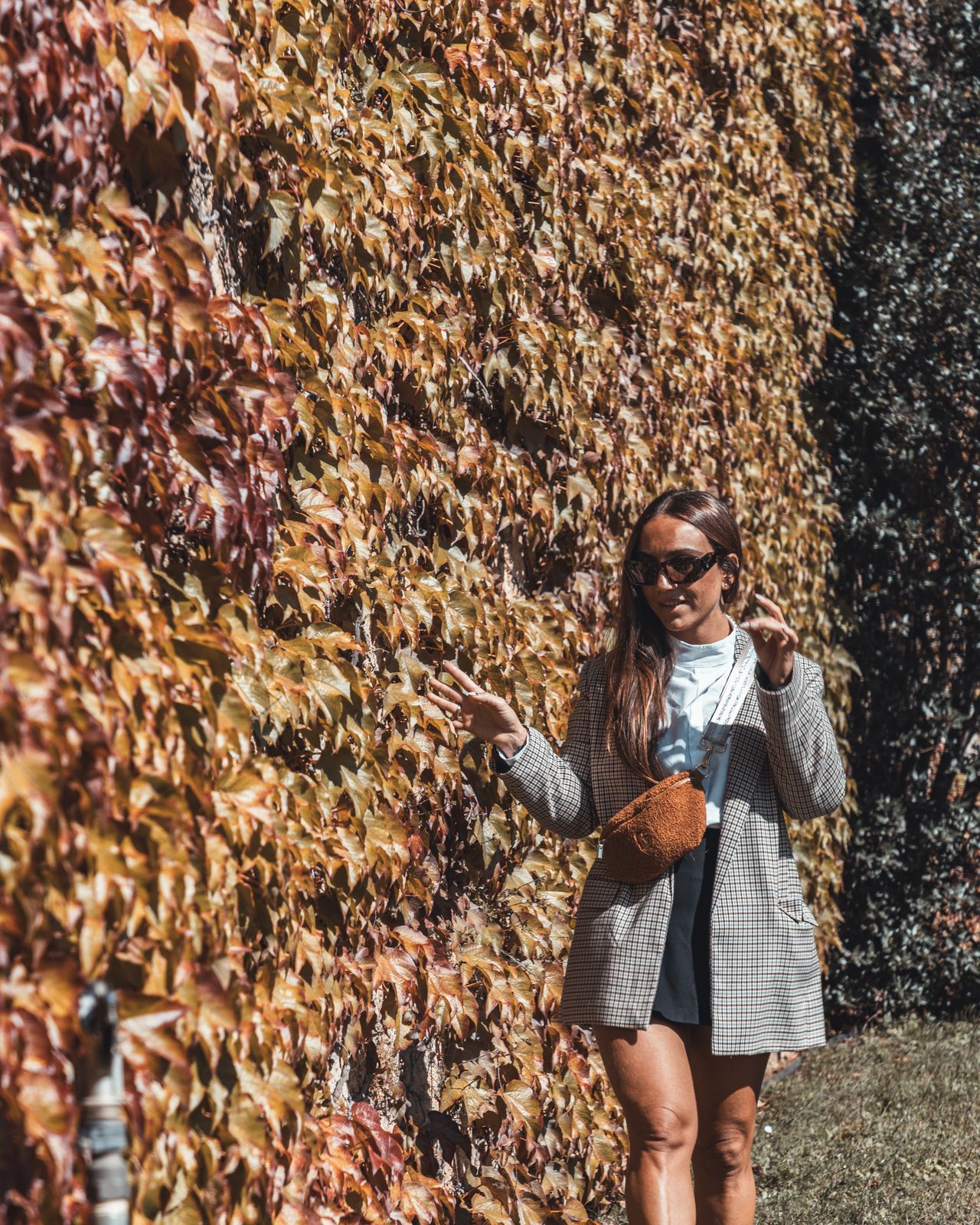
Photo via Pexels

No comments:
Post a Comment