A belted fall outfit is simply a fall dress, or a turtleneck-and-skirt pairing, with a belt that marks the waist and gives the whole look a clear shape. It does not need to be fancy, expensive, or copied from anyone else. The belt is doing one quiet job: it stops a soft dress or a loose knit from looking like one long block, and it lets the rest of the outfit stay simple. Once you get the waist right, the shoes, the coat, and the bag all fall into place more easily.
Fall is the best season for this trick, because the fabrics are already a little heavier. Knits, wool blends, denim, and leather hold a belt well, and they do not slip or bunch the way thin summer fabrics can. A belt also helps you wear the same dress or skirt in different ways: loose for a weekend walk, belted for work, and belted with boots and a coat for a dinner out. This guide walks through ten practical looks, with honest fit notes, so you can build the version that suits your body, your closet, and your day.
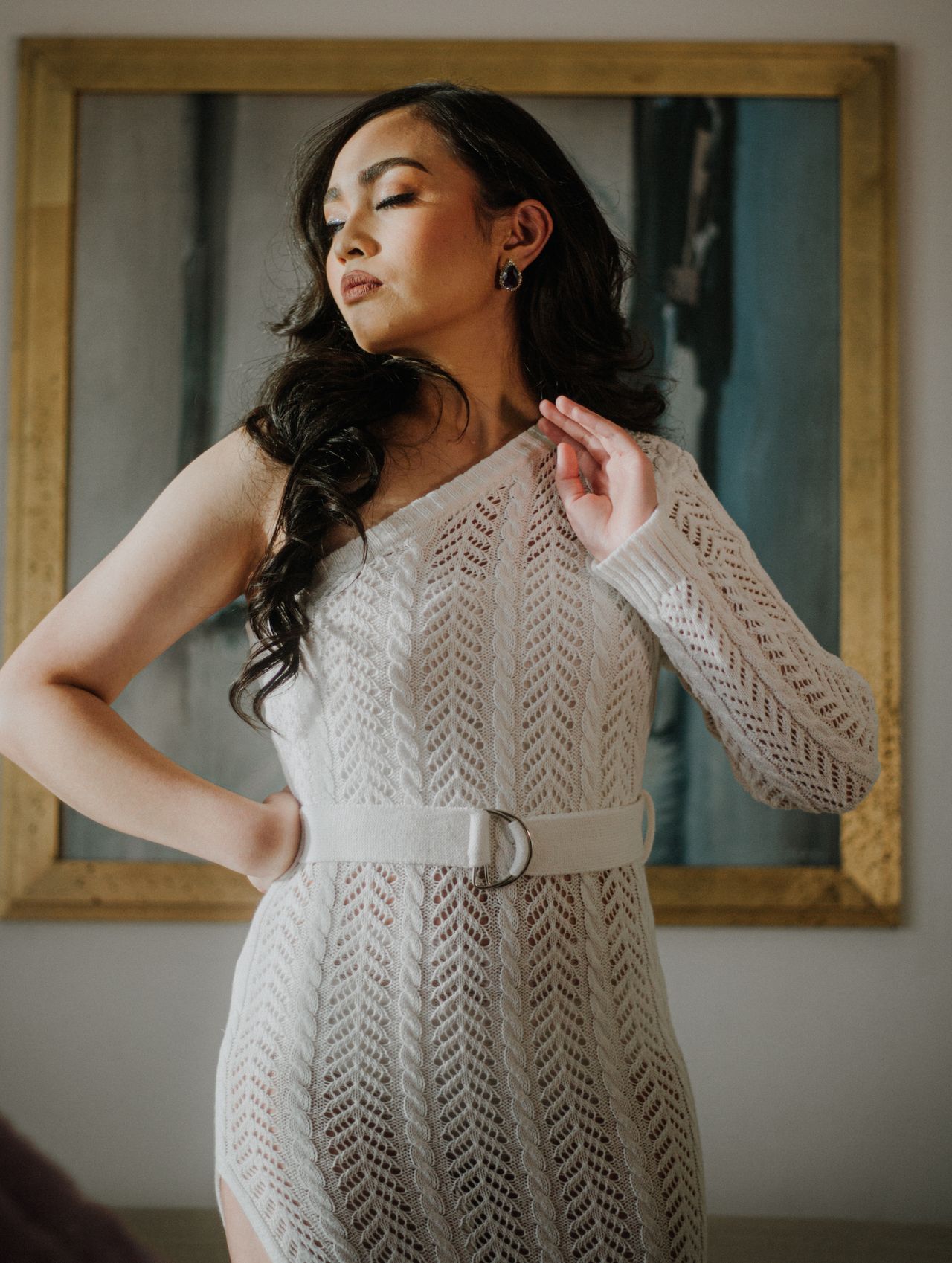
A woman in a white one-shoulder open-knit dress with a wide white belt and a metal buckle, indoors in front of a gold-framed artwork. Photo: Pexels.
Table of Contents
- 1. Start With the Waist, Not the Belt
- 2. A Thin Belt on a Flowing Dress
- 3. A Knit Top, a Mini Skirt, and a Belt
- 4. A Cropped Turtleneck With a Floral Skirt
- 5. Let One Big Buckle Do the Talking
- 6. A Shirtdress With a Self-Tie Waist
- 7. A Brown Belt Over Cream and White
- 8. A Graphic Turtleneck, Pleats, and Tall Boots
- 9. A Turtleneck, Pleats, and Tall Boots
- 10. A Belted Look That Survives a Commute
- Frequently Asked Questions
- Final Thoughts
- Sources
- Gallery
1. Start With the Waist, Not the Belt
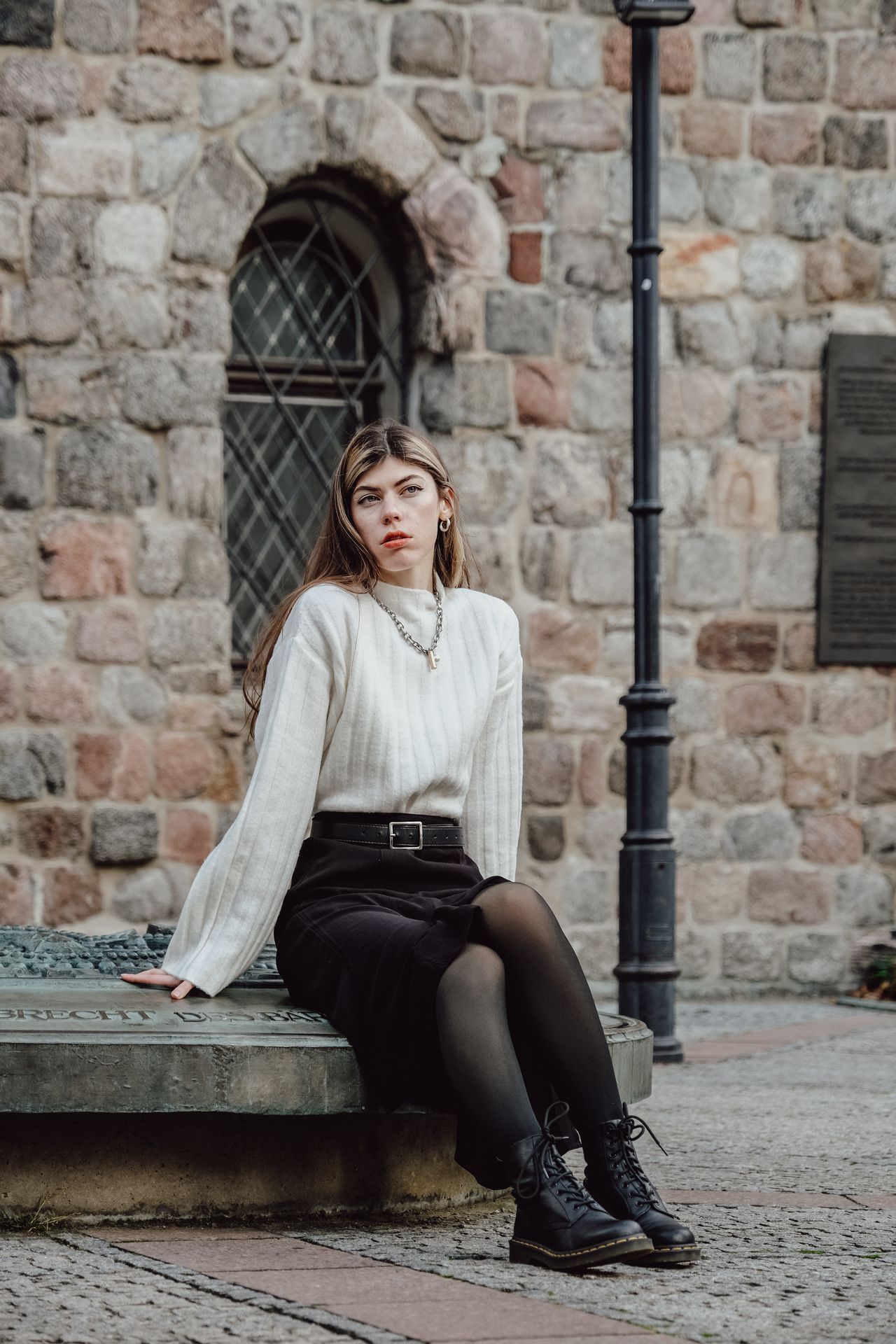
A woman seated outdoors in a white ribbed sweater, a black skirt with a black belt, black tights, and lace-up boots, with a stone wall behind her. Photo: Pexels.
Before you pick a belt, find your natural waist. It is usually about two inches above your belly button, at the narrowest part of your torso, and it is where a belt looks most natural. Stand in front of a mirror, breathe normally, and tilt side to side; the crease that forms is a good guide. A belt placed there shortens the torso a little and lengthens the legs, which is why the same dress can look shapeless unbelted and polished belted. If you belt too low, at the hips, the top half looks long and the skirt can bunch. If you belt too high, just under the bust, the look turns into an empire line, which is pretty but is a different outfit altogether.
Choose the belt width to match the outfit. A thin belt, like the black one in the photo, works well on a soft dress or a tucked sweater, because it defines the waist without cutting the outfit in half. A wide belt suits a sturdier dress or a coat-like shirtdress, where it can hold its shape. As a rule, if the fabric is soft and fluid, go thinner; if the fabric is stiff or heavy, you can go wider. Test the belt while sitting down, too, because a belt that feels fine standing can dig in at the waist when you sit for lunch or a long drive.
2. A Thin Belt on a Flowing Dress
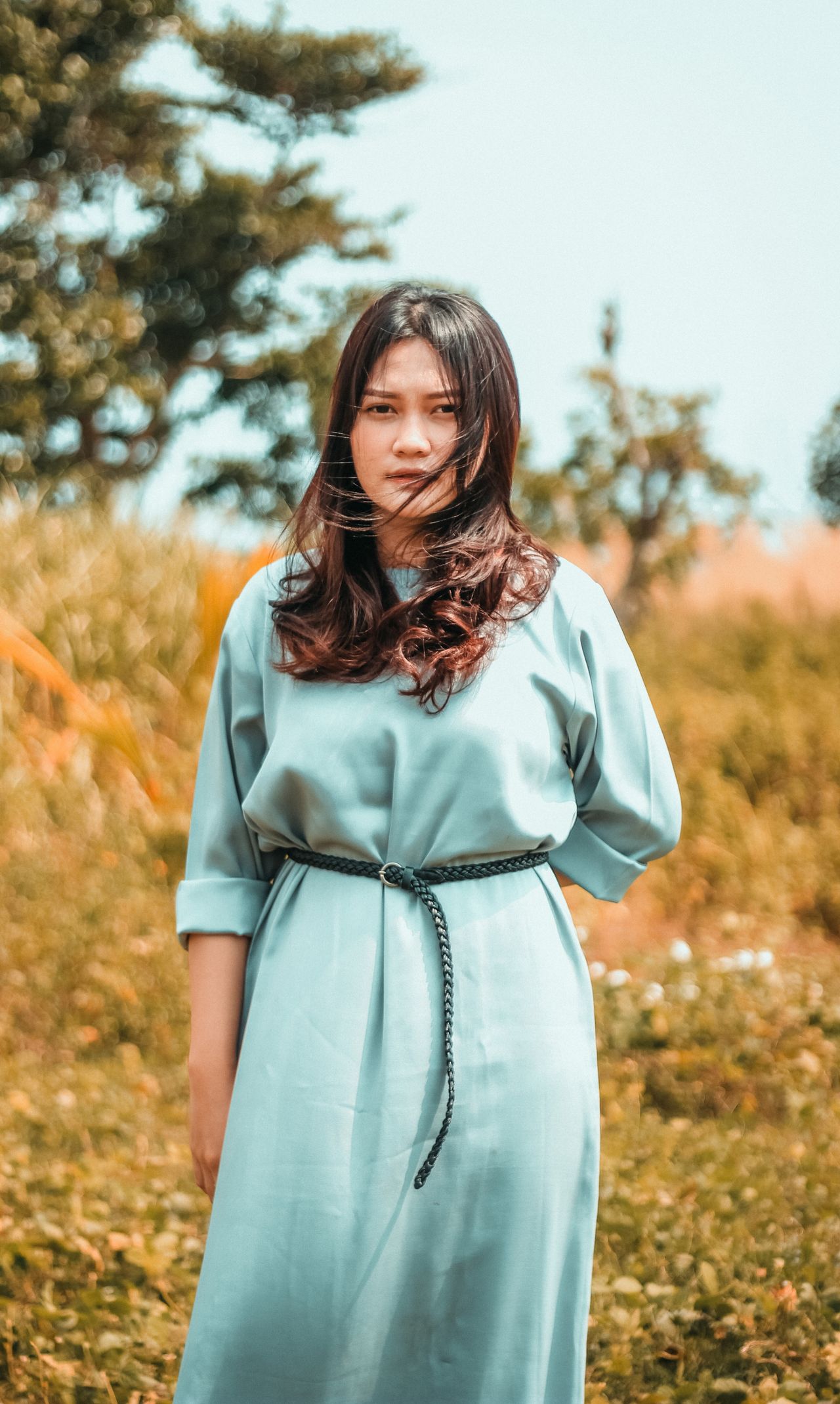
A woman outdoors in a light blue long dress with a thin black braided belt, with grass and trees behind her. Photo: Pexels.
A flowing dress with a thin belt is the easiest entry point, because you do not have to match two separate pieces. Look for a dress that already has belt loops or a seam at the waist; that seam tells you where the designer intended the waist to sit. A slim leather belt in brown or black, with a small buckle, keeps the focus on the dress instead of on the hardware. If the dress is patterned, keep the belt plain. If the dress is plain, the belt can carry a little more detail, such as a braided texture or a brushed metal buckle, without turning loud.
For fall, pair a belted dress with boots that match the belt in tone, not necessarily in exact color. Brown belt with brown or tan boots, black belt with black boots, and the outfit reads as one line from waist to toe. Add opaque tights when the temperature drops below about 55°F, and choose a coat that ends either at the waist or well below the knee, so it does not hide the belt entirely. A hip-length coat that cuts right across the belt line is the one length to avoid, because it chops the outfit at the exact place you just worked to define.
3. A Knit Top, a Mini Skirt, and a Belt
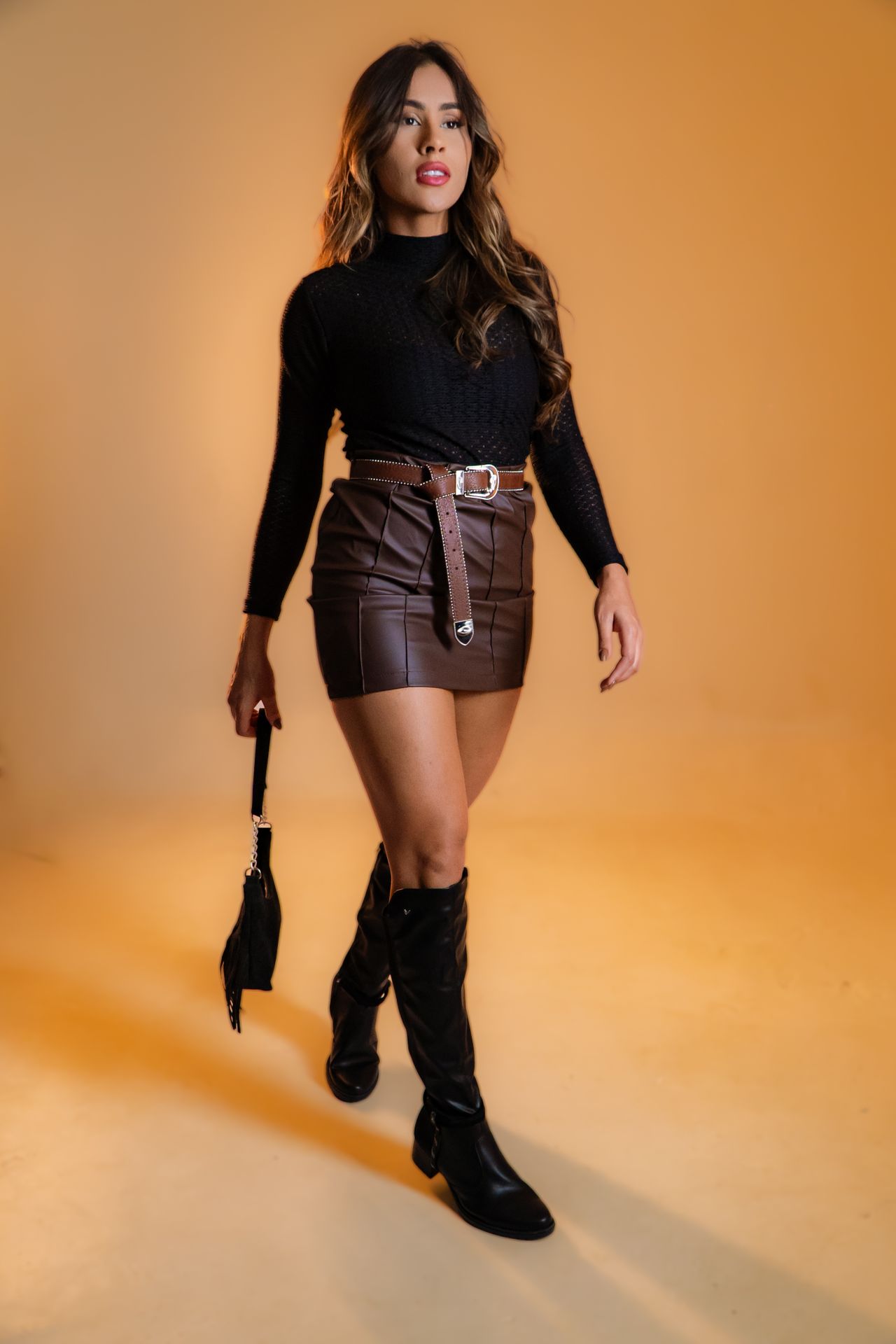
A woman in a black knit top, a brown leather mini skirt with a brown belt and silver buckle, knee-high black boots, and a black bag, against a warm orange studio background. Photo: Pexels.
The turtleneck-and-skirt pairing is where a belt earns its keep. Tuck a fitted turtleneck or a ribbed sweater fully into a high-waisted skirt, then add a slim belt over the waistband. The belt hides the tuck line, which is often the messiest part of this pairing, and it gives the eye a clean horizontal line to rest on. In the photo, the black knit, brown leather mini skirt, brown belt, and knee-high boots are all simple pieces, and the belt is what ties them together. Nothing here is loud, and that is the point: the shape does the work.
Fit matters more than the belt itself. If the sweater is thick, use a light front tuck instead of stuffing the whole hem in, or the waist will bulk up under the belt. If the skirt is a mini, wear opaque tights and boots that cover the knee or the ankle, depending on how cold it is, so the short hem feels intentional rather than bare. A good test is to walk, sit, and reach overhead in the outfit before you leave the house; if the sweater pulls out of the skirt every time you move, the sweater is too short or too loose for a full tuck, and a cropped layer or a bodysuit-style top will serve you better.
4. A Cropped Turtleneck With a Floral Skirt
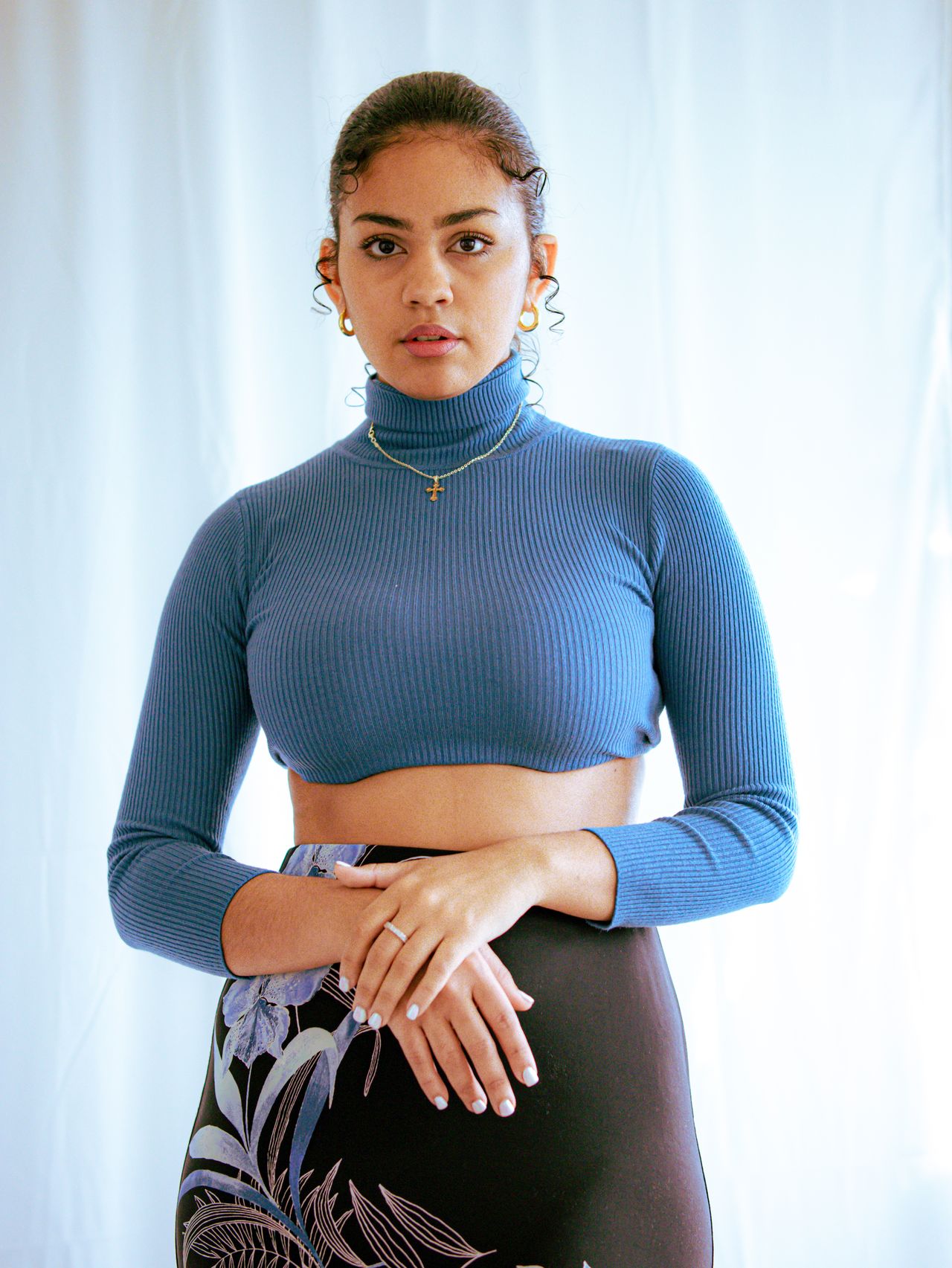
A woman in a blue ribbed cropped turtleneck and a black floral skirt, with gold hoop earrings and a small necklace, against a white curtain background. Photo: Pexels.
A blue ribbed turtleneck with a black floral skirt is a bright, simple pairing, because the dark skirt calms the color on top and the floral print stays small enough to read as texture rather than a loud pattern. Keep jewelry small when the neckline is already high: gold hoops or a thin chain, like the ones in the photo, are enough, and a big statement necklace will fight with the turtleneck. For shoes, ankle boots keep the look grounded for fall, while loafers make it feel lighter for a mild day indoors.
One honest note about the photo: the top here is cropped, so a little midriff shows. That works for a mild fall day or an indoor evening, but it is not the warmest choice for a cold afternoon. If you love the cropped shape, wear it with a high-waisted skirt that meets the hem, or layer a thin long-sleeve top underneath so no skin shows. The belt still helps in both versions, because it anchors the waistband and stops the skirt from slipping down when you move. For more sweater-and-skirt balance ideas, see these skirt sweater outfit ideas, which cover tucks, tights, and shoe pairings in detail.
5. Let One Big Buckle Do the Talking
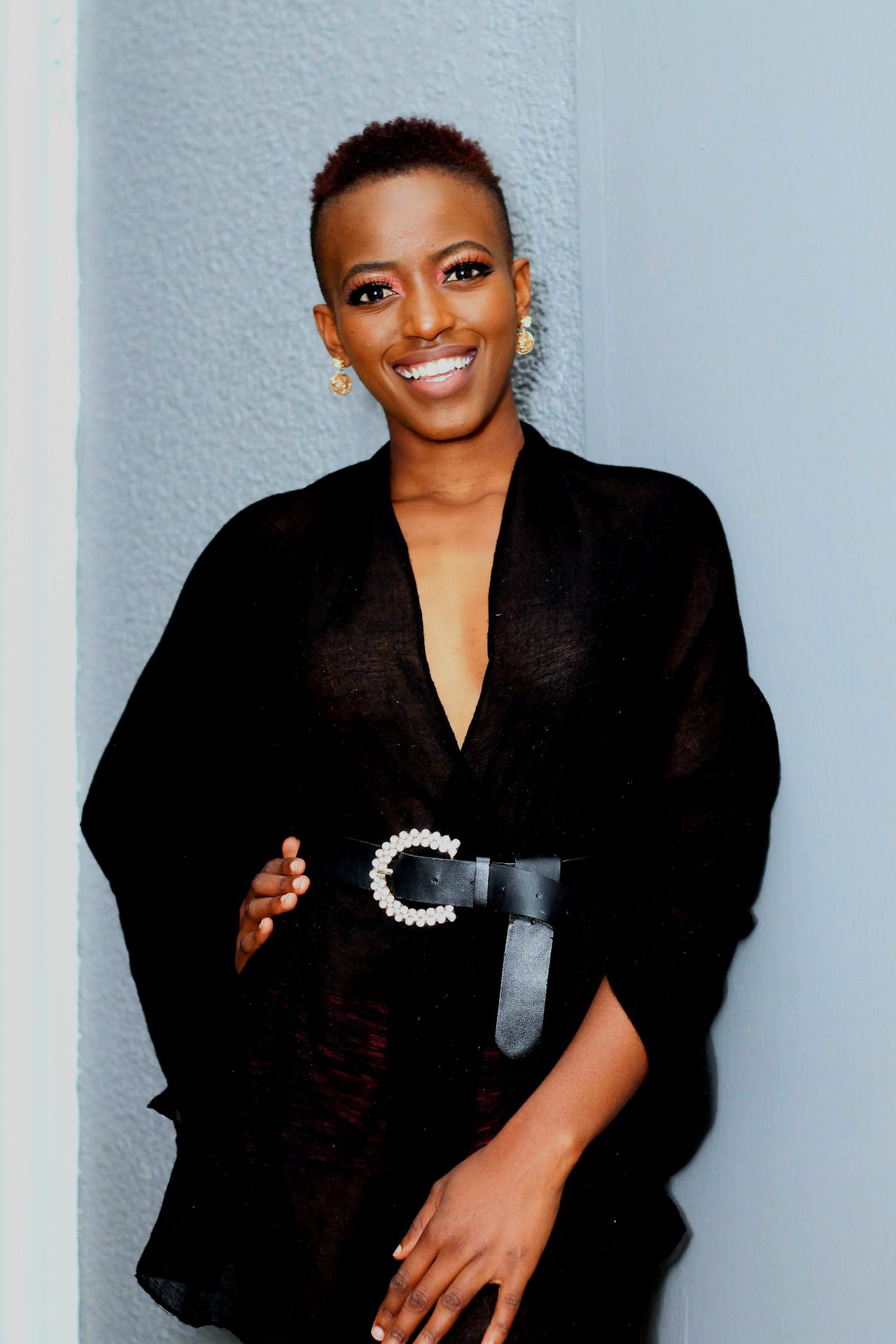
A woman in a black dress with a wide black belt and a large pearl-style buckle, standing against a gray wall. Photo: Pexels.
A statement buckle, like a large pearl-style buckle on a wide black belt, is a shortcut to a finished look. It works best when everything else is quiet: a plain black dress, simple earrings, plain shoes, and no competing print. The buckle becomes the jewelry, so you can skip a necklace and keep the neckline clean. This is a useful rule for evenings, when you want to look dressed up without adding a lot of pieces you will have to manage all night.
Be careful with scale. A very large buckle on a very small frame can overwhelm the waist, and a very large buckle on a soft, unstructured dress can pull the fabric forward and create gaps at the sides. Try the belt over the dress and sit down before you commit; if the buckle flips up or the dress pulls, the belt is too heavy for the fabric. A lighter belt with a medium buckle will give you the same polished effect with less fuss. Save the heaviest buckles for sturdier fabrics, such as denim, leather, or a structured shirtdress, which holds its shape under a tie waist.
6. A Shirtdress With a Self-Tie Waist
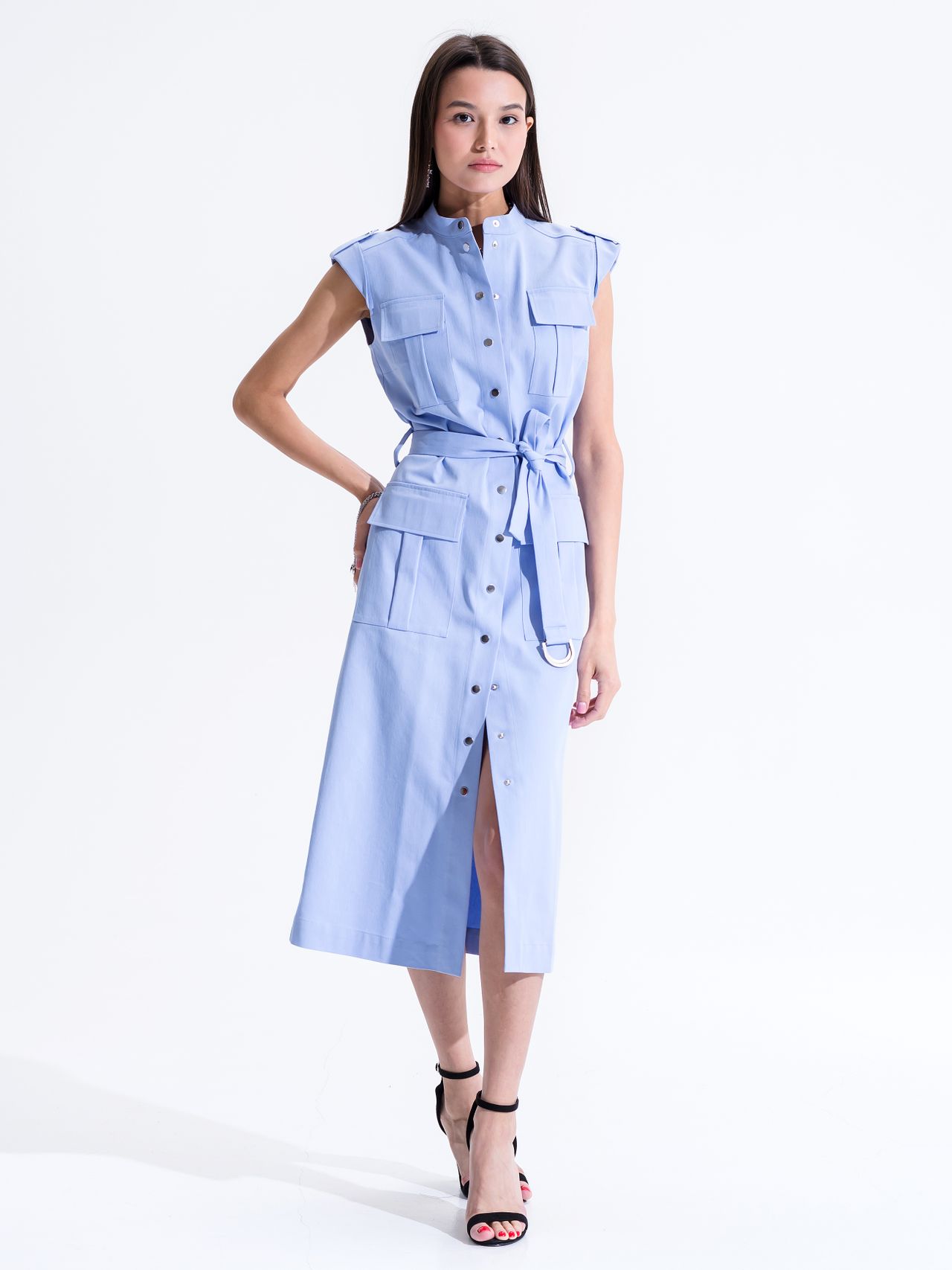
A woman in a light blue sleeveless shirtdress with a self-tie belt, chest pockets, and a front slit, wearing black heeled sandals against a white background. Photo: Pexels.
A shirtdress with a self-tie belt is the most forgiving belted dress of all, because the tie is made from the same fabric and cannot clash. Tie it in a simple knot or a small bow at the front or slightly to the side, and keep the ends short enough that they do not flap when you walk. A self-tie waist also lets you adjust the fit through the day: a little looser after lunch, a little snugger for photos, without needing a different belt. For fall, a long-sleeve shirtdress in navy, olive, or burgundy, with tights and ankle boots, is a complete outfit in one piece.
The light blue shirtdress in the photo shows the shape clearly: a collar, a button front, chest pockets, and a tie waist that pulls the straight cut into a defined shape. The front slit makes walking easy, and the sleeveless cut means you can layer a thin turtleneck underneath on a cold day without adding bulk at the waist, as long as the turtleneck is fitted. For shoes, black heeled sandals suit a mild day, while black ankle boots and opaque tights turn the same dress into a proper fall outfit. Keep the belt tie neat and centered, because a messy knot is the first thing the eye notices on an otherwise clean dress.
7. A Brown Belt Over Cream and White
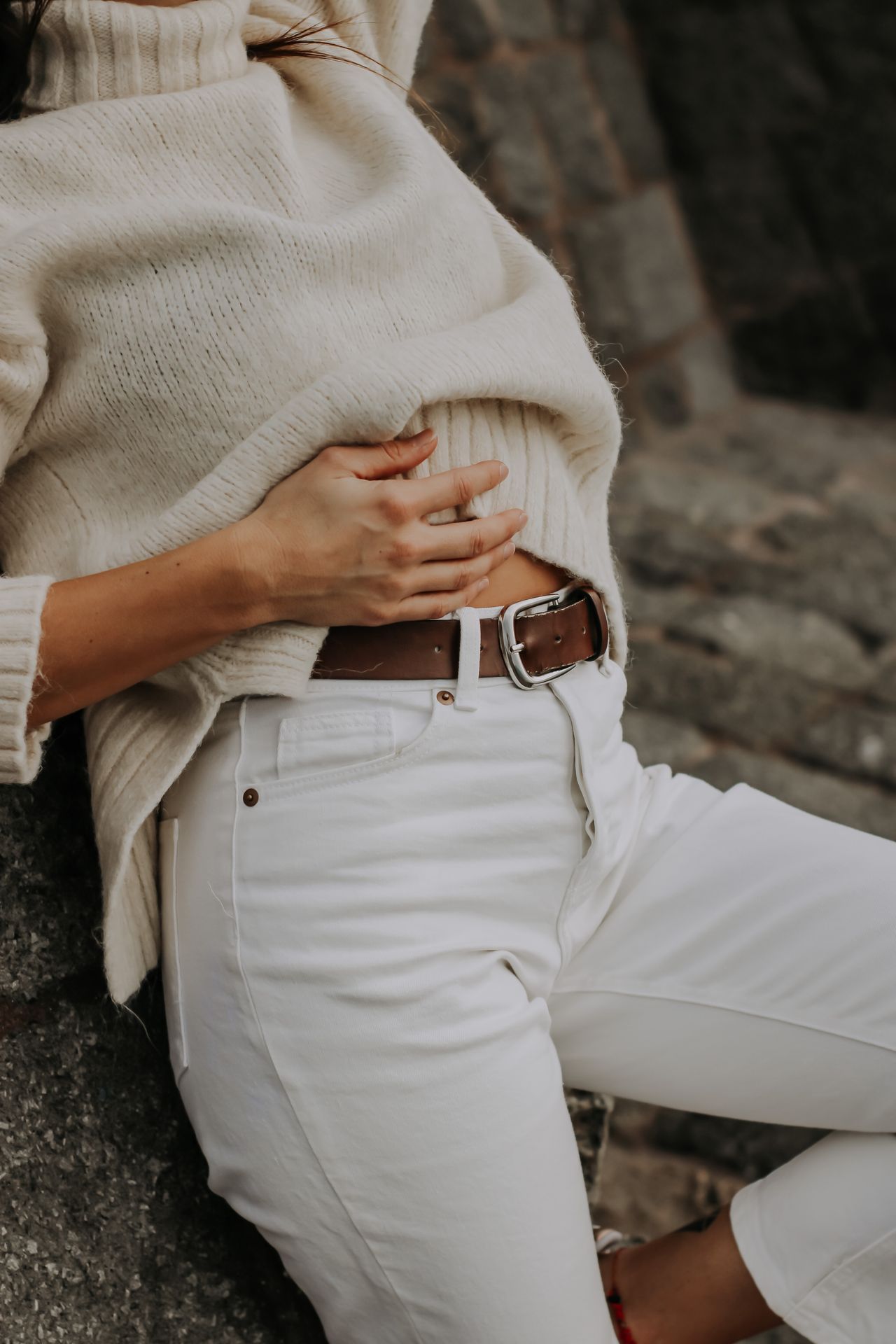
A close-up of a brown leather belt with a silver buckle worn over white jeans and a cream ribbed knit sweater. Photo: Pexels.
Cream and white outfits in fall look fresh, but they can also look washed out if there is no anchor. A brown belt is that anchor. It breaks up the pale column, adds warmth, and gives the eye a place to land. The close-up in the photo shows this clearly: a cream ribbed knit, white jeans, and a brown leather belt with a small silver buckle. Nothing else is needed, because the belt already provides the contrast. This is a good reminder that a belt does not have to match the dress; it has to match the mood. Brown leather reads warm and casual, black leather reads sharp and formal, and a fabric tie reads soft and relaxed.
For a softer version, try a cream knit with cream or ivory trousers and a tan belt, which keeps the palette light but still defines the waist. This works well for daytime events, when black can feel too heavy. Keep the belt narrow in a tonal outfit, because a wide dark belt will cut the light column in half and shorten the legs visually. A narrow belt in a warm tan or cognac, with a small buckle, defines the waist without breaking the line, and it pairs naturally with tan or brown shoes.
8. A Graphic Turtleneck, Pleats, and Tall Boots
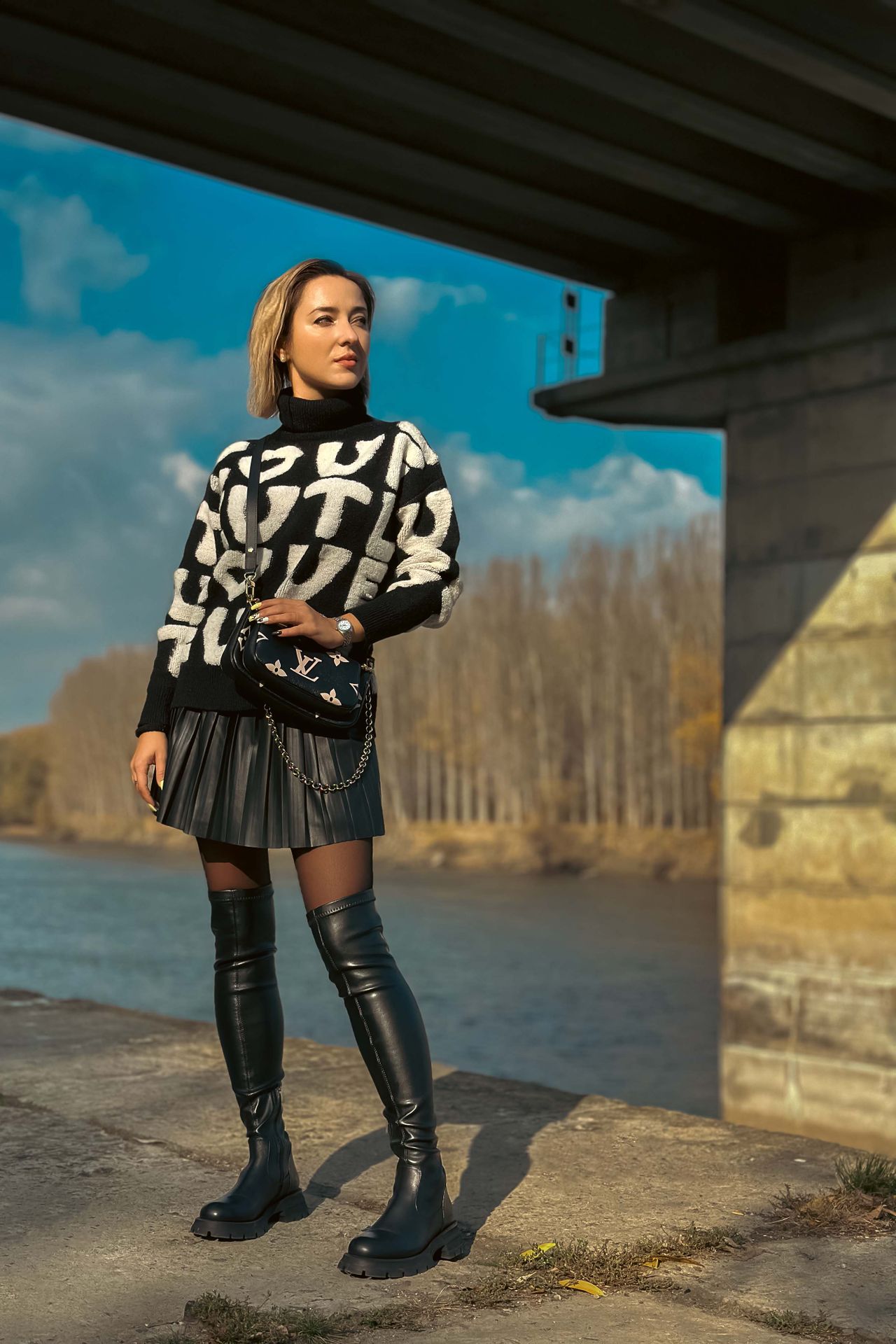
A woman in a black-and-white graphic-letter turtleneck sweater, a black pleated mini skirt, and over-the-knee boots, carrying a bag. Photo: Pexels.
When the skirt is short, tall boots do the hard work of keeping you warm and making the outfit look intentional. A graphic turtleneck sweater with a black pleated mini skirt and over-the-knee boots is bold, but the tall boots cover most of the leg, so the short hem feels balanced rather than bare. The pleats add movement, and the turtleneck keeps your neck warm, which matters more than people think on a windy 40°F day. Wear sheer or opaque tights under the boots for extra warmth, and keep the bag simple so the sweater stays the focal point.
One caution: if the sweater has a large graphic print, keep the skirt and boots plain black, as in the photo, so the outfit has one focal point. Two loud pieces at once will make the look feel noisy instead of confident. A belt can still help here, if the sweater is tucked into the skirt, by hiding the tuck line and marking the waist between the print and the pleats. Choose a slim black belt that disappears into the skirt, rather than a wide or bright belt that would become a third focal point.
9. A Turtleneck, Pleats, and Tall Boots
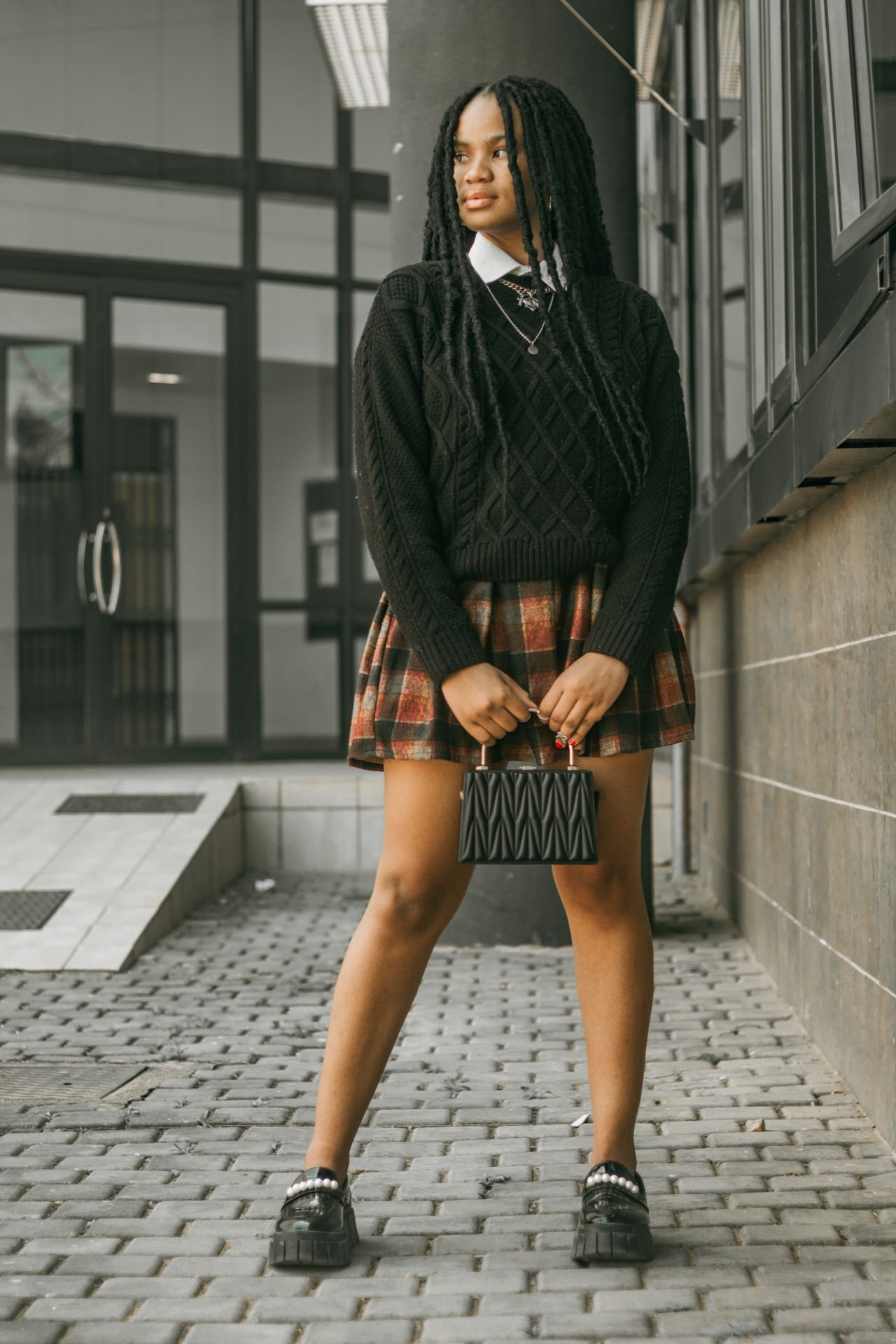
A woman in a black cable-knit sweater over a white collar, a plaid mini skirt, platform loafers, and a small black bag, on a city street. Photo: Pexels.
Pleats and a turtleneck are a natural fall pair, because the pleats move when you walk and the turtleneck keeps you warm. The key is to let the sweater end at the waistband, so the pleats start from a clean line. If the sweater is long and covers the waistband, the pleats disappear under knit, and the outfit loses its shape. A half-tuck at the front, or a sweater that is slightly cropped, solves this without needing a belt at all, which is the case in the photo: the waist is defined by the sweater hem, and no belt is visible. That is a useful alternative for days when a belt feels like one piece too many.
When you do add a belt to a pleated skirt, keep it slim and sit it right on the waistband, not over the pleats themselves. A belt worn over pleats can crush them and create bulk at the front, especially if the pleats are stitched down only at the top. Tall boots, as in the previous section, are the best shoe choice for a pleated mini in cold weather, because they cover most of the leg and keep the short hem feeling balanced. For a pleated midi, ankle boots or loafers work better, since a tall boot under a midi hem can bunch the fabric at the knee.
10. A Belted Look That Survives a Commute
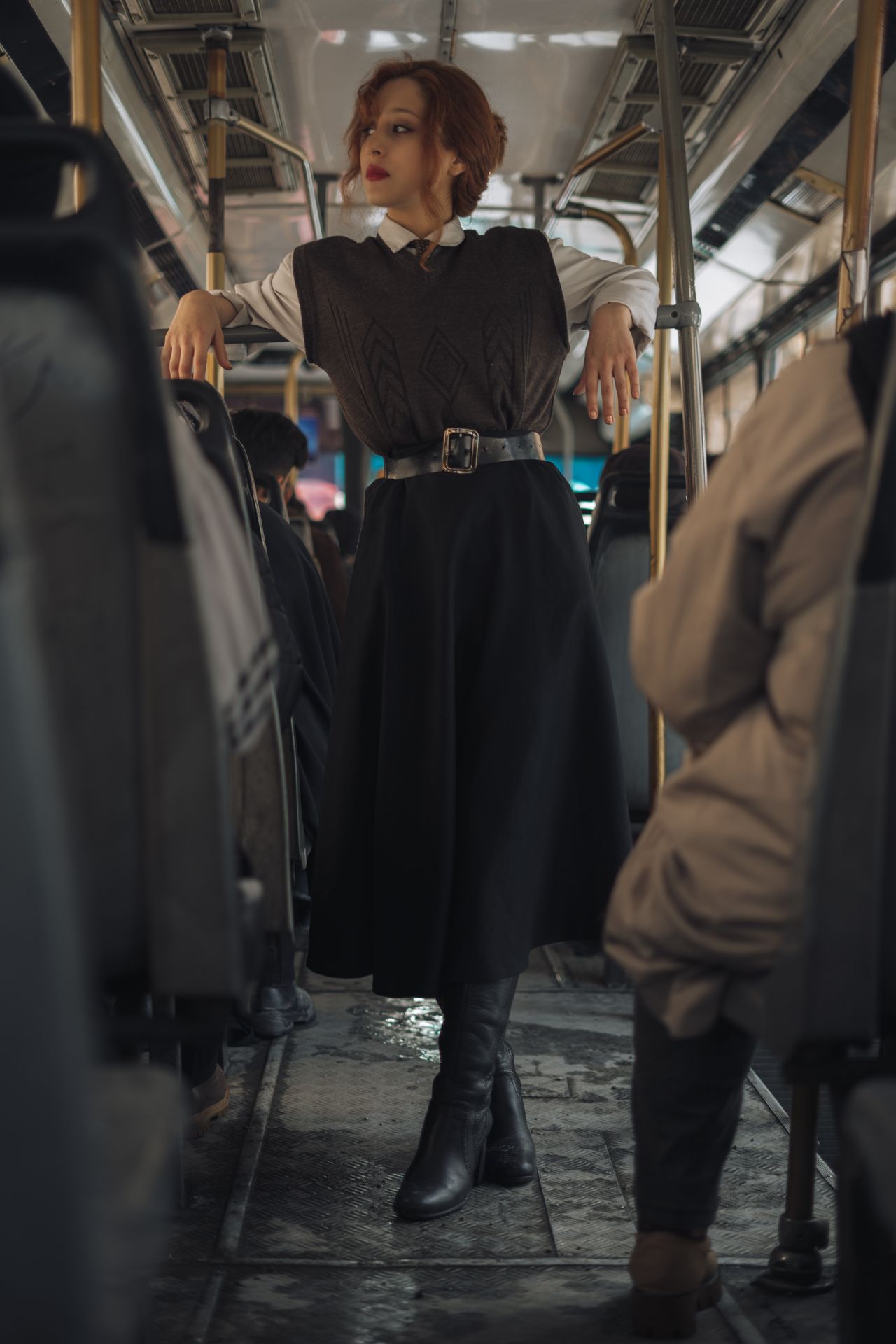
A woman standing on a bus in a dark sweater vest over a white shirt, a long black skirt with a wide belt and large buckle, and black boots. Photo: Pexels.
A belted look has to survive sitting, standing, and walking, not just a mirror check. The photo, taken on a bus, is a good reality check: the vest, shirt, long black skirt, wide belt, and boots all stay in place because each piece is fitted at the waist and the skirt is long enough not to ride up. For a commute, choose a belt with a flat buckle that will not dig in when you sit, and a skirt with a little stretch or a back vent so you can climb stairs and sit comfortably. Avoid a belt with a large, raised buckle for a long train or bus ride, unless you plan to loosen it once you sit down.
Pack a backup plan for the weather. A belted dress or skirt with a long coat works for the walk to the office, but if the coat is heavy, it can press the belt into your waist and leave a mark on soft fabric. Wear the coat open when you can, or choose a belt in a smooth leather that will not snag the coat lining. Keep a small crossbody bag instead of a heavy shoulder bag, so the strap does not pull the belt sideways through the day. For dressier belted looks that also need a coat, these winter wedding guest outfit ideas include a useful section on coats over formal outfits, including how to keep the waist visible under an outer layer.
Frequently Asked Questions
Can I wear a belt over a thick knit?
Yes, but use a wider, sturdier belt and keep the knit as flat as possible at the waist. A thin belt over a chunky knit will sink in and disappear, and it can create lumps. If the knit is very thick, a front tuck or a shorter sweater may define the waist better than a belt.
Where should the belt sit?
At your natural waist, usually about two inches above your belly button, at the narrowest part of your torso. That placement lengthens the legs and keeps the proportions balanced. Belting at the hips gives a different, more relaxed line and works better with long, loose tops.
Do the belt and shoes have to match?
They do not have to match exactly, but they should be in the same family. Brown with brown or tan, black with black, and a metal buckle that matches your other jewelry will make the outfit feel intentional without looking overly matched.
Can I belt a dress with no belt loops?
Yes, if the fabric is sturdy enough to hold the belt in place. A smooth, heavy dress works well. A very slippery fabric, such as thin satin, may let the belt slide up or down, so test it by walking and sitting before you wear it out.
What if a belt feels uncomfortable?
Loosen it by one notch, choose a softer leather or fabric belt, or skip the belt and use a tuck or a shorter top to define the waist instead. Comfort matters more than the accessory, and an uncomfortable belt will show in how you stand and move.
Final Thoughts
A belt is a small piece with a big job. It does not need to be expensive or dramatic; it needs to sit at the right place, match the weight of the fabric, and stay comfortable through a real day. Start with one good leather belt in black or brown, one dress that already fits well at the waist, and one turtleneck-and-skirt pairing you can tuck and belt with confidence. Once those three combinations feel easy, you can add a wider belt, a statement buckle, or a bolder color, one change at a time.
Try each look at home first, sit down in it, walk up stairs in it, and check it in a full-length mirror from the side as well as the front. The side view is where a belt that is too tight, too low, or too bulky will show up first. When the waist looks clean from every angle and the outfit still feels comfortable, you have found your version, and you do not need to copy anyone else's to make it work.
Sources
- Belted pleated midi dress styling notes
- How to style a cropped turtleneck
- What to wear with a black turtleneck
- Blazer outfit ideas for fall
Gallery
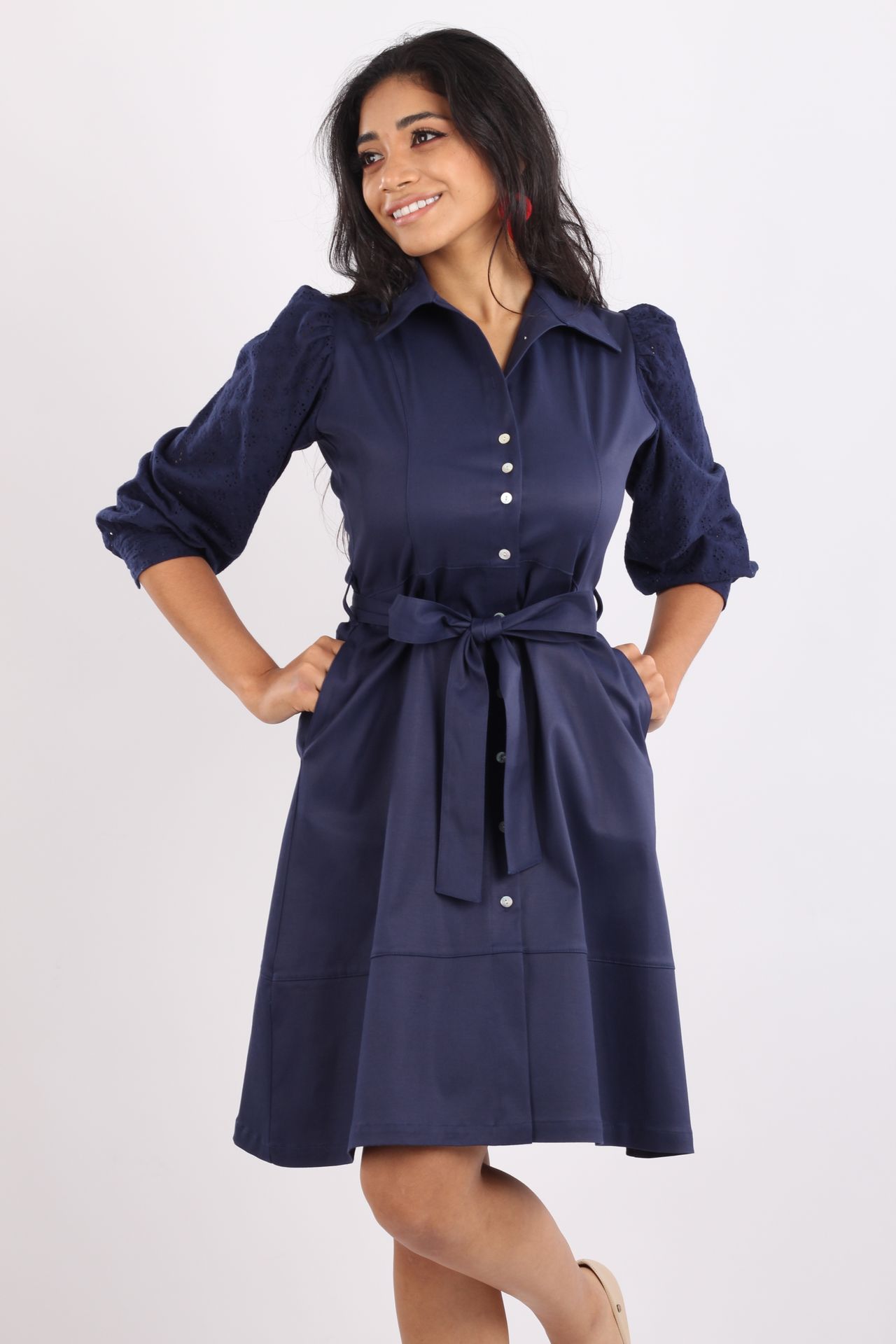
A woman in a navy button-front shirtdress with a tied fabric belt at the waist, against a white background. Photo: Pexels.
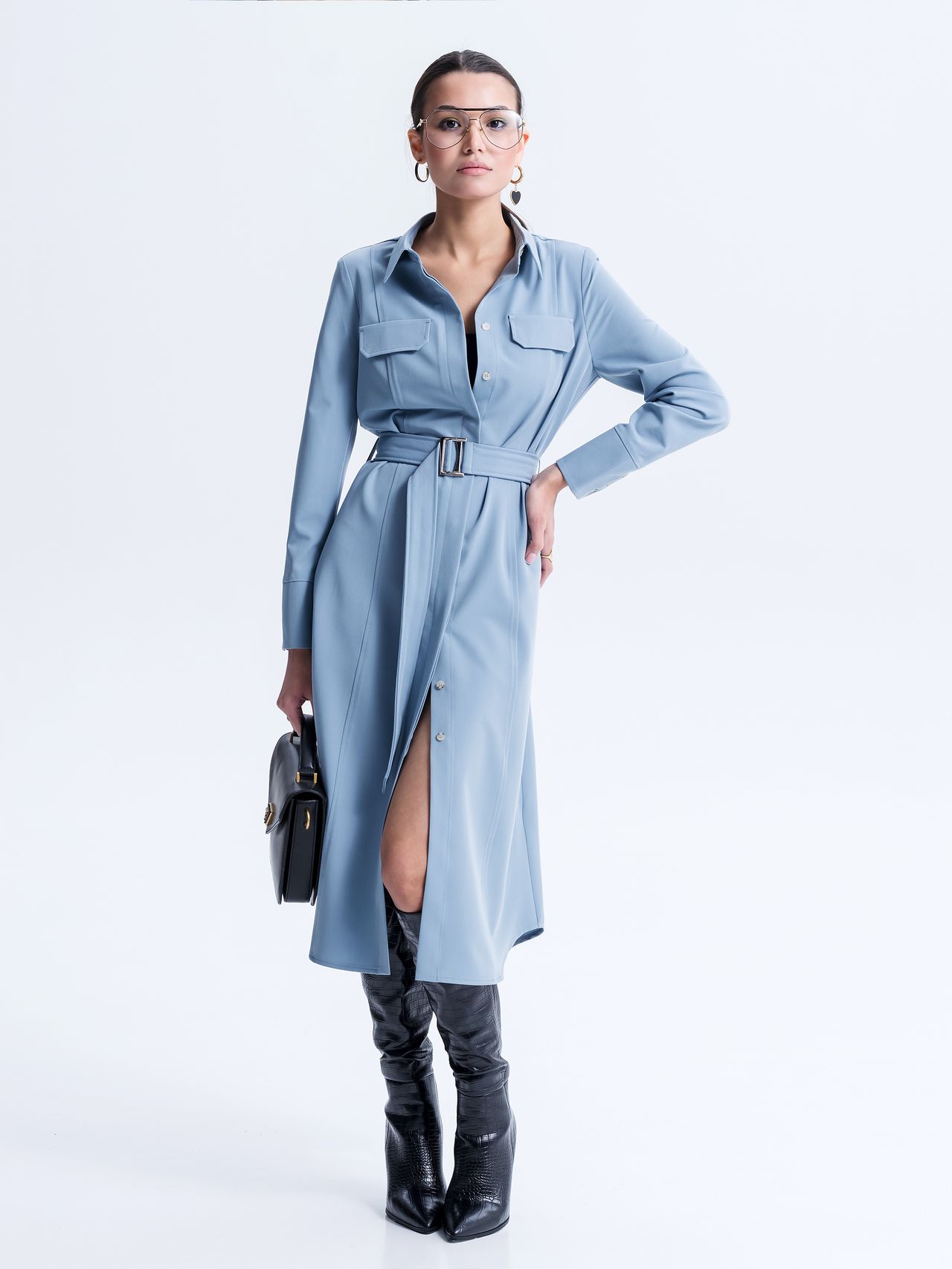
A woman in a light blue long belted shirtdress with a silver buckle, black over-the-knee boots, and a black bag, against a white background. Photo: Pexels.
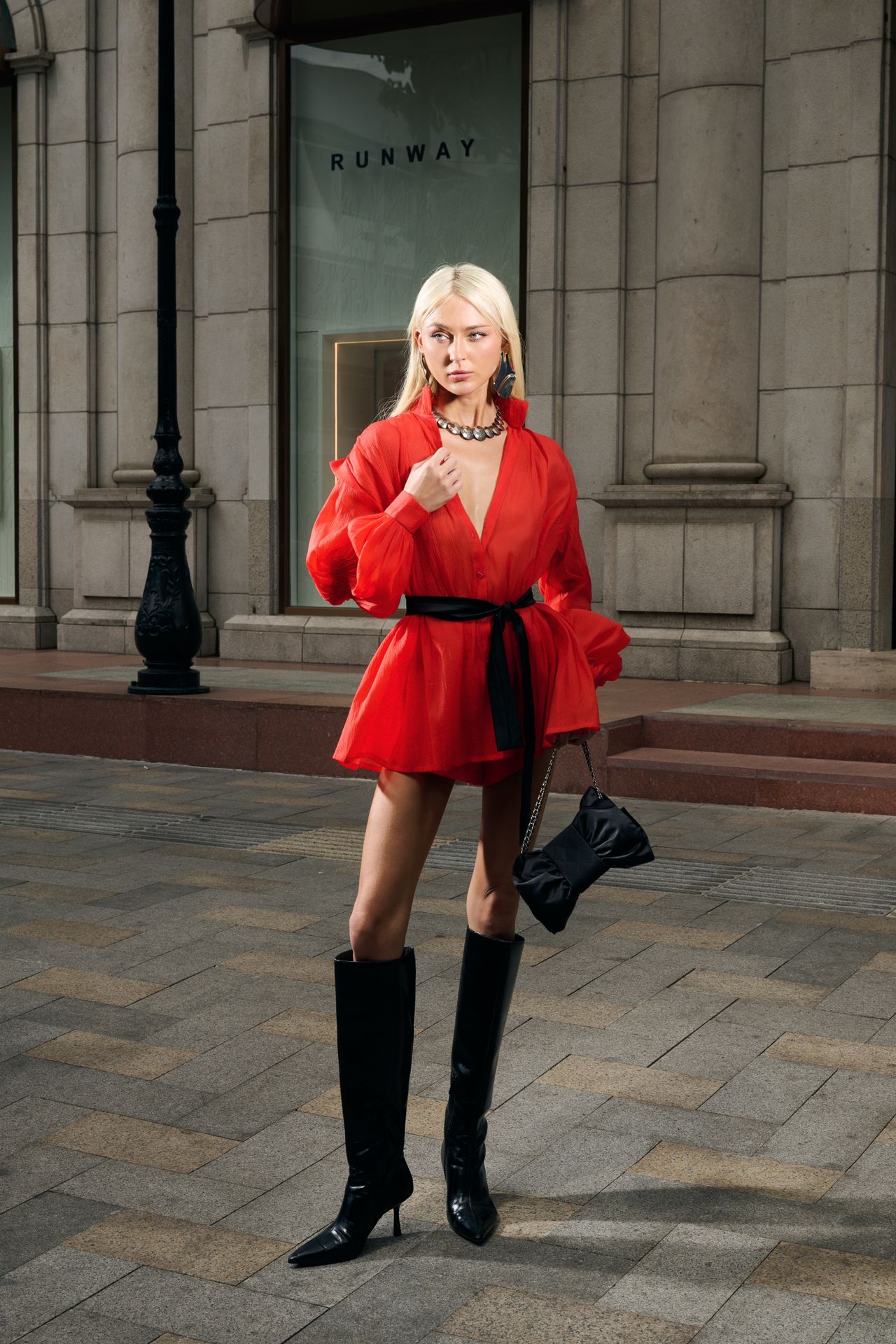
A woman on a city street in a bright red long-sleeve dress with a black sash belt tied at the waist, black knee boots, and a black bag. Photo: Pexels.

No comments:
Post a Comment