A 24 inch bathroom cabinet is the go-to choice for powder rooms, ensuites, and small bathrooms across Canada. At roughly 61 cm wide, it fits a single sink while leaving room to move, making it ideal for tight floor plans.
Choosing the right vanity involves more than width. This guide covers measuring, storage options, and installation tips so your renovation goes smoothly from demolition to the final bead of caulk.
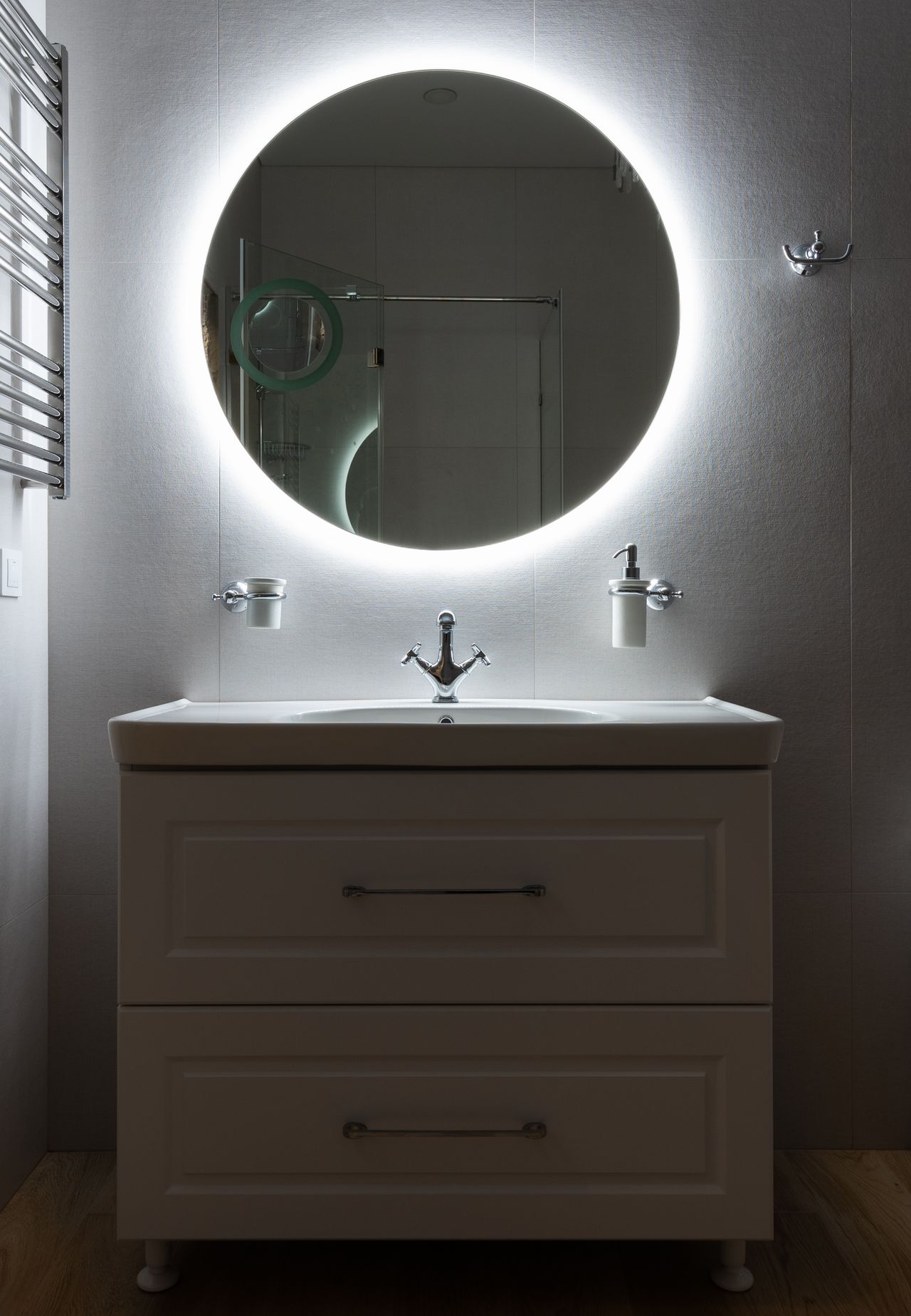
A white vanity with drawers and a backlit mirror. Photo: Pexels.
Table of Contents
- 1. Wall-Hung vs Floor-Standing
- 2. Maximizing Storage in 61 cm
- 3. Installation Tips for a Solid Fit
- FAQs
1. Wall-Hung vs Floor-Standing
Wall-hung vanities mount to studs and float above the floor, making small bathrooms feel larger and simplifying mopping. They work well on solid walls but need proper blocking; a 24 inch unit with a stone top can weigh 40 kg or more when loaded.
Floor-standing cabinets are simpler to install and offer a traditional look with toe-kick storage. They suit any wall type and cost less, typically $250 to $600 at Canadian retailers versus $400 to $900 for wall-hung models. Choose based on your wall structure and style preference.

A wall-hung basin keeps floor space open. Photo: Wikimedia Commons.
2. Maximizing Storage in 61 cm
A 24 inch vanity will not hold everything, so prioritize. Deep drawers beat doors for access; a single wide drawer under the sink fits taller bottles. Look for models with adjustable dividers or add aftermarket organizers for $20 to $40.
Use the wall above for a mirrored medicine cabinet to gain hidden storage without floor space. A narrow tower or shelf beside the vanity handles overflow. For drawer organization strategies, these bathroom vanity drawer organization tips help every centimetre count.
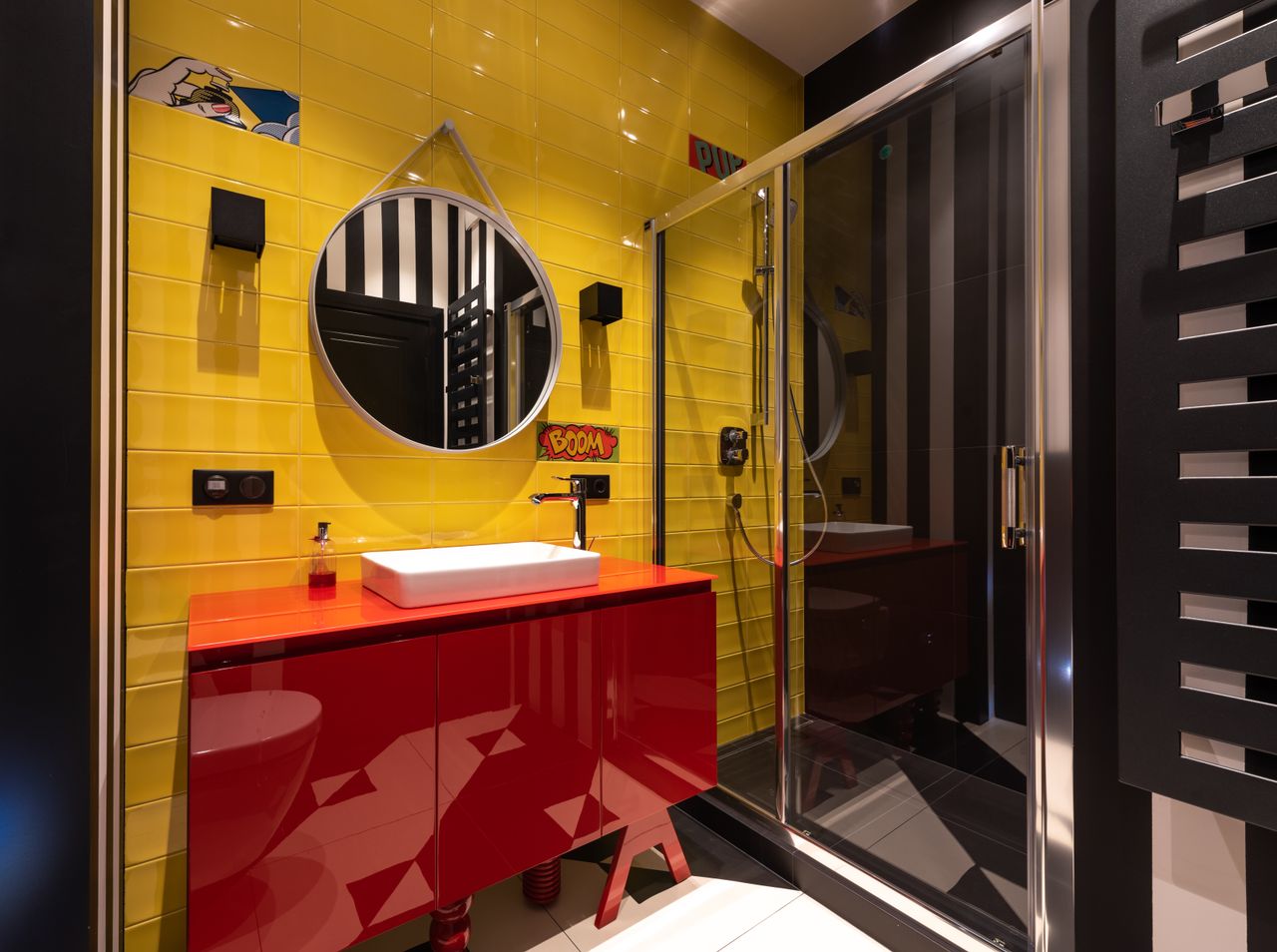
A bold red vanity adds personality to a small bath. Photo: Pexels.
3. Installation Tips for a Solid Fit
Turn off water and disconnect the old vanity before starting. Dry-fit the new cabinet to check plumbing alignment; the drain and supply lines should pass through the back without forcing. Shim the base level, as few bathroom floors are perfectly flat.
Secure floor-standing units to wall studs with screws through the back rail. Caulk the top edge where the backsplash meets the wall to prevent water damage. If plumbing needs moving, budget $300 to $600 for a licensed plumber, since DIY drain work risks leaks. Browse creative bathroom vanity ideas for styling once installed.
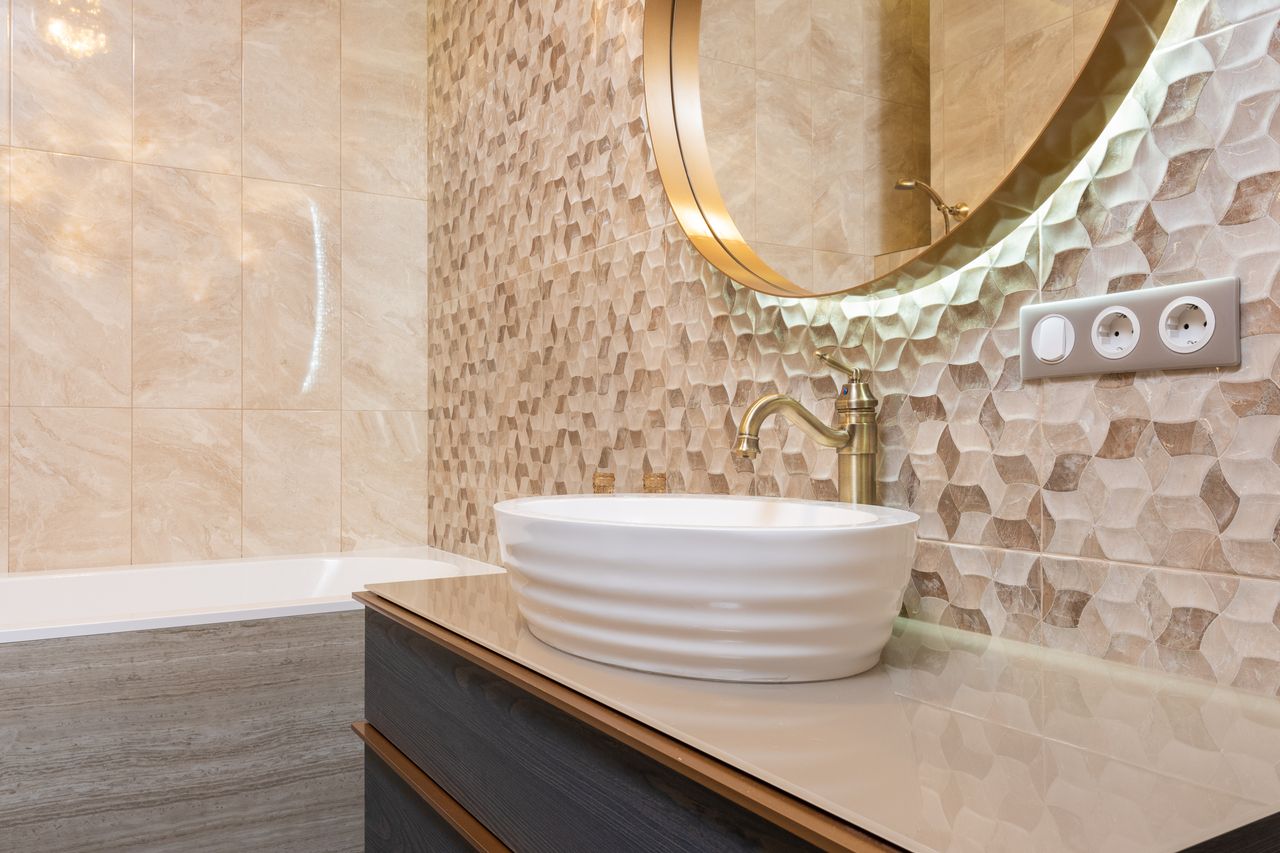
A vessel sink pairs well with compact vanities. Photo: Pexels.
FAQs
Will a 24 inch vanity fit a standard sink?
Yes, most 24 inch vanities include or fit a single oval or rectangular sink about 43 cm wide.
How much does this size vanity cost in Canada?
Expect $250 to $900 depending on construction and top material, plus installation if needed.
Can I install it myself?
Yes, if plumbing stays in place. Moving drains or supplies is best left to a licensed plumber.
What is the standard depth?
Most are 46 to 53 cm deep, with 53 cm being the most common for comfortable use.
Does it work in a powder room?
Absolutely, the 61 cm width is ideal for powder rooms where space is tight.
Final Thoughts
A 24 inch bathroom cabinet proves that small can be mighty. Measure carefully, choose storage that suits your habits, and install it level and secure. With the right vanity, even the tiniest Canadian bathroom feels organized and welcoming.
Sources
Gallery

A classic white vanity with ample drawers. Photo: Wikimedia Commons.

No comments:
Post a Comment