
A marble island and warm gold pendants anchor this elegant kitchen. Photo via Pexels.
There is a special kind of disappointment in walking into a finished kitchen and feeling nothing. It looks correct — the cabinets line up, the counters are clean — and yet it has no soul. Most of the time, the problem is not the budget or the contractor. It is that the design never started from the one thing that matters: a clear sense of personal style. From cramped studio kitchens under eight feet wide to sprawling open-plan farmhouse builds, the same rule holds — people who know exactly which aesthetic they love make faster, better decisions and end up with kitchens that genuinely feel like home.
This guide covers thirteen distinct kitchen aesthetics, each with the exact specs, material names, and design details that make the style work. And at the bottom, a short style quiz will point you toward the one that fits your life in under two minutes.
Your Kitchen Style Isn't Just Aesthetic
Real estate agents consistently note that kitchens sell homes. A cohesive kitchen — one where cabinets, counters, lighting, and hardware all speak the same design language — photographs better, shows better, and earns more buyer interest than a kitchen with mismatched pieces. Knowing your style before you buy anything also saves money: mid-project changes, when finishes clash in real light, are among the most expensive mistakes in renovation. Style clarity pays off in four concrete ways:
Saves Your Renovation Budget
Knowing your style prevents expensive change orders from mid-project pivots — ripping out a backsplash or repainting cabinets because the pieces don't work together.
Reduces Daily Stress
Kitchens designed around how you actually cook, clean, and gather feel calmer to live with every day than kitchens designed purely for photos.
Supports Resale Value
Cohesive, well-executed kitchen design is consistently one of the strongest contributors to a home's perceived value at resale.
Smarter Material Choices
Style clarity means you pick materials built for your actual lifestyle — a busy family needs different surfaces than a couple that entertains monthly.
Design wisdom: The single most expensive mistake in kitchen design is choosing finishes in isolation — a beautiful marble slab that clashes with warm oak cabinets, for example. Decide your aesthetic identity before you touch a single sample board.
The 13 Kitchen Aesthetics
01. Earthy Kitchen Design

Natural stone and warm neutrals define the earthy kitchen. Photo via Pexels.
Warm · Grounded · Organic
Earthy kitchen design is one of the most requested aesthetics right now, and the reason is simple: it never feels cold. The style centers on natural materials, warm neutral tones, and textures that feel pulled directly from the landscape. Think terracotta floor tiles, hand-plastered walls in raw umber, and matte ceramic cabinet pulls with a handmade feel.
What most guides miss is the secret of layering warmth temperatures. Light sources should sit between 2700K–3000K (warm amber-white). Anything above 3500K will strip the coziness from clay-toned plaster and make it look like a hospital corridor.
- Cabinet color: raw umber / warm taupe
- Countertop: honed quartzite or leathered granite
- Flooring: Saltillo or terracotta tile, 12-inch squares
- Lighting temp: 2700K–2900K LED
Strengths:
- Timeless, not trendy
- Natural materials age beautifully
- Works in every climate
- High resale appeal
Watch-outs:
- Terracotta needs regular sealing
- Warm tones can feel dark in north-facing rooms
- Authentic materials cost more
Lesser-known tip: For earthy kitchen colors, look at Sherwin-Williams "Antique White" SW 6119 and Benjamin Moore "Camouflage" 2143-40 — neither shows up on typical "earth tone" round-ups, but both photograph warmer than they look on the chip.
02. Modern Earthy Kitchen

Clean lines warmed with natural materials and marble. Photo via Pexels.
Fresh · Calm · Natural
A modern earthy kitchen is what happens when Japandi restraint meets the organic trend — clean lines and restrained geometry, anchored in natural materials rather than cold minimalism. Think flat-front Shaker cabinets (not inset, not raised — flat) in Farrow & Ball "Mole's Breath" No.276, paired with a waterfall edge of honed Nero Marquina marble at 1¼-inch thickness.
The architectural rule to live by here: maintain 42-inch minimum aisle clearance in single-cook kitchens (48 inches for two-cook households). Modern earthy kitchens feel deliberately spacious — the restraint is the point.
- Cabinet style: flat-front, integrated pulls
- Hero material: fluted white oak veneer
- Backsplash: 3"×12" zellige tile, hand-applied
Strengths:
- Photographically stunning
- Easy to keep clean
- Ages with dignity
Watch-outs:
- Flat fronts show finger marks
- Handmade zellige tile is premium-priced
- Needs a skilled installer
03. French Country / Provençal
Timeless · Elegant · Classic
If you have ever eaten a croissant on a Paris balcony and thought "I want my kitchen to feel like this" — this is your style. French Country kitchens earn their romance through antique-look unlacquered brass hardware (worth the premium from quality makers), creamy inset cabinets with a revealed face frame, and open shelving displaying authentic linen napkins and hand-thrown stoneware.
- Cabinet color: Benjamin Moore "White Dove" OC-17
- Hardware: unlacquered brass, aged
- Sink style: apron-front fireclay, 33 inches
Insider spec: Use beadboard paneling at 42 inches high on your island to ground it visually. Higher looks too country-casual; lower looks like you ran out of material. This detail separates designer-quality French Country from the DIY version.
04. Cottagecore / Grandmillennial
Cozy · Nostalgic · Handcrafted
This aesthetic is a direct rebellion against sterile grey-and-white kitchens. The grandmillennial kitchen embraces open shelving on library-style brackets (heavy-duty 3-inch shelf brackets at 16-inch intervals for any shelf over 36 inches wide), vintage-style pendant lighting with Edison filament bulbs at 2200K, and intentionally mismatched cabinet hardware.
- Signature feature: plate rack above sink
- Countertop: butcher block or honed Carrara marble
- Lighting: 2200K Edison filament
Strengths:
- Warm and welcoming
- Vintage finds keep costs down
- Forgiving of clutter
Watch-outs:
- Can tip into clutter without discipline
- Open shelving needs dusting
- Mismatched hardware can look random if not curated
05. Moody / Dark Dramatic
Bold · Dramatic · Sophisticated
Designing a moody kitchen well is all about light control. Most attempts at this style fail by using dead-flat black paint with zero reflective surfaces — the result looks like a cave, not a jewel box. The real approach: navy or forest green lacquer cabinets with a satin 30-sheen finish (Benjamin Moore "Hale Navy" HC-154 is a trusted workhorse), paired with unlacquered brass hardware that glows against the darkness.
Critical spec: install undercabinet LED strips at 4000K color temperature, not warm white. In a dark kitchen, warmer task lighting just adds more darkness. The cooler task light creates a pleasing contrast with warmer ambient pendants set to 2700K.
- Cabinet finish: satin lacquer, 30-sheen
- Task lighting: 4000K undercabinet LED
- Countertop: Calacatta Gold or white quartzite
Strengths:
- Dramatic and instantly memorable
- Hides everyday mess
- Feels luxurious with modest materials
Watch-outs:
- Polarizing at resale
- Requires excellent task lighting
- Needs natural light to avoid feeling closed in
06. Japandi (Japanese-Scandinavian)
Natural · Humble · Wabi-Sabi
The most misunderstood style on this list. True Japandi is not just "beige and light wood" — it is a philosophy of intentional incompleteness. In a kitchen context: leave one shelf deliberately empty. Choose a single beautiful Japanese ceramic bowl for display, not a collection. Use white oak flat-fronts with a natural oil finish (Rubio Monocoat Pure is a popular choice), never polyurethane, which gives a plasticky sheen incompatible with the aesthetic.
- Cabinet finish: white oak, natural oiled
- Hardware: no pulls — push-to-open
- Countertop: soapstone or concrete-look porcelain
Strengths:
- Deeply calming
- Timeless and low-maintenance visually
- Quality over quantity keeps spend focused
Watch-outs:
- Oiled wood needs periodic re-oiling
- Can feel sparse if taken too far
- Every flaw shows — installation must be precise
07. Minimalist Modern

Handleless glossy cabinets define the minimalist look. Photo via Pexels.
Sleek · Functional · Precise
True minimalist kitchens are not just "white and empty" — they are about obsessive detail resolution. Every outlet cover should be flush. Appliances should be panel-ready or integrated. The refrigerator and dishwasher should disappear behind cabinetry. In a truly minimalist kitchen, appliance front depths must be planned so cabinet panel depth stays uniform across the entire run.
- Cabinet style: handleless, finger-pull edge
- Countertop: Neolith or ultra-compact surface
- Appliances: panel-ready, integrated
Strengths:
- Calm and orderly
- Easy visual cleaning
- Ages well — no ornamentation to date it
Watch-outs:
- Demands hidden storage for everything
- Integrated appliances cost more
- Unforgiving of clutter
08. Rustic / Modern Farmhouse
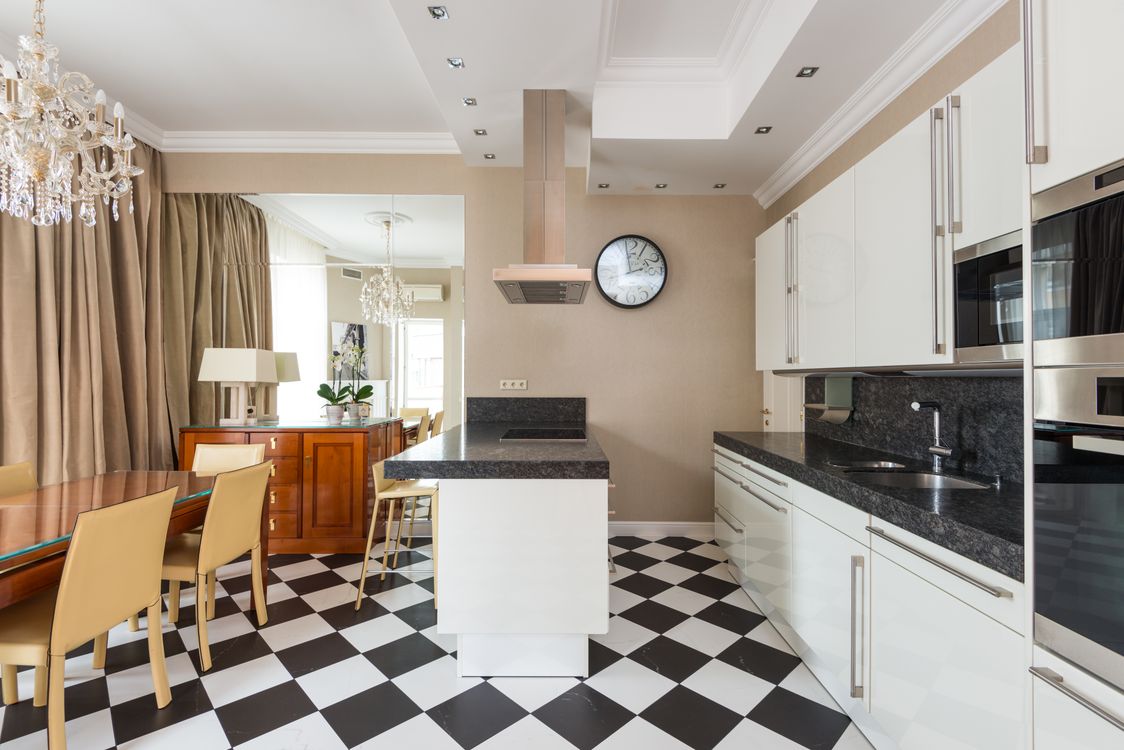
Marble counters meet warm wood for modern farmhouse charm. Photo via Pexels.
Rustic · Authentic · Textured
The modern farmhouse kitchen had a decade of domination for a reason: it works. The key is avoiding the mass-produced trap. Real farmhouse character comes from reclaimed Douglas fir open shelving at 1¾-inch thickness (not the thin 1-inch boards from big-box stores), genuine shiplap at ½-inch thickness with a 1/8-inch reveal, and a deep fireclay apron sink in a warm biscuit tone rather than stark white.
- Shelving: reclaimed Douglas fir, 1¾ inch
- Sink: fireclay apron, 36 inch, in biscuit
- Hardware: oil-rubbed bronze or iron
Strengths:
- Warm and family-friendly
- Reclaimed materials add character
- Broad resale appeal
Watch-outs:
- Trendy versions can date quickly
- Reclaimed wood needs sealing for kitchen use
- Open shelving requires upkeep
09. Industrial / Urban Loft

Granite, steel, and warm wood — the industrial mix done right. Photo via Pexels.
Urban · Edgy · Industrial
Industrial kitchens work best when they avoid the cliché. Yes to exposed brick — but paint the mortar joints white to keep them from absorbing light. Yes to stainless steel — but mix in a warm wood butcher block peninsula (at a separate counter height of 36 inches for prep, versus 42 inches for bar seating). The contrast is everything. Pendant lighting should be factory-style with metal shades, positioned so the bottom of the shade sits at 66–72 inches above finish floor over an island.
- Key feature: open pipe shelving system
- Countertop mix: stainless steel + butcher block
- Pendant height: 66–72 inches above finish floor
Strengths:
- Durable, workhorse materials
- Forgiving of wear
- Great for open-plan spaces
Watch-outs:
- Can feel cold without wood and textile balance
- Stainless steel shows fingerprints
- Exposed brick needs sealing in kitchen zones
10. Eclectic / Maximalist
Vibrant · Personal · Maximalist
Maximalist kitchens fail when they are just "a lot of stuff." They succeed when there is a hidden organizational logic. The rule: pick one dominant color family, two secondary accent colors, and let everything else be neutral. A classic example pairs deep forest green as the dominant color with terracotta and aged brass as accents — every "extra" element, from patterned cement tiles to colorful ceramics and hanging copper pots, sits inside one of those three families. The result: lively but not chaotic.
- Design rule: 60-30-10 color split
- Tile style: encaustic cement, 8"×8"
- Display: open shelving with intentional curation
Strengths:
- Deeply personal
- Vintage and collected pieces keep it affordable
- Never looks like anyone else's kitchen
Watch-outs:
- Easy to cross into clutter
- Needs constant editing
- Polarizing at resale
11. Biophilic / Nature-Immersive
Biophilic · Serene · Regenerative
Biophilic design goes beyond putting a succulent on the windowsill. A truly biophilic kitchen incorporates living wall panels on the backsplash (specify a proper drainage-mat panel system, not just pots glued to a board), views oriented toward garden or sky, and materials that actively reference nature: book-matched travertine for the island top, rough-sawn cedar slats on the ceiling, woven seagrass pendant shades.
- Hero feature: living herb wall with drainage
- Surface material: book-matched travertine slab
- Ceiling feature: rough-sawn cedar slats
Strengths:
- Feels alive and restorative
- Fresh herbs on hand while cooking
- Unique talking-point kitchen
Watch-outs:
- Living walls need light and irrigation planning
- Humidity management matters
- Specialist installation recommended
12. Art Deco / Hollywood Regency

Marble, warm wood, and golden pendants — Deco glamour. Photo via Pexels.
Glam · Refined · High-Contrast
This style demands courage. Art Deco kitchens use fluted glass cabinet inserts (specify reeded glass, not ribbed — they look similar, but reeded has rounder ridges that photograph more elegantly), book-matched marble with dramatic veining, and polished nickel hardware over chrome (nickel has a warmer, slightly yellow tone that reads as far more luxurious in photographs and real life).
- Cabinet insert: reeded fluted glass
- Hardware finish: polished nickel (not chrome)
- Budget: premium — this is a high-investment style
Strengths:
- Dramatic, instantly memorable
- Hides everyday mess
- Premium perceived value
Watch-outs:
- Polarizing at resale
- Requires excellent task lighting
- Small kitchens feel smaller in dark, high-contrast palettes
13. Coastal / Mediterranean

White cabinets and a marble island keep the coastal look fresh. Photo via Pexels.
Coastal · Breezy · Textured
Coastal kitchens live or die by material authenticity. The blue that defines this aesthetic should be pulled from actual sea glass or indigo dye, not the turquoise-blue that appears in every coastal cliché collection. A favorite designer pick is Farrow & Ball "Inchyra Blue" No.289 — it reads as almost grey in north light and dusty blue-green in south-facing kitchens, which means it is never boring. Pair with unlacquered brass hardware that patinates naturally over time (don't seal it — let it live).
- Signature color: Farrow & Ball "Inchyra Blue" No.289
- Backsplash: handmade glazed ceramic subway tile
- Floor: wide-plank European white oak
Strengths:
- Light, fresh, and timeless
- Works beautifully in bright rooms
- Easy to live with
Watch-outs:
- White cabinets need regular cleaning
- Cliché colors cheapen the look
- Needs texture variety to avoid feeling flat
Which Kitchen Style Is Actually Yours?
Answer honestly — not aspirationally. The best kitchen is the one that fits your real life. For each question, pick the answer that feels most like you, and count your letters. Whichever letter you picked most often points to your style family.
Question 1: When you walk into someone's home, what makes you immediately feel at ease?
- A: Warm textures, natural wood, terracotta pots on every surface
- B: Clean lines, nothing out of place, a sense of intentional calm
- C: Rich, dramatic colors that feel like a grown-up's space
- D: Color, personality, evidence of a person who actually lives there
Question 2: Your Sunday morning ritual most likely involves...
- A: Slow coffee, bread baking, windows open to the garden
- B: Matcha in a minimal cup, reading, zero clutter on the counter
- C: Pancakes for everyone, cast iron, flour absolutely everywhere
- D: Brunch, fresh flowers on the table, soft natural light through linen curtains
Question 3: What's your honest relationship with kitchen clutter?
- A: I need everything hidden — visible clutter makes me anxious
- B: A few beautiful things displayed is fine — I'm selective
- C: My collections are display-worthy — I curate my chaos
- D: Real life is messy and I want a kitchen that can handle it
Question 4: You're choosing a kitchen countertop. What do you reach for?
- A: Honed leathered quartzite — I love tactile, natural surfaces
- B: Matte soapstone or ultra-compact — durable and clean-looking
- C: White Calacatta Gold against dark cabinets — maximum contrast
- D: Butcher block — warm, real, and I don't mind the patina
Question 5: Which paint swatch are you most drawn to on this list?
- A: Benjamin Moore "Camouflage" 2143-40 — warm sage-grey
- B: Farrow & Ball "Mole's Breath" No.276 — complex warm grey
- C: Benjamin Moore "Hale Navy" HC-154 — deep, serious, dramatic
- D: Farrow & Ball "Inchyra Blue" No.289 — dusty, sea-glass blue-grey
Your Kitchen Style: Earthy Modern
You belong in a space rooted in natural warmth — where textures tell stories and every surface was chosen with intention. If most of your answers were A, lean into Earthy Kitchen Design (Style 01): terracotta, raw umber, warm 2700K light, and materials with a handmade feel. Mostly B? Modern Earthy (Style 02) is your match — clean lines grounded in natural oak and marble. Mostly C? You are drawn to drama: explore Moody Dark (Style 05) and Art Deco (Style 12). Mostly D? Your heart is with warmth and lived-in character — Cottagecore (Style 04), Rustic Farmhouse (Style 08), or Coastal (Style 13) will feel like home.

No comments:
Post a Comment