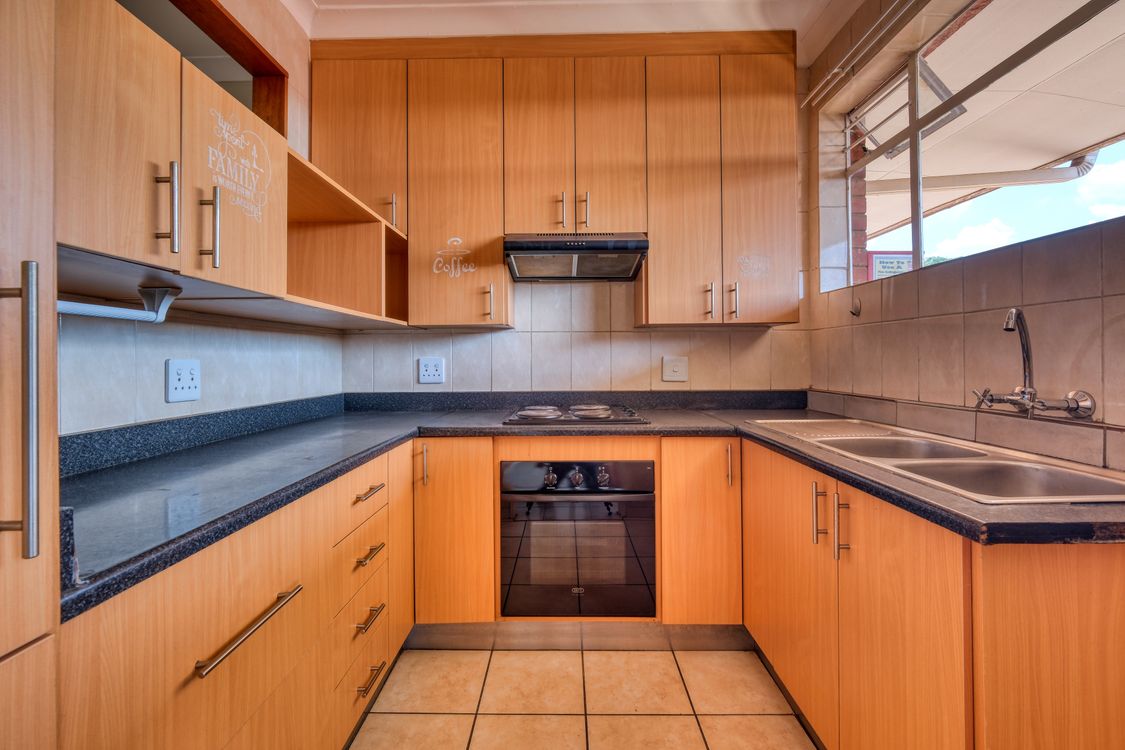
Smart design turns a tiny kitchen into a charming, functional space. Photo via Pexels.
Does your kitchen feel like a closet with a stove? You are not alone. Millions of people cook in small apartments, studios, and older homes where the kitchen is the tiniest room of all. But a small kitchen does not have to feel cramped or sad — it just needs smart design.
Here are 20 real, practical ideas that actually work, plus the 2026 trends worth knowing, common mistakes to avoid, and a budget guide so you know exactly what each idea costs.
Idea 1: Go Vertical With Your Storage
The biggest mistake in tiny kitchens is thinking only about floor space. Your walls go all the way to the ceiling — use them. Open shelves near the top hold seasonal baking supplies and decorative pieces; everyday items stay at easy reach. A small step stool makes high shelves completely practical.
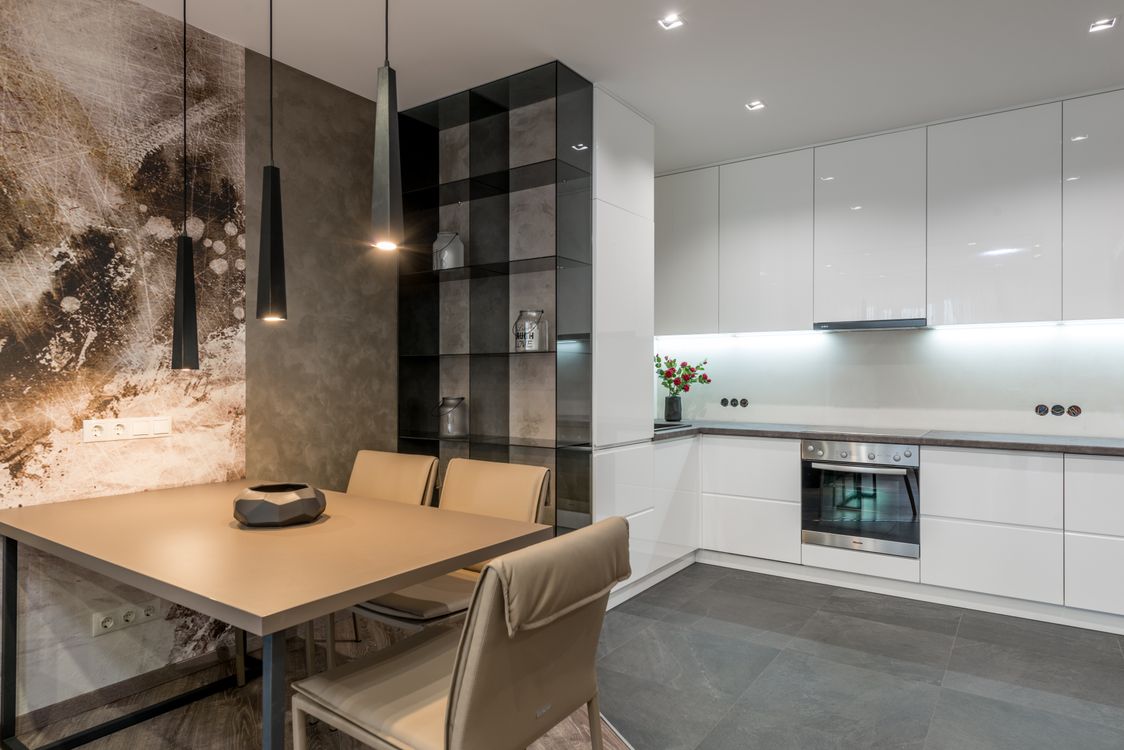
Multi-use furniture is the secret weapon of tiny kitchens. Photo via Pexels.
Idea 2: Use A Kitchen Cart That Does Many Jobs
A rolling kitchen cart is one of the best investments for a tiny kitchen. Butcher block top for chopping, drawers and shelves below for storage, hooks on the sides for tools — and it rolls away when you do not need it. Best of all for renters: it is not permanent. It moves with you.
Idea 3: Install Open Shelves Instead Of Upper Cabinets
Upper cabinets can make a tiny kitchen feel like a dark cave. Open floating shelves let light travel freely and instantly make the room feel bigger and brighter. Be selective about what you display — matching containers, pretty dishes, a few plants. Think of each shelf as a small gallery.
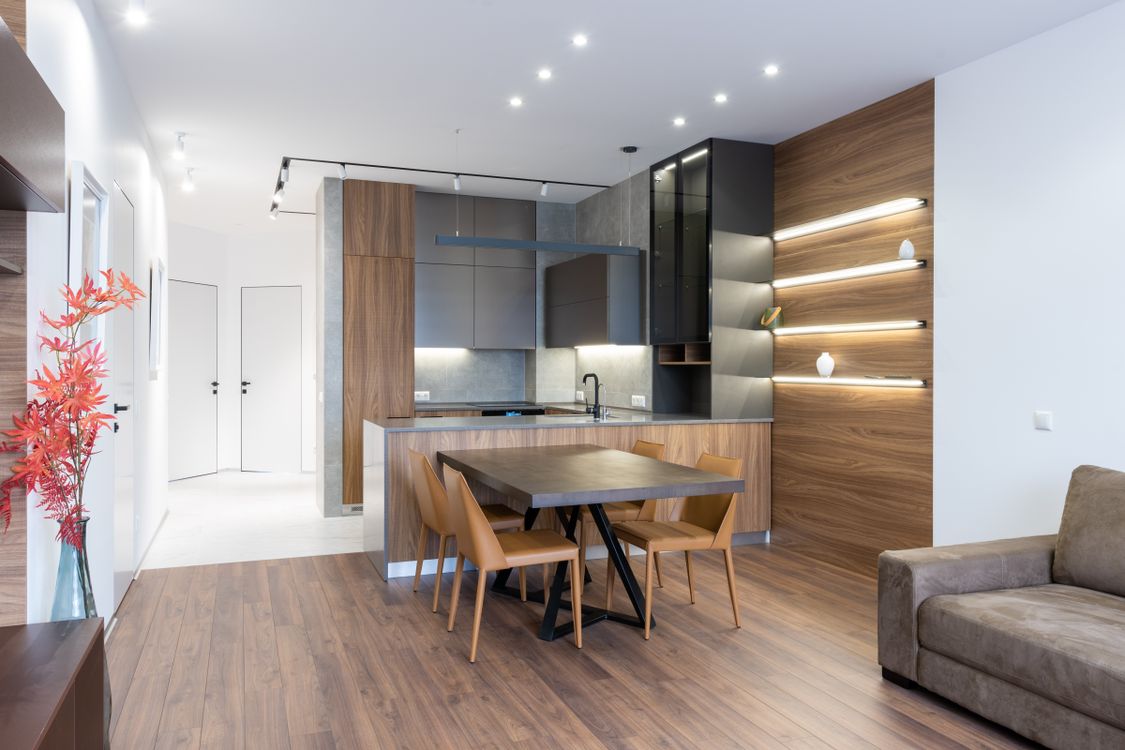
Open shelves keep a small kitchen feeling light and airy. Photo via Pexels.
Idea 4: Choose Light Colors To Make The Room Feel Bigger
Light colors reflect light and create the illusion of more space. Soft white, warm cream, pale sage, light grey, soft blush — all beautiful in a tiny kitchen. Warm white with natural wood accents is the top trending combination right now. A two-tone approach (lighter uppers, slightly deeper lowers) adds interest without heaviness.
Idea 5: Mount Your Microwave On The Wall Or Under The Cabinet
The microwave is probably the biggest thing eating your counter. An over-the-range microwave doubles as a vent hood. An under-cabinet model keeps the counter completely clear. Renters can use a sturdy wall-mounted shelf near an outlet. Any of these gives you back a huge amount of working room.
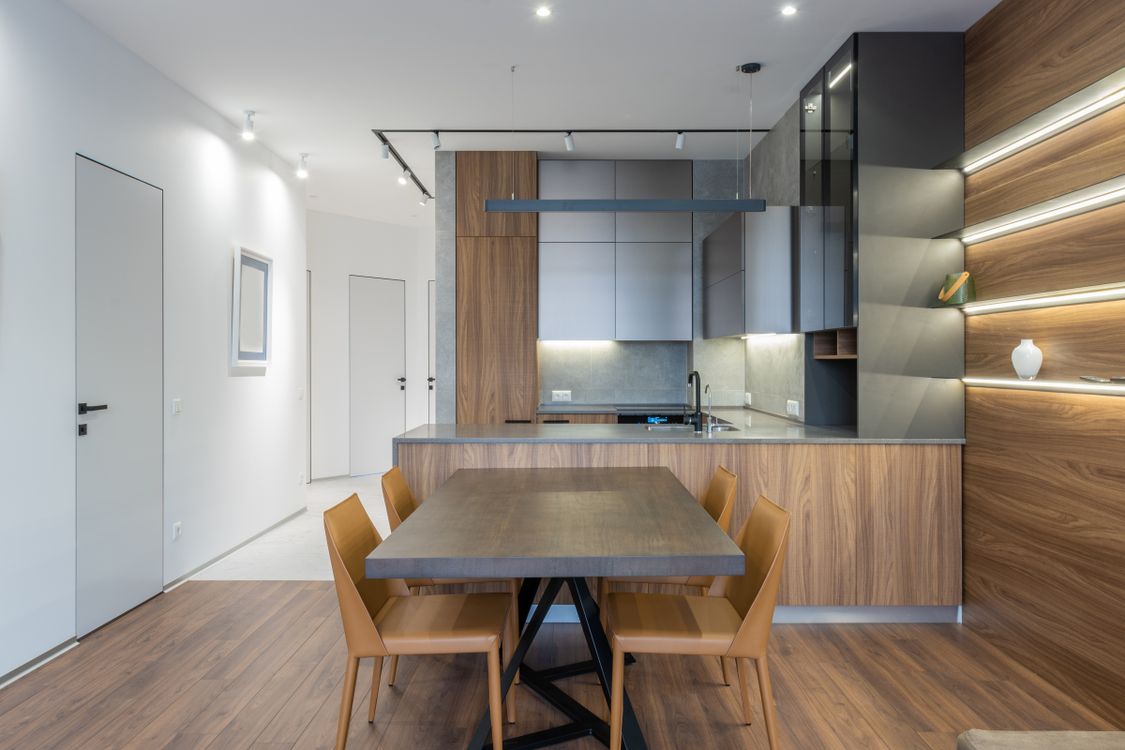
Getting appliances off the counter frees precious work space. Photo via Pexels.
Idea 6: Add A Pegboard To Your Wall
A pegboard is one of the cleverest, most affordable ideas you will ever try. Hang pots, pans, utensils, spice jars, cutting boards — in any arrangement you like, changed whenever you want. Paint it in a fun color like forest green, navy, or terracotta and it becomes a design feature, not just storage.
Idea 7: Use Magnetic Spice Jars On Your Fridge
The side of your fridge is wasted storage waiting to happen. Small magnetic glass spice jars, a magnetic knife holder, magnetic baskets for fruit or mail — a whole new storage zone with zero counter or cabinet space used. Place them on the side facing your cooking area for grab-and-go convenience.
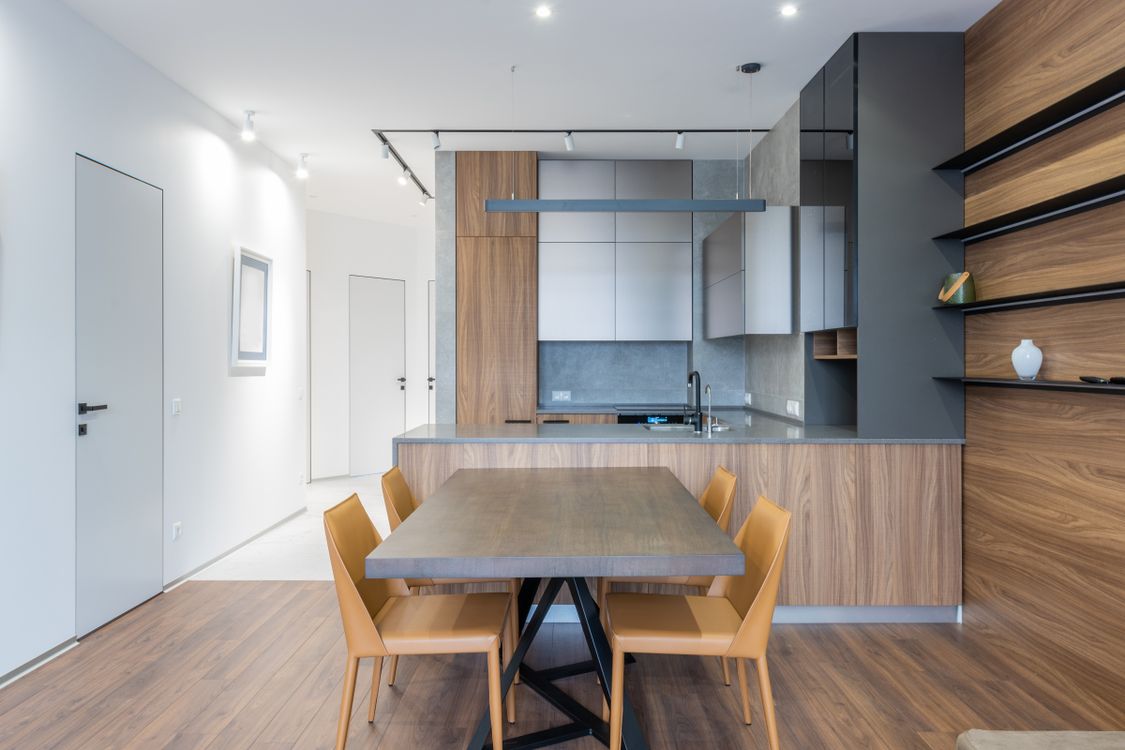
Every surface earns its keep in a well-designed tiny kitchen. Photo via Pexels.
Idea 8: Install Under-Cabinet Lighting
Most small kitchens have one overhead light, which leaves the countertops — where you actually work — in shadow. Under-cabinet LED strips fix this for very little money. Many are plug-in or battery-operated, so renters can use them too. Choose warm white (2700K to 3000K) so food looks appetizing and the room feels cozy.
Idea 9: Try A Fold-Down Table For Eating And Prep
A fold-down wall-mounted table flips down for dining or prep, then folds flat like a picture when you are done. Natural oak with black brackets, white with gold hardware, or reclaimed industrial wood — all popular right now. Paint it the same color as the wall and it nearly disappears when folded.
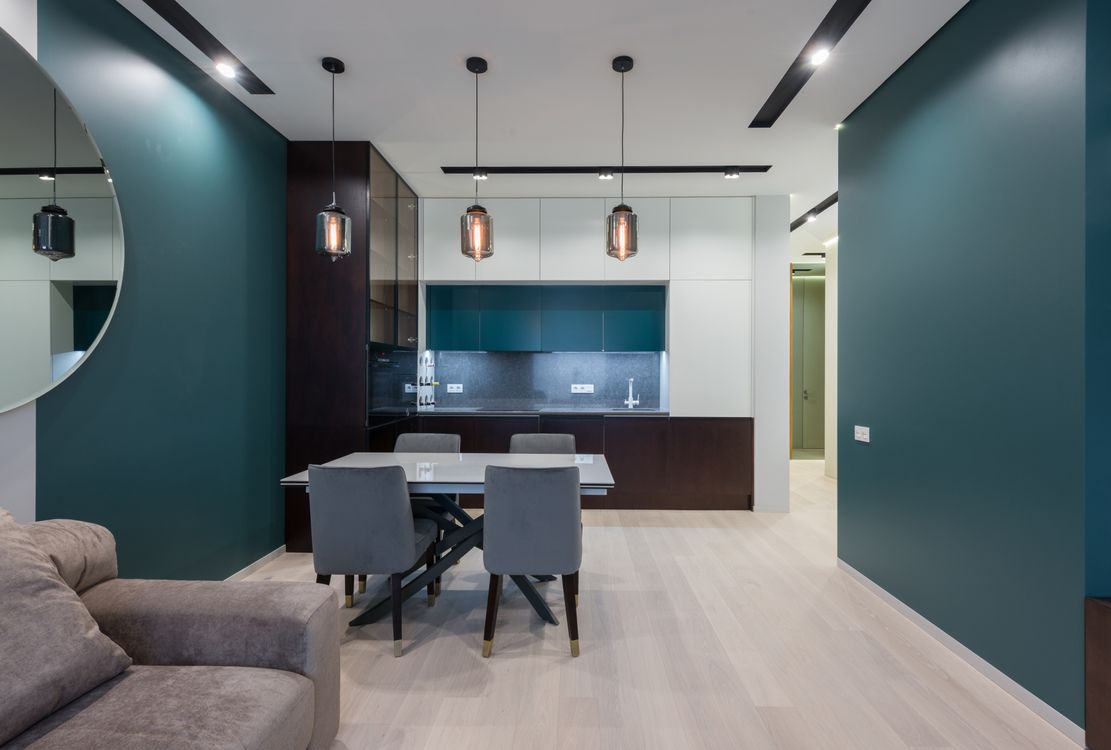
Fold-down tables give you dining space that vanishes when you are done. Photo via Pexels.
Idea 10: Declutter Your Countertops Completely
The hardest idea on this list — and the most powerful. Ask of every item: do I use this every single day? If not, it belongs in a cabinet, a drawer, or out of the kitchen. Only daily-use items earn permanent counter space. Clearing counters is free, takes about an hour, and makes a bigger visual difference than almost anything else.
Idea 11: Use Drawer Organizers And Cabinet Dividers
Cabinet and drawer interiors are hidden storage gold, wasted when things are just piled in. Drawer dividers, shelf risers, pull-out baskets, and door-mounted organizers transform chaos into order. Bamboo organizers look beautiful and feel satisfying every time you open the drawer.
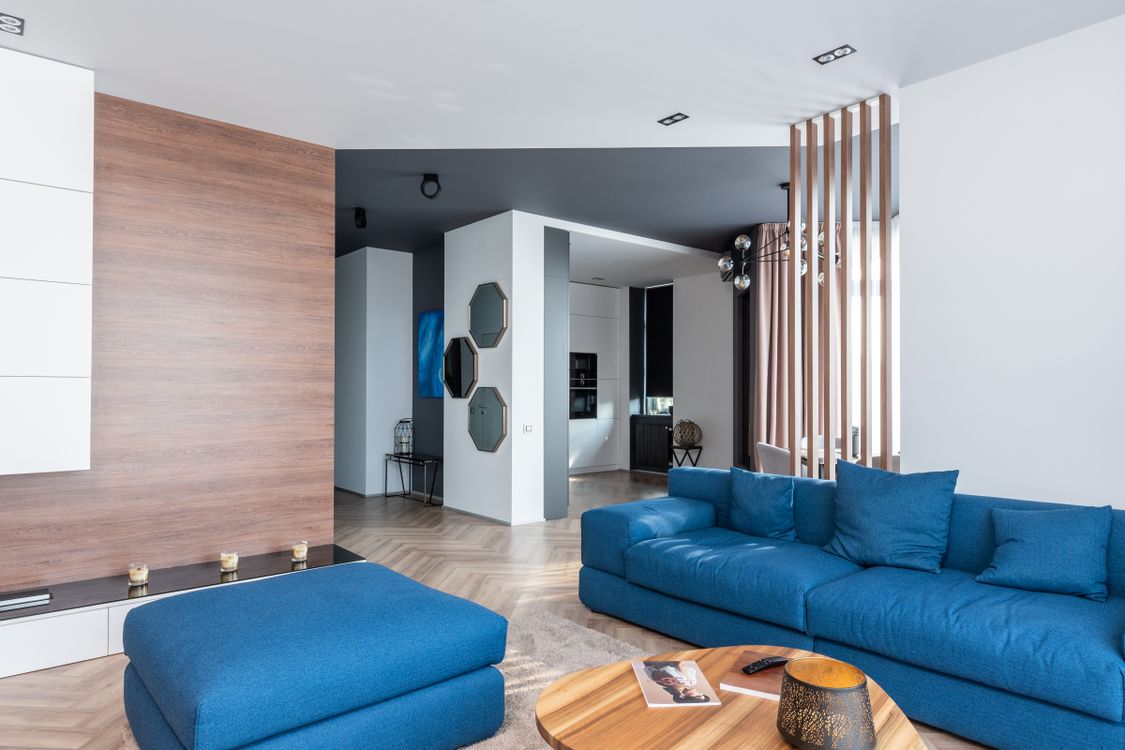
Organized drawers and cabinets double your usable storage. Photo via Pexels.
Idea 12: Add A Pull-Out Pantry Or Slim Cabinet
A pull-out pantry — a tall cabinet just 6 to 12 inches wide that slides out from beside the fridge or stove — turns a wasted gap into astonishing storage. Canned goods, spices, bottles, dry goods, all in perfect rows with ball-bearing slides. Ready-made kits exist, or a carpenter can build one to fit your exact gap.
Idea 13: Hang Pots And Pans From The Ceiling
Cookware is bulky and hard to store neatly. A ceiling pot rack — metal or wood, attached to ceiling beams — frees one or two full cabinets and puts everything at easy reaching height. Black iron for industrial, aged brass for vintage, natural wood for farmhouse. A wall-mounted rail above the stove works if ceiling mounting is not possible.
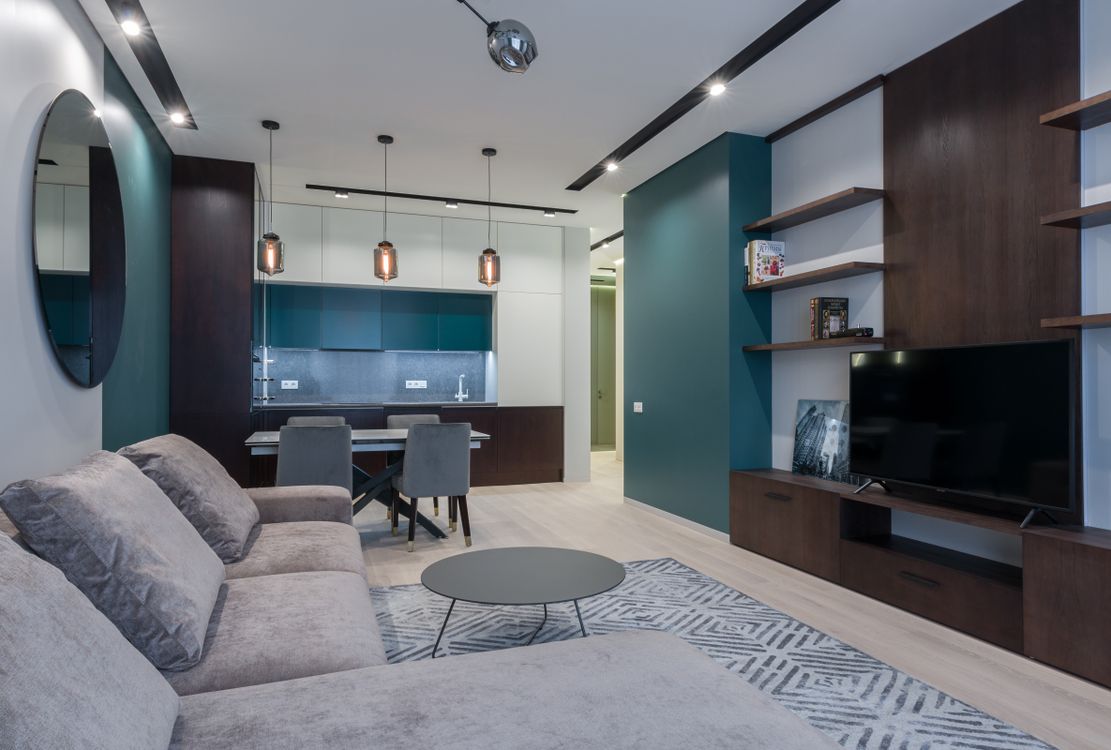
Ceiling and wall storage keeps bulky items off the counters. Photo via Pexels.
Idea 14: Use Mirrored Or Glass Cabinet Fronts
Glass-front cabinet doors reflect light and create visual depth, tricking the eye into seeing a larger room. Keep the insides neatly organized — display your prettiest dishes and matching glassware like a functional display case. Frosted or textured glass is a good middle ground if you want the light without fully exposing everything.
Idea 15: Invest In Compact Multi-Use Appliances
In a tiny kitchen, every appliance must earn its place. A toaster-oven-air-fryer combo replaces three machines. A multi-cooker replaces a slow cooker, pressure cooker, rice cooker, and steamer. Before buying anything, ask: will I use this at least three times a week? If not, it does not deserve the space.
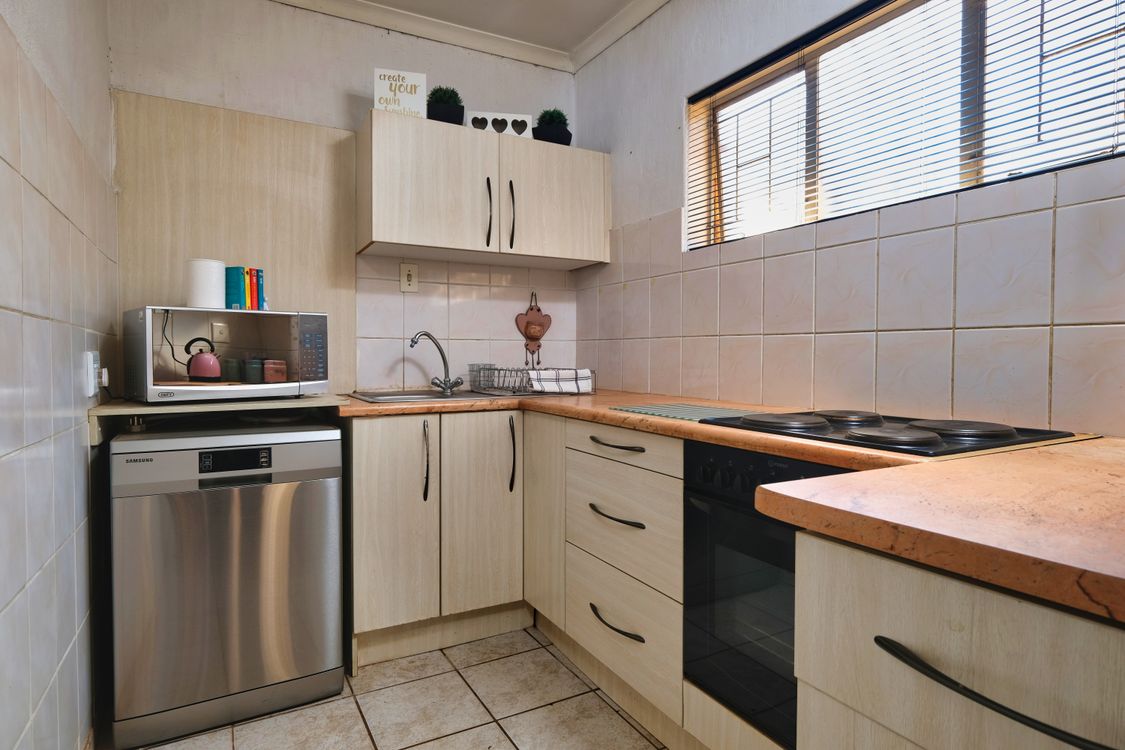
Multi-use appliances earn their place; single-task ones do not. Photo via Pexels.
Idea 16: Add A Kitchen Window Shelf For Herbs
A simple shelf spanning your kitchen window becomes a living herb garden — practical and beautiful at once. Basil, mint, chives, thyme, and parsley all thrive in a sunny window. Natural pine with black brackets, reclaimed wood on rope hangers, or glass for a modern look. Matching terracotta pots with handwritten labels complete the picture.
Idea 17: Use A Tension Rod Under The Sink
A shower-curtain tension rod fits inside the under-sink cabinet with zero drilling. Hang spray bottles on S-hooks from the rod, and the cabinet floor below is suddenly free for baskets and bins. Two dollars, five minutes, roughly twice the storage. One of the most shared tiny-kitchen hacks for good reason.

Small, clever details add up to a kitchen that feels generous. Photo via Pexels.
Idea 18: Paint Or Wallpaper The Inside Of Cabinets
This adds personality rather than storage — and it matters. Paint cabinet interiors in emerald, deep navy, terracotta, or mustard, or line them with peel-and-stick wallpaper (renter-friendly and removable). White dishes against a bold background look like gallery pieces. High visual impact, very low cost.
Idea 19: Choose Furniture With Legs, Not Skirts
A designer trick that genuinely works: furniture on legs — where you can see the floor underneath — makes a room feel bigger and airier. Choose an island on slim legs instead of a solid base, a cart with tapered legs instead of panels. Even two inches of visible floor makes a noticeable difference.
Idea 20: Create A Coffee Station In An Unused Corner
Give your morning ritual its own dedicated zone: one corner of counter, one small floating shelf above. Coffee maker below, mugs and supplies above, a small plant for personality. Grouping everything together clears the rest of the counter and creates a cozy moment that feels special every single morning.
2026 Tiny Kitchen Design Trends You Should Know
Japandi style — Japanese minimalism meets Scandinavian coziness: clean lines, natural wood, muted earth tones, everything intentional.
Warm earth tones — terracotta, warm clay, olive green, and creamy beige replacing stark white and grey palettes.
Smart kitchen technology — touchless faucets, voice-controlled smart plugs, and LED systems that adjust throughout the day, now affordable for small budgets.
Biophilic design — bringing nature in through plants, natural materials, and organic shapes: a window herb garden, wooden boards, woven baskets, natural stone.
Common Tiny Kitchen Mistakes And How To Fix Them
Buying furniture that is too big. Always measure first. Look for pieces designed for small spaces — proportions matter enormously.
Using only one light source. Layer it: under-cabinet lights, a pendant over the work area, LED strips inside glass cabinets.
Ignoring the back of cabinet doors. Door-mounted organizers and hooks double cabinet storage without adding anything to the room.
Choosing open shelving without a plan. Decide exactly what you will display first. Matching containers and a consistent palette are everything.
Forgetting vertical space. Shelves high up, tall pantry cabinets, stacking vertically — the room goes all the way to the ceiling.
Budget Guide — How Much Do Tiny Kitchen Ideas Cost?
Under 50 dollars: tension rod under-sink organizer (about 5 dollars), magnetic spice jars (15 to 25 dollars), under-cabinet LED strips (15 to 30 dollars), drawer organizers (15 to 30 dollars), pegboard with hooks (20 to 40 dollars).
50 to 200 dollars: rolling kitchen cart (60 to 150 dollars), fold-down wall table (70 to 180 dollars), open floating shelves (30 to 80 dollars per shelf), pull-out cabinet organizers (40 to 100 dollars), window herb shelf with pots (30 to 60 dollars).
200 to 500 dollars: ceiling pot rack (80 to 300 dollars plus installation), glass cabinet door replacement (100 to 400 dollars), pull-out slim pantry (150 to 500 dollars), professional lighting upgrade (150 to 400 dollars).
Start with the free and cheapest ideas first — declutter, clear counters, use vertical space, organize existing cabinets. You will be amazed how different your kitchen looks before you spend a single dollar.
Conclusion
A tiny kitchen is not a problem to solve — it is a design challenge to enjoy. You do not need a big budget or a major renovation. Start with the free ideas: clear your counters, maximize vertical space, organize your cabinets. Then add a few affordable solutions like a tension rod, magnetic spice jars, or a pegboard. Before long, your tiny kitchen will not feel tiny at all — it will feel like the smartest, most charming room in your home.
FAQs — Frequently Asked Questions
Question 1: How can I add more counter space to my tiny kitchen without renovating?
The easiest ways to add counter space without renovation include buying a rolling kitchen cart with a butcher block top, installing a fold-down wall-mounted table, adding a cutting board that fits over your sink to create extra prep space, and clearing all non-essential items off your existing counter.
Question 2: What are the best tiny kitchen ideas for renters?
Renters can use peel-and-stick removable wallpaper inside cabinets, tension rods under the sink, magnetic spice jars on the fridge, freestanding rolling carts, plug-in under-cabinet LED lights, and over-the-door organizers. All of these create significant improvements without any permanent changes to the kitchen.
Question 3: How do you organize a tiny kitchen with too much stuff?
Start by removing everything from your kitchen and deciding what truly belongs there. Donate, store, or throw away anything you have not used in six months. Then put things back using organizers — drawer dividers, cabinet risers, door-mounted bins — so everything has a specific home. The less you have in the kitchen, the easier it is to keep it organized.
Question 4: Is open shelving a good idea for a small kitchen?
Yes, open shelving is a great idea for a small kitchen when done thoughtfully. It makes the room feel more open and airy compared to heavy upper cabinets. The key is to keep shelves neat and display only matching, attractive items. If you tend to be disorganized, keep one or two cabinets with doors for messier storage and use open shelves only for your prettiest things.
Question 5: What is the single best tiny kitchen idea for making the space feel bigger?
The single most impactful change you can make is clearing your countertops completely. Empty counters make any kitchen feel dramatically larger, lighter, and more open. This costs nothing, takes one afternoon, and has the biggest visual impact of any tiny kitchen idea on this list.

No comments:
Post a Comment